
BMW turbo lag is the time a turbocharger needs to respond after increased engine demand. Boost threshold is the operating range below which useful boost is limited. A gearbox selecting a lower gear creates another kind of delay. New power loss, rough running, or a warning needs diagnosis.
These can feel similar from the driver’s seat, but they need different answers. A familiar response characteristic does not automatically need repair. A new hesitation should not lead straight to adaptation resets, ignition parts, a replacement turbo, or a tune.
Identify which delay you are feeling
| Situation | Useful distinction | Next step |
|---|---|---|
| Response builds after a change in engine demand | Turbo response involves accelerating the turbine and compressor | Compare with the vehicle’s established behavior under similar conditions |
| Weak response at low engine speed in a high gear | Available exhaust energy and gear choice may limit response | Use the transmission as the manual directs; avoid demanding heavy load at very low rpm |
| A pause followed by a lower gear | Gear selection contributes to the delay | Distinguish the shift event from boost development |
| Power is newly reduced or inconsistent | A leak, control restriction, ignition issue, or another fault may be involved | Record conditions and arrange diagnosis |
| Engine speed rises without matching road speed | The concern may involve clutch or transmission slip | Stop loading the drivetrain and assess whether recovery is needed |
There is no single normal delay in seconds or universal boost pressure for every BMW. Engine design, selected gear, software, load, altitude, fuel specification, and operating temperature affect the comparison. The badge alone does not identify the fitted system.
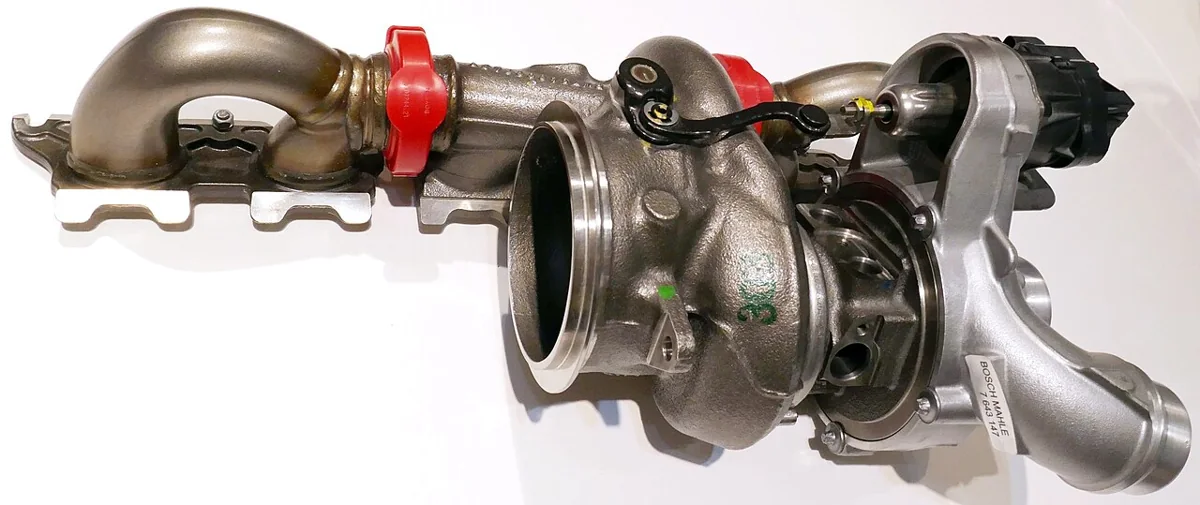
Stop testing when warning signs appear
If the car cannot accelerate predictably enough for safe traffic use, stop safely and arrange assistance. Do not repeatedly attempt an overtake or force a high-load pull to find out whether the power returns.
- Stop safely for an oil-pressure warning, overheating warning, heavy smoke, severe rough running, or a new loud mechanical noise.
- Follow the vehicle’s instructions for a drivetrain or engine warning. The message and symptoms determine whether further travel is appropriate.
- Arrange recovery if power loss, stalling, or transmission slip prevents safe control.
- Keep clear of hot turbocharger and exhaust parts. Do not inspect a running engine by touching hoses or linkages.
Garrett’s turbocharger diagnostic precautions require a suitable vehicle condition before testing and direct technicians to follow the vehicle manufacturer’s procedures. A public-road acceleration challenge is not a diagnostic method.
Preserve clues before changing anything
Once parked, note when the change began, whether the engine was cold or warm, and any warning message. Include recent maintenance, refueling, software work, or modifications. A complaint that began immediately after a repair deserves a check of the work performed.
Keep fault information available. Clearing codes or resetting adaptations before assessment can remove useful context. A reset is a procedure used when the applicable diagnosis or repair calls for it, not a general treatment for hesitation.
- Check the required fuel grade in the vehicle’s manual or fuel information.
- Record the grade and station used if the symptom followed refueling.
- Check accessible warnings and service history while parked.
- Leave pressure testing, actuator operation, electrical probing, and hose removal to the workshop.
Do not substitute a blanket 98 RON rule for the fitted engine’s requirement. Higher octane does not repair a leak or failing component. RON is also different from the AKI labeling used at US pumps, so compare specifications in the same rating system.
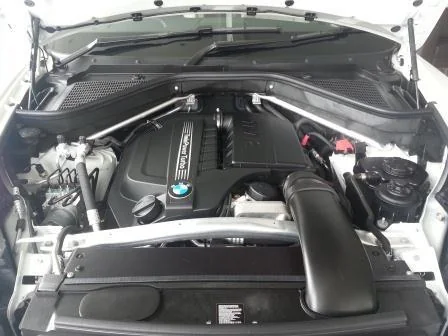
Read boost data in context
Requested boost shows what the engine controller is asking for. Actual boost shows a measured pressure value. Their relationship helps diagnosis only when operating conditions, sensor location, pressure units, and other control decisions are understood.
| Data pattern | What to investigate | What it does not prove |
|---|---|---|
| Requested pressure is reduced | A protection response, torque limit, traction intervention, or another operating condition | That the turbo cannot make pressure |
| Actual pressure stays below request under a valid test | Leaks, sensor plausibility, air or exhaust restriction, and the fitted boost-control system | That the wastegate or turbo must be replaced |
| Pressure appears normal but acceleration is poor | Ignition, fueling, torque delivery, brakes, and transmission behavior as appropriate | That the entire powertrain is healthy |
| The trace changes during a shift | Gear selection and coordinated torque control | That the temporary change is an independent boost fault |
Absolute pressure includes atmospheric pressure; gauge boost is referenced to it. Comparing one with the other can create a false discrepancy. A brief mismatch during a transient event also needs interpretation rather than an automatic failure verdict.
A useful log can include engine speed, pedal demand, selected gear, relevant temperatures, torque interventions, and fault context alongside pressure. Actuator commands and position feedback vary by system. There is no universal wastegate duty-cycle number that diagnoses every BMW.
Use tests that distinguish the causes
The workshop should identify the engine and installed hardware before testing. Vacuum-operated and electronic actuators need different checks. Gasoline and diesel boost systems cannot share an assumed parts list simply because both use a turbocharger.
- Read the full fault context. Save relevant engine and transmission faults and available event data before clearing anything.
- Check sensor plausibility. An implausible pressure or temperature input can mislead both control decisions and the diagnosis.
- Inspect the air path. Check accessible connections and components, then use the approved leak-test method and limits where justified.
- Test the fitted control system. Follow the applicable actuator, vacuum, electrical, and mechanical checks.
- Verify under controlled conditions. Compare the repaired system with the original complaint after establishing that testing is safe.
A smoke or pressure test can reveal a leak under its test conditions. A clean result does not eliminate every load-dependent fault. Do not introduce an arbitrary pressure, defeat protective controls, or perform unsupervised full-throttle tests.
If code 120408 is present, check BMW 120408 and its companion faults. That article covers the boost-control shutdown question in detail; the code alone is not a parts order.
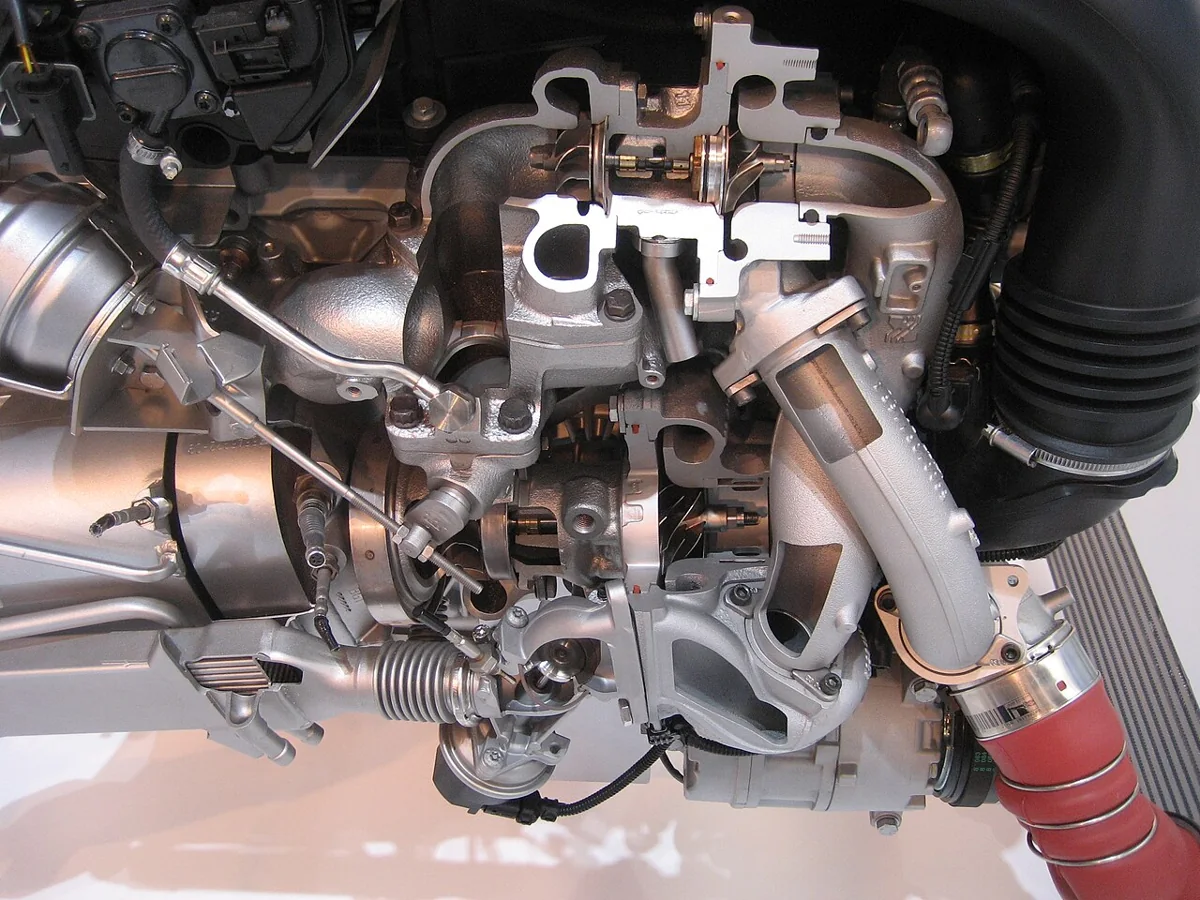
Match the repair to the finding
A confirmed damaged connection may justify repairing that connection. An ignition fault needs ignition and related checks. A verified actuator or turbo fault needs the repair options for that particular assembly. Hesitation alone does not justify replacing all of them.
Ask what failed, how it was tested, and what must be verified afterward. A recommendation for a turbo should also explain whether another condition caused or contributed to its damage. Otherwise, replacing the unit may leave the original cause unresolved.
Use the approved oil specification and maintenance requirements. There is no universal diverter-valve service interval or scheduled smoke test for all BMWs. Software work should follow an applicable fault remedy or maintenance instruction, not a mileage-based promise to remove lag.
Separate response settings from tuning
A different driving mode can change accelerator response and gear selection where supported. compare BMW Comfort Sport and Eco Pro modes before interpreting a different pedal feel as a mechanical repair.
Custom tuning changes the calibration and may increase thermal or mechanical demands. It can affect emissions compliance, warranty treatment, and insurance conditions. Neither a reputable tuner nor a clean data log establishes that reliability will be unchanged.
Consider modifications separately from restoring normal operation. Confirm vehicle compatibility and applicable approvals before proceeding. Performance validation belongs on suitable professional equipment or an authorized closed facility, with appropriate safety controls.
Prepare a focused workshop assessment
Provide the VIN, mileage, maintenance history, warning text, and any existing scan report. Describe whether the delay happens before a downshift, after selecting Drive, or during acceleration in an already selected gear. Those are different starting points.
Agree on the diagnostic scope before authorizing parts. Ask for the relevant findings and post-repair comparison. Diagnostic time, additional testing, and availability depend on the vehicle and complaint; a complete same-day repair should not be assumed.
The practical takeaway: identify the kind of delay, preserve the evidence, and repair a demonstrated fault. Do not buy a tune or replace a turbo simply because acceleration feels slower than expected.
Common turbo response questions
Does hot weather prove the delay is normal
No. Temperature can affect operating conditions and control strategies, but it does not explain every new loss of power. Compare the change with warnings, measured data, and vehicle-specific limits before deciding that no repair is needed.
Can new plugs or coils solve hesitation
They can address a fault when inspection or testing supports that repair. Replacing them solely because the car feels hesitant can waste money and leave a boost, fueling, transmission, or other problem unresolved.
Should adaptations be reset after every service
No. Use the procedure only when the applicable diagnostic or repair instructions call for it, and complete any required learning process. First preserve relevant faults and data so the original complaint can still be investigated.