
BMW Garage · Al Quoz 4, Dubai
BMW Oil Consumption Repair in Dubai
Topping up oil more often? Find where the oil is going and get a clear repair quote, from external leaks and ventilation faults to turbo-related or internal engine work.
Oil-loss diagnosis AED 250–400 · Ventilation repair guide AED 600–1,200
Free initial inspection · Free pickup and drop-off within Dubai
New customers receive 15% off their first service. Ask when booking.
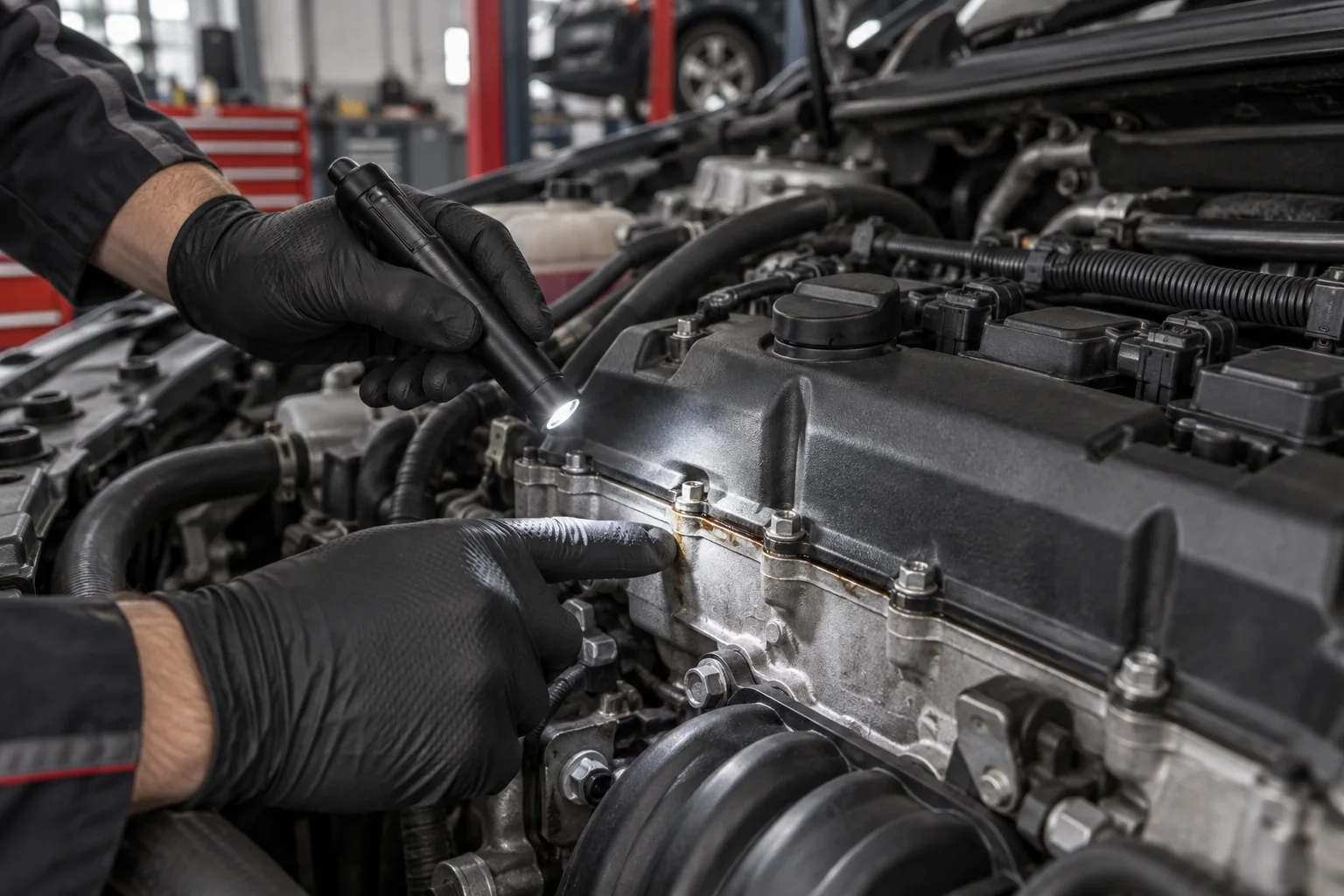
Find why your BMW needs frequent oil top-ups
BMW Garage investigates excessive oil consumption and carries out the confirmed repair in Al Quoz 4, Dubai. We check whether oil is leaking outside the engine, entering the intake through a ventilation or turbo-related fault, or passing into the combustion chambers because of internal wear. The right repair may be a gasket, ventilation component, turbo-related repair, valve stem seals or more extensive engine work.
A low reading is the starting point for investigation, not a diagnosis of worn piston rings. We first establish the correct level, recent servicing and how much oil has actually been added over a known distance. We also inspect for an external leak and check the engine’s condition. This helps prevent an expensive internal repair being recommended before a simpler, measurable cause has been assessed.
Call with the model year, mileage and top-up history, or send those details on WhatsApp. We explain the initial inspection and any additional testing before it begins. If a repair is required, the quotation names the failed parts, labor and follow-up checks. You can approve the investigation without agreeing in advance to an engine rebuild.
BMW oil-consumption diagnosis and repair costs
| Service and inclusions | Guide price |
|---|---|
| Oil-loss diagnosisGuide for leak inspection and relevant ventilation checks; extended tests agreed separately. | AED 250–400 |
| Crankcase ventilation repairExisting guide for an applicable ventilation-component replacement. Complete covers can cost more. | AED 600–1,200 |
| Turbo-related oil-leak repairGuide for a repairable turbo-related oil fault. A complete replacement turbo is separately quoted. | AED 1,800–3,000 |
| Valve stem seal replacementExisting guide for an applicable engine; access and additional cylinder-head work can change the cost. | AED 2,500–4,000 |
| Engine rebuildingGeneral BMW rebuilding budget when inspection confirms repairable internal damage. | AED 15,000–40,000 |
These are indicative repair budgets, subject to inspection and parts availability. Your written quotation confirms the applicable parts, quantities, labor, fluids, testing and VAT before work begins. Starting prices do not cover every engine or equipment option.
Three places we investigate when oil disappears
Outside the engine
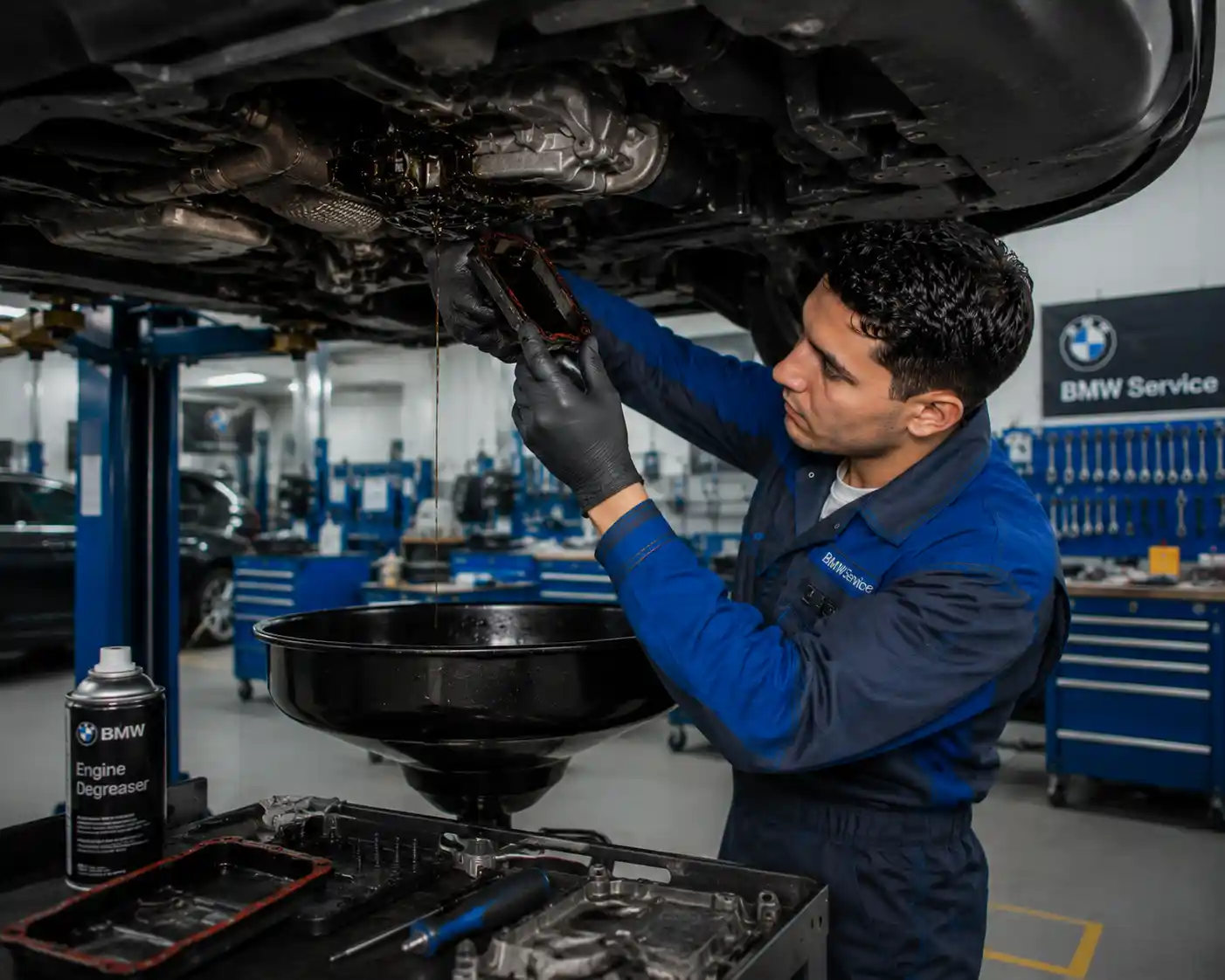
A cover, housing, gasket, seal or oil line can leak while the engine continues to run normally. Oil may collect on an undertray, spread rearward with airflow or burn off a hot surface without leaving a large puddle. We inspect the origin of fresh oil rather than quoting the lowest wet component. Cleaning and rechecking can be part of locating a slow leak.
Through the intake or turbo system
A ventilation fault can allow unwanted oil into the intake. On a turbocharged engine, turbo condition and its oil connections may also be relevant. Oil residue by itself does not prove that the turbo is defective. We assess the amount, associated symptoms and other evidence before deciding which component needs repair.
Inside the combustion chambers
Valve stem seals, piston rings or cylinder wear can contribute to oil burning. These possibilities require a suitable assessment of the engine. Smoke, deposits and test results are considered together, because one observation is not enough to establish which internal part has failed. We explain the evidence before proposing dismantling.
More than one problem can exist. A car can have an external leak and an internal consumption concern, particularly when maintenance or previous repairs are unclear. Fixing a confirmed leak makes it easier to assess the remaining loss accurately. We explain whether the first repair is expected to address all of the complaint or whether another measurement is needed afterward.
Measure the loss before choosing a major repair
A useful oil-consumption measurement starts from a known, correctly established oil level and records the distance and oil added. The checking method must suit the vehicle. Some BMWs use an electronic measurement with defined operating conditions; others have a dipstick. We use the applicable information rather than assuming that every model can be measured in the same way.
A record kept in your phone is enough to help the first conversation. Record additions when they happen and keep the oil invoice or bottle specification. Do not deliberately run the engine low to complete a measurement. If the vehicle asks for oil or displays a serious warning, follow the applicable instructions and contact us.
- Starting level and mileage
- When the level was established, the odometer reading and whether an oil service had just been performed.
- Measured oil additions
- The amount actually added on each occasion, with the oil specification if known. A bottle purchased is not always a bottle used.
- Distance and conditions
- The distance traveled, usual trip pattern and any unusual period of use. Note smoke, leaks or a warning at the time.
- Ending check
- The level and mileage checked using a consistent, appropriate method. We assess the result against the relevant engine information.
For example, adding 1 liter over 1,500 km gives a calculated rate of about 0.67 liter per 1,000 km. That arithmetic describes the record; it does not classify the engine as normal or faulty. The correct starting and ending levels, measurement method, engine specification and inspection findings still matter.
We do not publish one universal acceptable consumption limit for every BMW engine. A manufacturer limit for a particular engine or assessment is not permission to ignore a new change in behavior. If your car suddenly needs much more oil than before, develops smoke or shows another symptom, arrange an inspection even if an online number suggests the amount is acceptable.
Low oil level and low oil pressure need different responses
A request to add engine oil
Read the exact message and follow the vehicle’s applicable instructions. If the level needs correcting, use the specified oil and avoid overfilling. Repeated requests deserve investigation, but they do not automatically mean the engine has lost oil pressure. Tell us when the message appeared and whether the level was checked again under the correct conditions.
If a level reading appears inconsistent after servicing, we review the amount filled and the measurement method before assuming the engine has burned the missing oil. A sensor or measurement concern may also need investigation. We do not dismiss the message as a sensor fault without checking the actual oil situation.
An oil-pressure warning or serious engine symptom
Stop safely and switch off the engine if an oil-pressure warning appears. Do not keep driving to the workshop or restart repeatedly to see whether the warning disappears. A correct oil level does not prove that lubrication pressure is adequate. Contact us and explain the warning so suitable transport and inspection can be arranged.
Heavy smoke, a severe new mechanical noise, overheating or a large active leak also changes the booking priority. Let us know before collection. A car that can still move may still be unsuitable to drive. We do not ask customers to make hard acceleration runs or continue driving with a warning in order to produce evidence.
Crankcase ventilation repairs
The crankcase ventilation system manages gases from inside the engine and, depending on design, separates oil mist and regulates pressure. Faults can contribute to oil loss, rough running or oil in the intake. The arrangement varies by engine, so the inspection and replacement parts are selected for the particular BMW. A component described as a PCV valve on one engine may be part of a larger cover assembly on another.
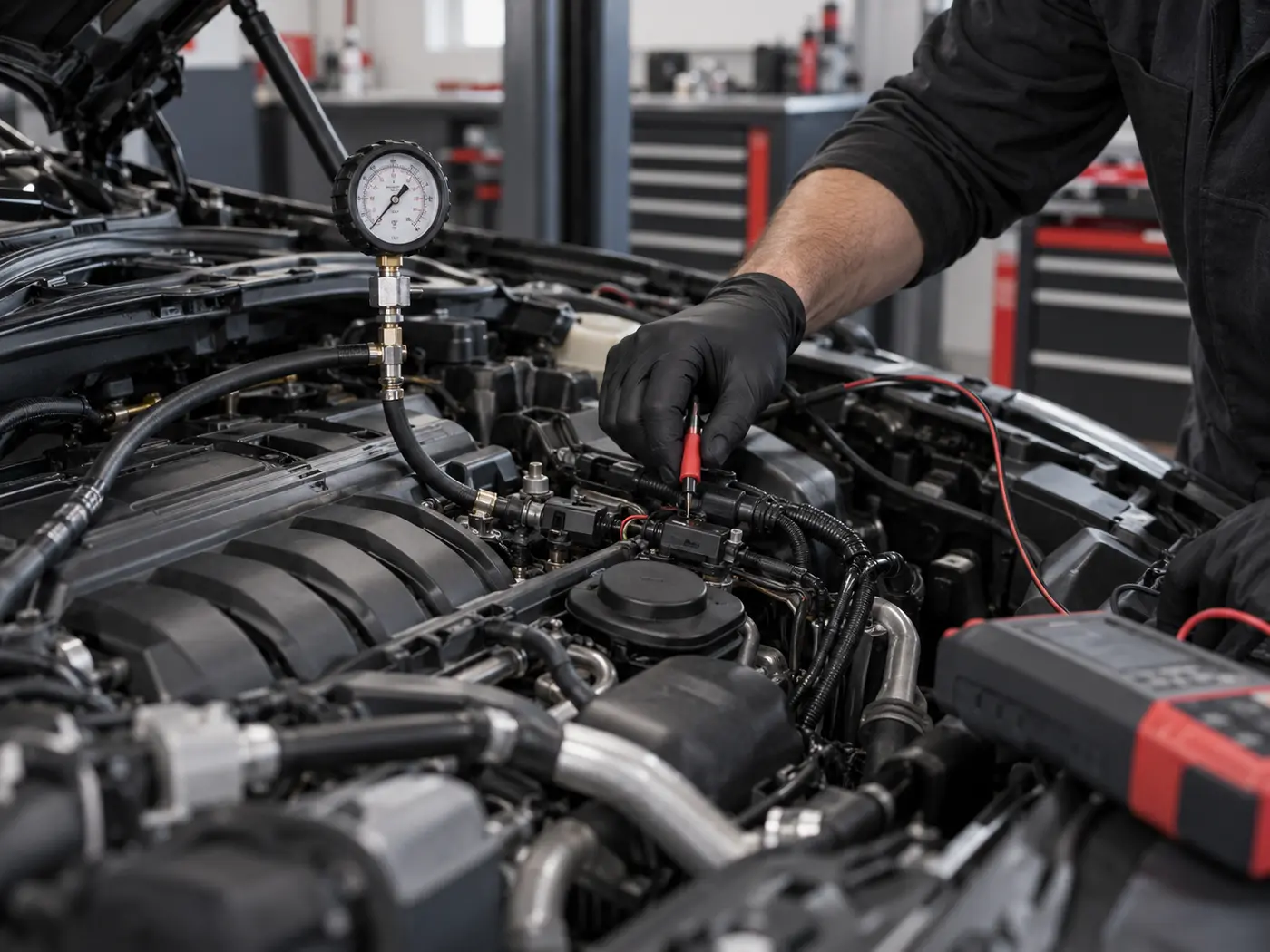
We inspect the relevant hoses, connections and components, and use appropriate pressure or leak checks where the engine design supports them. A whistle or an oily intake pipe can be a clue, but neither is a complete diagnosis. The aim is to confirm whether ventilation is contributing to the complaint and whether there is another source of loss.
Valve, hose or complete cover
A replaceable failed hose and a damaged integrated cover require different quotations. We explain the assembly being supplied, the seals involved and any related access work. Replacing only a small part is worthwhile when the design and condition allow it; fitting a complete assembly may be necessary when the failed function is integrated or the cover itself is damaged.
After repair, we verify the relevant operating condition and review whether further oil-consumption measurement is needed. A ventilation repair can correct a confirmed ventilation fault, but it should not be sold as a guaranteed cure for unrelated piston-ring or cylinder damage.
Turbo-related oil loss needs a complete assessment
On a turbocharged BMW, oil in a pipe, exhaust smoke or a boost complaint may lead an owner to suspect the turbocharger. We assess the turbo and associated components as part of the investigation, while also considering ventilation and other engine faults. BMW technical guidance notes that crankcase ventilation problems can be misdiagnosed as a turbocharger defect. That is a reason to test the cause carefully, not a reason to dismiss genuine turbo damage.
The appropriate work may concern an oil feed or return connection, a serviceable external seal, a repairable turbo-related fault or replacement of a damaged turbocharger. We explain which of those has been confirmed. The guide price for a turbo-related oil repair must not be read as the price of a complete turbo replacement on every BMW.
Where repair or replacement is appropriate, we consider the supporting oil connections and other conditions that could affect the replacement component. The quotation identifies the unit quantity, fitting requirements, gaskets and fluids. We also discuss inspection or cleaning of oil-contaminated areas when needed. A new turbo should not be installed while an identified cause of its failure is left untreated.
If the engine is producing heavy smoke or oil loss has suddenly increased, describe it when contacting us. Do not drive harder to establish whether smoke occurs under boost. A safe inspection provides more useful evidence than a risky attempt to reproduce a serious symptom on the road.
Valve stem seals and cylinder-head work
Valve stem seals control oil around the valve stems. When their condition contributes to oil burning, replacement may be appropriate, but we first assess the evidence and the rest of the engine. Smoke after a period of idling or after the vehicle has been parked can be relevant history. It does not identify valve stem seals conclusively on its own.
The cost depends on the engine layout, access and the work needed to complete the repair correctly. A straightforward seal replacement and a job that requires additional cylinder-head repair are different commitments. We explain whether the guide range is applicable to your engine and what is included before work is authorized.
Other wear can change the result of replacing seals alone. If the inspection points to valve-guide damage, compression concerns or wider internal wear, we explain why further checks are needed. This helps avoid paying for a limited seal repair with expectations that it will resolve every source of oil consumption.
Once the work is complete, we check for leaks and relevant running concerns, then explain the follow-up needed to assess oil use over distance. A short workshop test cannot establish the long-term consumption rate by itself. We agree how the result will be reviewed so the owner knows what to record and when to contact us again.
Piston rings, cylinder wear and engine rebuilding
If the simpler causes have been assessed and evidence points inside the engine, we explain the next useful mechanical tests. Compression, leak-down testing or internal visual inspection may help, depending on the complaint and engine. These tests answer different questions. A single apparently satisfactory result should not be used to promise that every oil-control component is healthy.
An engine can need further assessment even when it starts and drives. Conversely, high mileage alone is not a reason to condemn it. We consider the measured oil loss, running condition, service history and findings together. The recommendation should explain why the evidence supports continued monitoring, a limited repair, internal inspection or a larger engine job.
Rebuild or replacement
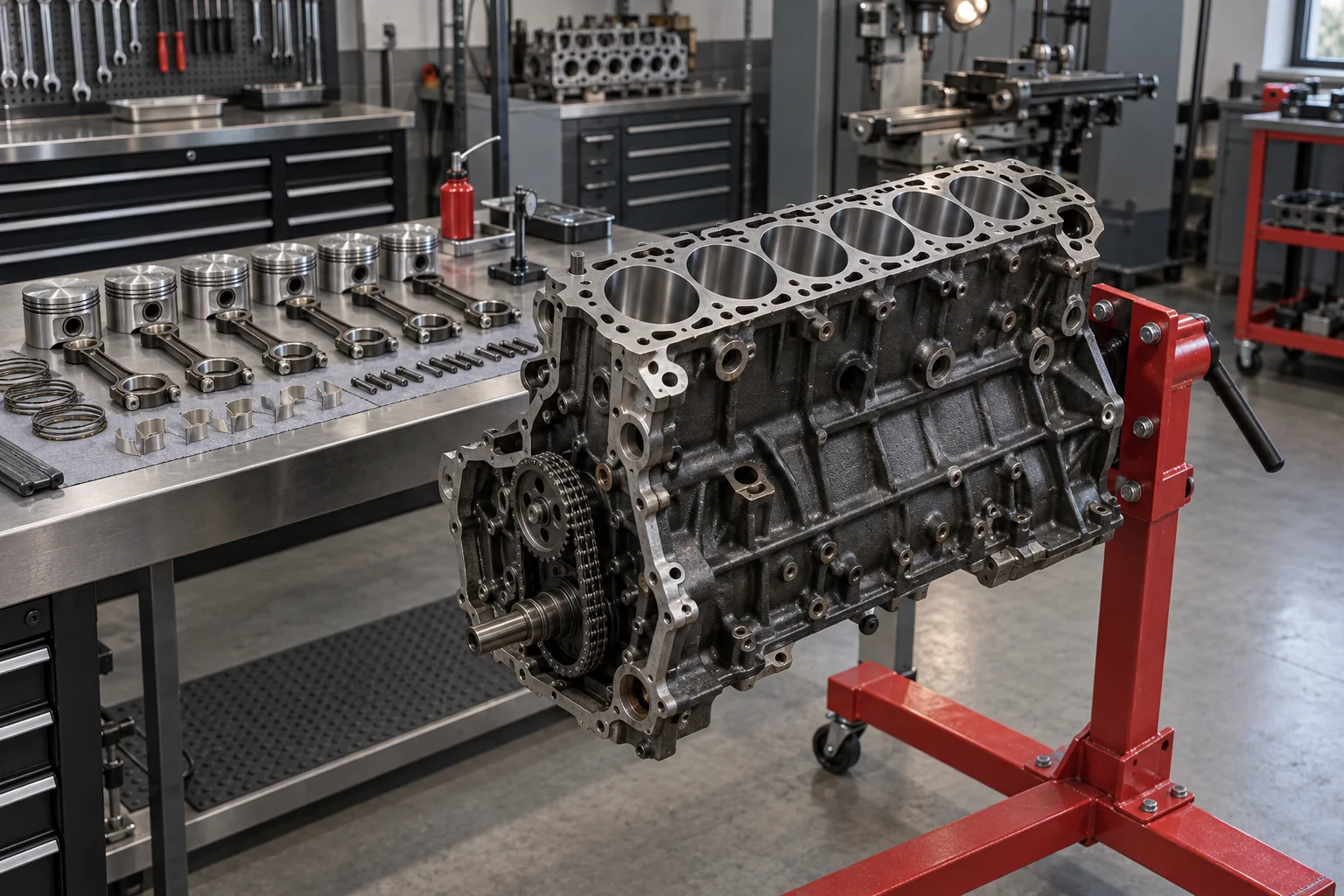
Where rebuilding is feasible, the estimate identifies inspection, required components, machining, assembly, fluids and verification. If replacement is being considered, we explain the compatible assembly, stated condition, included parts and fitting requirements. A bare used-engine price cannot be compared directly with a complete rebuilt-engine installation. The applicable warranty and any follow-up requirements are confirmed with the chosen work.
Correct oil and servicing remain part of the repair
We check the oil approval specified for the engine, together with the quantity and service history. Viscosity is only part of selecting a suitable oil. A product that sounds thicker or more protective is not automatically appropriate for the vehicle. Changing viscosity simply to hide a symptom can make the record harder to interpret and does not repair worn parts.
Overfilling can also complicate the investigation. Repeatedly adding a complete bottle without confirming the required amount is not a reliable way to manage the level. We establish the correct fill and checking method and explain what to record afterward. If you are unsure what was added at the last service, bring the invoice and tell us rather than guessing.
An oil change may be necessary as part of establishing a baseline or completing an approved repair. It is not presented as a permanent cure for every consumption complaint. Additives, chemical treatments and a reset of the service reminder are also not substitutes for identifying a mechanical problem. We explain what each agreed service is expected to achieve.
Long gaps in maintenance, extended parking, frequent short journeys or demanding use may be relevant history, but none should become a blanket explanation that stops the investigation. Your BMW’s changing behavior and actual test results matter more than a generic statement that the UAE climate makes all engines consume excessive oil.
Verify the repair and agree the follow-up
The checks after repair depend on the work completed. An external leak repair requires inspection for fresh leakage. A ventilation repair requires the relevant operating checks. Internal engine work requires its own completion and running checks. We relate those checks to the original complaint and explain any further measurement that is still needed.
For a consumption complaint, a repeat record over distance is often useful because a brief stationary test does not recreate normal ownership. We explain how the starting level is established, how additions are recorded and when to return for review. Continue responding to the vehicle’s warnings; never leave the level low merely to preserve a test record.
If the measured loss remains higher than expected, the next step is to review the conditions and evidence. An unresolved problem should not automatically trigger the most expensive remaining repair. We explain whether another leak, incomplete measurement, a different cause or further internal assessment needs consideration.
Your invoice identifies the completed work, while recommendations describe anything not included. Ask us to confirm the warranty terms for the chosen repair and supplied parts. We keep a follow-up measurement separate from a promise of zero oil use, because the acceptable behavior and assessment method depend on the engine.
Book an oil-consumption inspection in Al Quoz 4
Send the model, year, mileage and VIN if available. Tell us how much oil you added, over what distance and whether there is visible smoke, a smell, a puddle or a warning. Mention recent oil servicing, previous ventilation or turbo repairs and any engine modifications. That information helps us arrange the right initial inspection.
Call +971 56 464 6081 or contact BMW Garage through WhatsApp. Free pickup and drop-off within Dubai is available by arrangement. Explain any oil-pressure warning, large leak or heavy smoke before collection so suitable transport can be discussed. New customers can ask for the current 15% discount on their first service.
If the main issue is a visible external leak, you can also review our BMW oil leak repair service. If inspection confirms a larger mechanical problem, our engine repair service explains the repair, rebuild and replacement choices. You can arrange the complete investigation and approved work directly from this page without booking several unrelated services.
BMW Oil consumption repair questions
Answers to help you arrange the right workshop visit in Al Quoz 4, Dubai.
How much BMW oil consumption is normal?
There is no single useful limit for every BMW engine and situation. The engine specification, checking procedure, distance, usage and service information must be considered together. We measure the loss and investigate changes or related symptoms. An internet tolerance figure is not a reason to ignore a sudden increase, smoke or an oil-pressure warning.
Can my BMW burn oil without leaving a puddle?
Yes. Oil can be consumed internally or enter the intake, and an external leak can collect on an undertray or reach a hot surface without leaving an obvious puddle. We inspect for external loss and assess the other possibilities. The absence of a mark on your parking space does not establish that piston rings are the cause.
Does blue smoke prove the valve stem seals are worn?
No. Smoke history can help the investigation, but more than one source of oil burning can produce similar observations. We review when it occurs and inspect the relevant components before recommending seals, turbo work or internal engine repair. Heavy smoke or a sudden worsening should be reported before driving to the workshop.
Will replacing the PCV valve solve the problem?
It can help when the ventilation component is confirmed to be faulty and contributing to oil loss. It does not correct every other cause of consumption. The design may also require a hose, another ventilation component or a complete cover rather than a separate small valve. We explain the fitted parts and follow-up measurement before work.
Can you check consumption without dismantling the engine?
Initial checks and a controlled measurement can often begin with the engine assembled. External leak inspection, ventilation assessment and suitable mechanical tests help decide whether dismantling is justified. We explain what each stage can establish and its cost. Opening the engine is a separate decision when the findings support further internal assessment.
Should I change to thicker oil?
Do not choose oil solely to suppress consumption. The correct manufacturer approval and suitable viscosity depend on the engine. We review the current oil and service information as part of the inspection. A change in oil does not repair a damaged seal, faulty ventilation system or worn internal component.
Can I drive when the oil-pressure warning appears?
Stop safely and switch off the engine. Contact us to arrange appropriate inspection and transport instead of continuing to the workshop or repeatedly restarting. Oil pressure and oil level are different concerns. Adding oil may be relevant if the level is low, but a correct level does not prove that an oil-pressure fault has been resolved.
Book a check for frequent oil top-ups
Send your BMW details and the amount of oil added over a known distance. We will explain the inspection and help arrange the right repair appointment.