Brake pads
Replace worn friction material on the affected axle after checking both inner and outer pads. The quote should identify front or rear pads, any required wear sensor and the condition of the existing discs.

BMW Garage · Al Quoz 4, Dubai
Brake pads, discs and fluid service, with diagnosis for noise, vibration or a warning. Get the right work for the way your BMW stops.
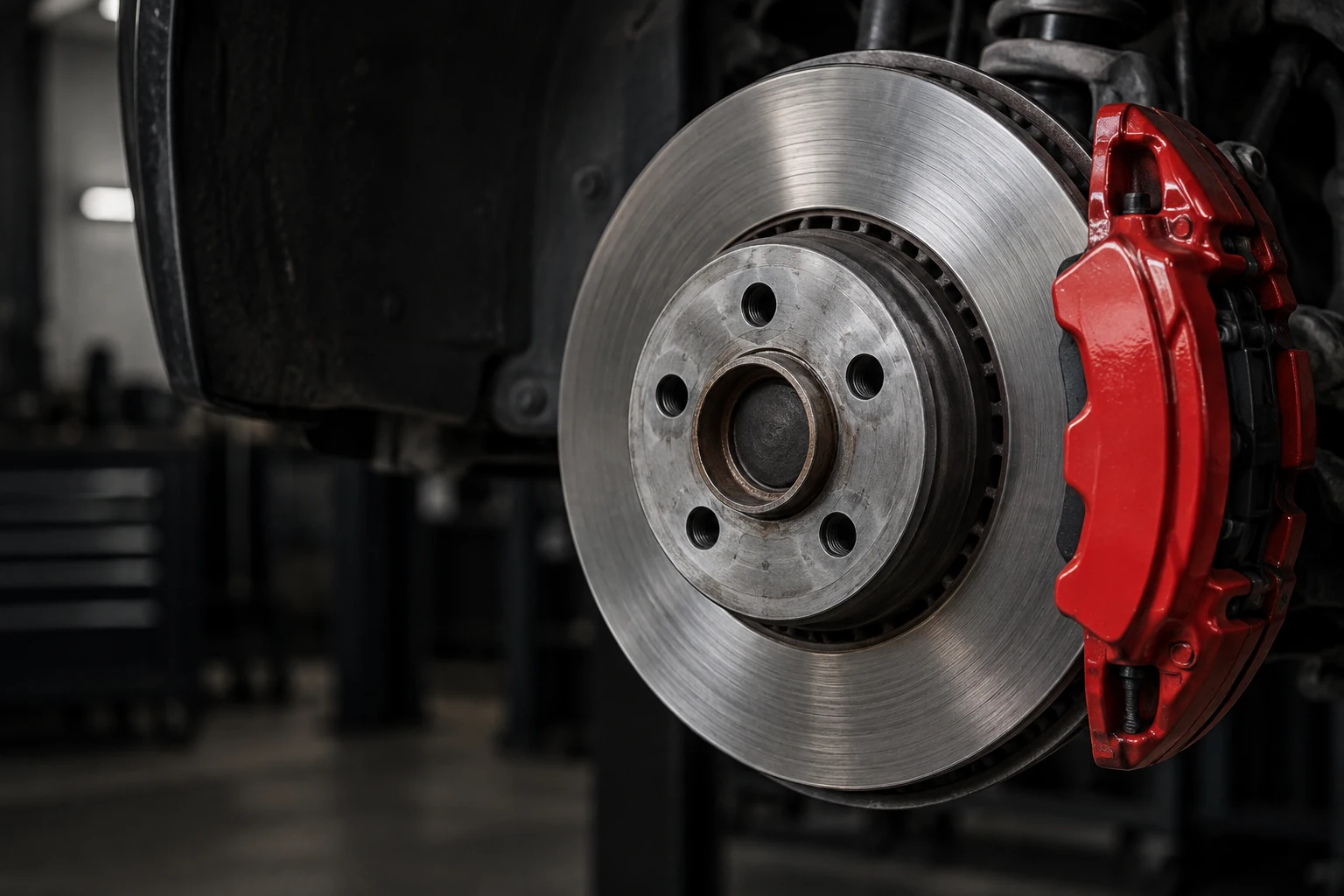
Brake service illustration
What does your BMW need?
Choose a service or tell us the symptom.
A brake service can mean several different jobs. Choose the work already identified on your car, or start with an inspection for noise, vibration, a warning or a change in braking response.
Replace worn friction material on the affected axle after checking both inner and outer pads. The quote should identify front or rear pads, any required wear sensor and the condition of the existing discs.
Investigate disc wear, scoring or braking vibration. Disc thickness and condition help determine whether new discs are needed alongside pads; a vibration complaint also needs checks beyond the disc surface.
For a parking brake that will not hold, release or operate normally. The work depends on whether your BMW uses a mechanical or electronic arrangement, so the repair starts with the fitted system.
A worn pad sensor and a wheel-speed sensor perform different jobs. Use this service for a pad-wear warning or sensor concern, with the actual component identified before ordering.
For ABS, stability-control or electrical warnings. Fault-code and circuit checks help distinguish a sensor, connection, supply or control-unit fault before any replacement is proposed.
Restore stop-lamp operation when a bulb, lamp assembly, wiring or related electrical fault is involved. Brake lighting is separate from the hydraulic system that slows the car.
A pad-wear reminder gives a reason to inspect the pads; it does not describe the condition of every brake component. We compare wear across the axle, check the discs and identify any sensor or fitting hardware required. Pads and discs are quoted as separate items when only one needs replacement.
If one pad is wearing much faster than another, the caliper movement and related hardware need attention as well. Simply fitting a new set can leave the cause of uneven wear unresolved.
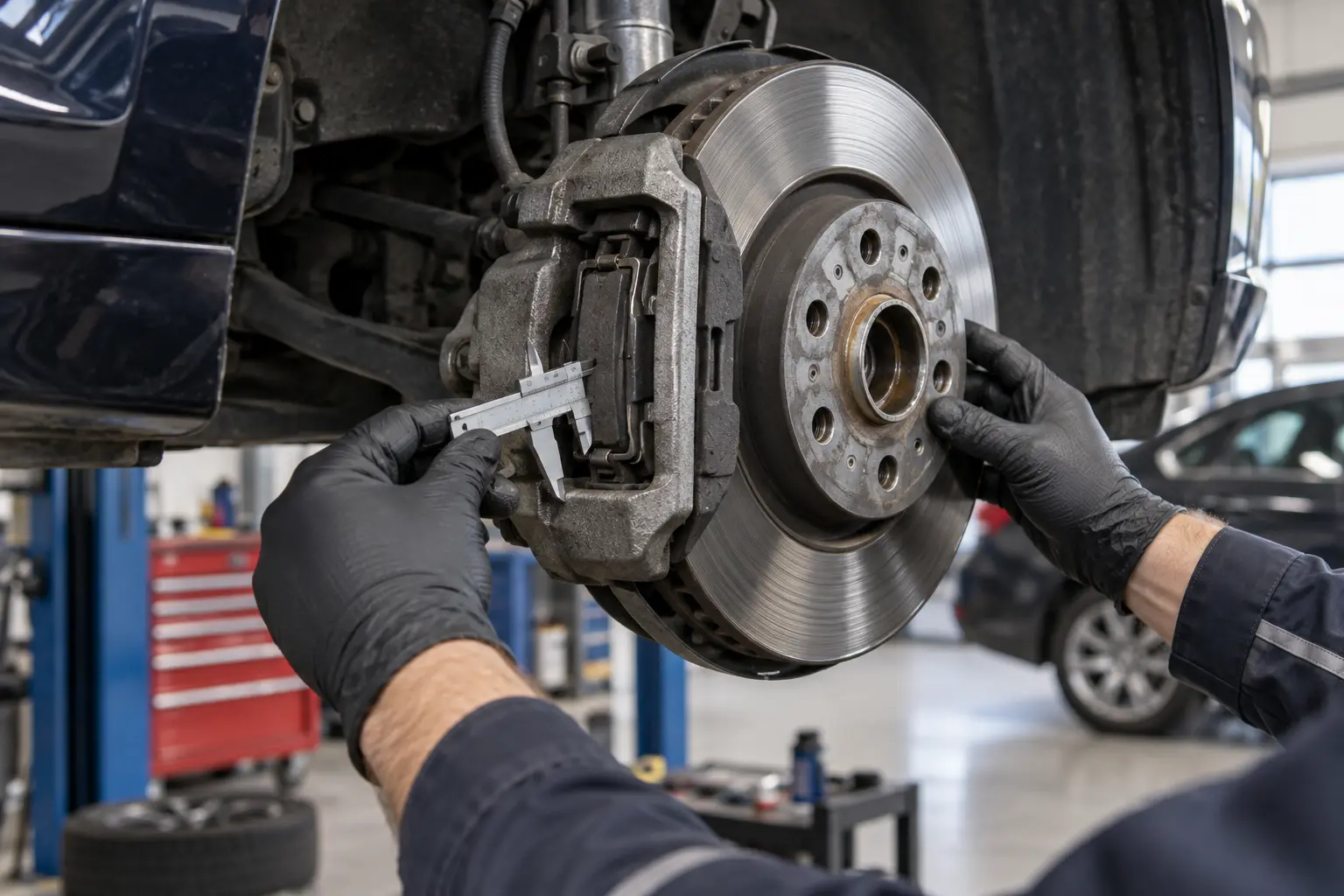
Tell us whether the noise occurs on the first stop, after the brakes warm up or throughout a journey. A squeal can have several causes, while grinding warrants prompt inspection. Vibration can involve disc condition, hub seating or another wheel and suspension issue.
The assessment should connect the symptom to a finding, such as measured wear, an uneven surface or a sticking component. A description of “warped discs” alone is not enough to decide the complete repair.
A pedal that sinks, a fluid leak or a clear loss of braking ability needs urgent attention. Stop driving and arrange assistance. New pads, a reset or a routine fluid change should not be treated as an automatic cure for a hydraulic fault.
A warning message should be read together with the car’s behavior and the relevant inspection findings. Share the exact wording if convenient, but do not drive the car simply to reproduce a dangerous symptom.
| Service | Planning range in AED | Work to identify in your quote |
|---|---|---|
| Front brake pads | 450–700 | Front-axle pads and fitting; identify any separately required sensor or discs. |
| Rear pads and wear sensor | 500–800 | Rear-axle pads, the required pad-wear sensor and fitting; discs assessed separately. |
| Brake fluid change | 350–500 | Compatible fluid, replacement procedure and service checks; hydraulic fault repairs are separate. |
| One ABS wheel-speed sensor | 300–600 | One diagnosed sensor replacement and fitting; additional wiring or module work is separate. |
These are planning estimates, not fixed offers for every BMW. Your written quote confirms VAT treatment and the final payable total. Parts choice, brake size, sensor requirements and additional repairs can change the price. A pad-wear sensor and an ABS wheel-speed sensor are different items.
Brake fluid replacement is a maintenance job in its own right. It renews the fluid used to transmit hydraulic pressure; it does not replace worn pads or discs. Likewise, fitting pads does not automatically mean that the brake fluid has been changed.
Use the vehicle’s service information and maintenance history to establish when the fluid is due. We select the fluid specification and replacement procedure for the fitted braking system, replace the old fluid and check the completed work. Any service reminder is updated after the applicable work has been completed.
If there is a leak, a spongy pedal or an ABS-related concern, explain that when booking. The system may need fault diagnosis and repair before a routine fluid service can be completed properly.

A model name does not establish disc diameter, caliper type or the correct pad set. Standard and optional brake packages can differ on cars with similar badges. The workshop checks the installed equipment and parts details before the order is finalized.
Genuine BMW parts and suitable alternatives should be compared by the actual application and specification. The quotation should name the chosen parts and explain their coverage. A brand being well known does not make every product in its range suitable for your car.
New pads can be appropriate when the discs remain within the applicable limits and are in suitable condition. Discs that are below their service limit, damaged or otherwise unsuitable need a different proposal. The inspection should make that distinction clear.
Seized or damaged calipers, hoses, fittings and parking-brake components are additional repairs. Where work is combined, the quotation should reflect shared access rather than charging the same removal work twice.
Your repair summary should identify the axle, pads or discs replaced, relevant sensors and any hydraulic or parking-brake work. A front-pad job and a complete four-wheel brake repair are different purchases.
Checks follow the repair performed: pedal response and leakage where relevant, component operation, applicable warnings and a road test when the vehicle is safe to drive. Clearing a warning alone does not establish that the original fault has been repaired.
Where new friction components need a bedding-in procedure, follow the advice for the actual parts fitted. Ask about an unfamiliar noise or change in feel after collection rather than assuming it is part of normal bedding-in.
For model-specific pad work, see X5 brake pads or 3 Series brake pads. The relevant page helps define the vehicle and repair; final parts matching still follows the installed brake system.
Yes, when inspection shows that the discs remain within the applicable limits and are in suitable condition. Worn or damaged discs, uneven pad wear and caliper problems can change the repair.
Only when the agreed service includes a brake fluid change. Pad replacement, disc replacement and fluid replacement are separate tasks, so the quote should list the work you are buying.
The fluid must meet the specification for the fitted braking system. The workshop checks that requirement rather than choosing only by the model badge or treating every DOT-rated fluid as interchangeable.
The cause needs checking. A pad-wear reminder, an ABS warning and a parking-brake fault can involve different systems. A reset is appropriate only after the underlying service or repair has been completed.
A straightforward pad or fluid service is usually less involved than a caliper, hydraulic or electronic parking-brake repair. The workshop gives a time estimate after the work and parts availability are established.
Tell us the service or the symptom. Arrange your BMW’s next brake-service visit at our Al Quoz 4 workshop.
Call or message BMW Garage
+971 56 464 6081