
Best BMW 320i Turbo Replacement Service in Dubai
What happens when your BMW 320i starts losing power in the middle of Dubai traffic, and you hear a strange whistle from under the hood? Most drivers shrug it off until it gets worse. A failing turbo is not just about weak acceleration. It can quietly damage your engine and burn a hole in your wallet if ignored. At our Dubai-based garage, we deal with BMW 320i turbo replacement almost every week. Whether it is sudden boost pressure loss, ongoing smoke issues, or repeated turbocharger failure, these problems demand attention. Especially in Dubai’s climate, where turbo wear is more aggressive due to heat and dust. This page walks you through everything: real problems, actual solutions, and how we handle it professionally without guesswork.
Common BMW 320i Turbocharger Problems in Dubai
Your turbo is not just a performance booster; it is one of the hardest-working components in your BMW 320i, especially in Dubai’s heat. When it starts to fail, it does not fail quietly. From the engine response to the exhaust pipe, you start noticing things feel off. Here are six very real issues we deal with every week, and they are often the reason why drivers eventually need a BMW 320i turbo replacement.
- Turbo Lag on Acceleration
When your car feels sluggish or takes too long to build power, it could mean a delayed boost response. We often trace this to wastegate actuator issues, clogged boost pipes, or a compressor wheel starting to wear. - Whistling or Siren Noise
A high-pitched whine during acceleration is not just annoying; it usually points to turbo bearing wear or air escaping from loose clamps or cracked boost hoses. This sound tends to get louder with time and faster driving. - Oil Leaks Around Turbo
Noticed fresh oil on the driveway? If it is dripping near the turbo oil return line or feed pipe, there is a good chance your turbo seals are worn. This oil loss not only damages the turbo but also creates fire hazards if ignored. - Smoke from the Exhaust
A smoky exhaust, especially blue or gray smoke, often comes from oil leaking past failing turbo seals into the intake. This can damage your intercooler, coat the intake manifold, and cause knock-on effects to the engine. - Turbo Error Codes During Scan
Faults like P0299 (underboost) or P0234 (overboost) usually show up when the turbo system loses efficiency. It could be the wastegate, actuator, or even a boost pressure sensor that is out of calibration. - Accelerated Turbo Wear in Dubai
The extreme heat, stop-and-go traffic, and fine dust in the air all attack your turbo from every angle. We see compressor blades worn down by sand, blocked air filters, and dried-out seals, leading directly to premature turbo failure.
When these problems start showing up, it is usually a matter of when, not if, your turbo will fail. Getting a timely BMW 320i turbo replacement is often the only way to stop the damage from spreading and bring your engine back to full strength.
When Does a BMW 320i Need Turbo Replacement?
Turbo failure is not always sudden, but once it starts, it rarely fixes itself. Knowing when to replace your turbocharger can save your engine, your money, and your time on the road. In Dubai’s driving conditions, the decision between repair and full BMW 320i turbo replacement becomes critical.
Repair vs. Turbo Replacement
Wondering if you can fix the turbo instead of replacing it? That depends on what has failed inside the unit.
- Small issues like oil line leaks or actuator faults can sometimes be repaired.
- But if the turbo core is worn or shaft play is detected, repair is risky.
- Rebuilt units often fail sooner, especially in Dubai’s heat.
- A complete BMW 320i turbo replacement restores long-term reliability without guesswork.
Turbo Lifespan What to Expect
Even the best turbos have a limit, and in Dubai, that limit comes quicker than most expect.
- Normal lifespan: 80,000 to 140,000 miles.
- In Dubai, lifespan drops due to heat, dust, and traffic stress.
- Poor oil quality and infrequent service reduce turbo life even further.
- Once it wears, no patch job will bring it back to full performance.
When Repair is No Longer Worth It
Some problems go beyond bolts and seals. These signs often mean your turbo is done for.
- Unstable boost or repeated underboost/overboost codes.
- Whining sound or grinding during acceleration.
- Oil leaking around the turbo housing or intercooler piping.
- Cracks or visible wear on the turbine housing.
- Carbon buildup inside the EGR or intake system that affects airflow.
System Failures That Lead to Turbo Damage
Turbo failure is rarely an isolated issue. Often, it is triggered by something else breaking down first.
- Oil contamination clogs turbo lines and ruins bearings.
- Cooling failure leads to overheating and internal warping.
- Restricted intake or EGR: increases turbo load, reduces efficiency.
- These underlying problems make a BMW 320i turbo replacement necessary, even if the turbo is not fully broken yet.
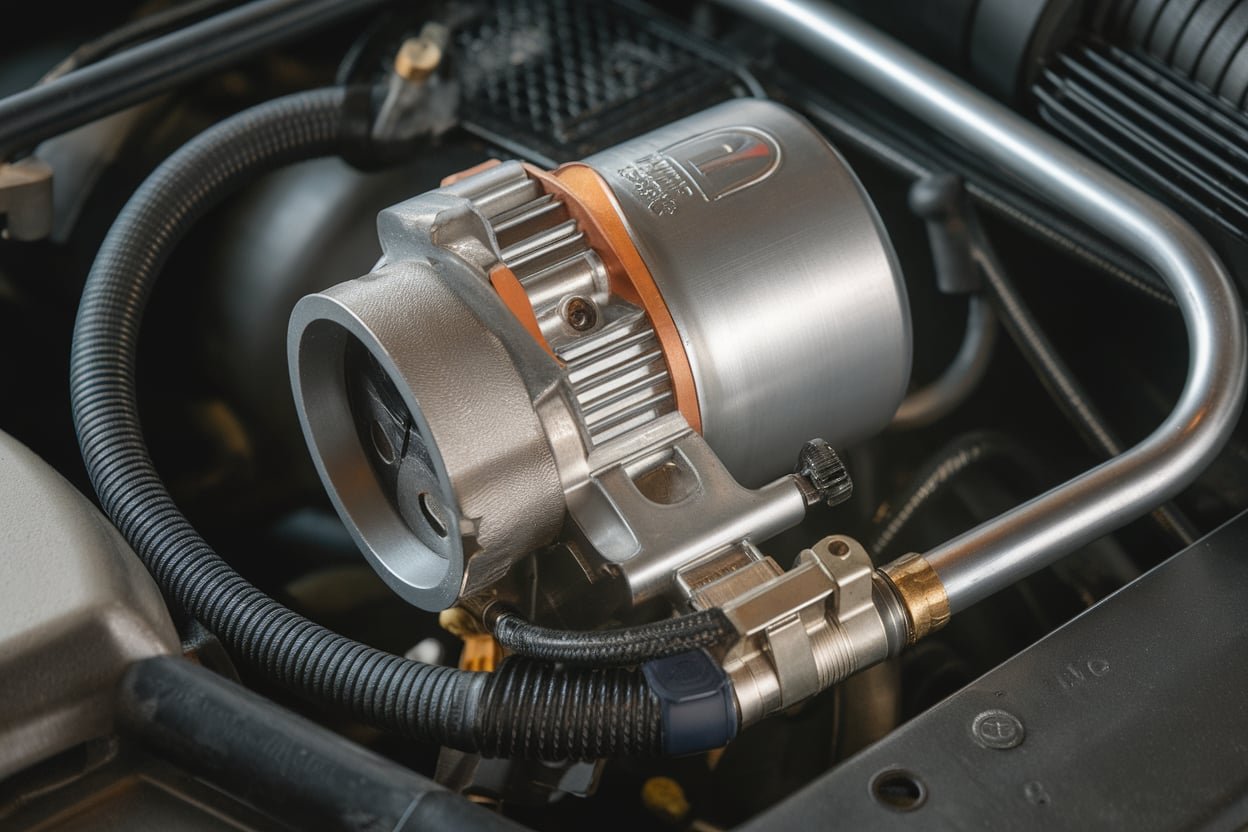
Our BMW Turbo Replacement Process
Turbo replacement is not just about removing parts; it is about precision, pressure calibration, and protecting your engine from future failure. Every BMW 320i turbo replacement we handle follows a clear, controlled process that ensures reliability and long-term performance.
- Turbo Check & Scan: We start with a test drive and diagnostic scan. If the car shows underboost, smoke under load, or rough acceleration, we dig deeper. A visual inspection follows, checking for oil leaks, hose cracks, and carbon residue.
- Removal of Turbo Unit: Once confirmed, we remove the intake manifold, exhaust connections, and isolate the turbo. We mark sensor positions and carefully disconnect oil and coolant lines to prevent contamination or damage during refit.
- Turbo Inspection: Before replacing, we inspect the unit for shaft play, bearing failure, and oil residue inside the housing. If the wastegate actuator is stuck or damaged, or the turbo fins show wear, the part is marked for replacement.
- New Turbo Installation: We install a fresh unit, either original or high-quality aftermarket, based on your car’s engine variant (e.g., N20, B48). We fit new gaskets, seals, and turbo oil feed lines, ensuring nothing is reused or compromised.
- ECU Calibration: The ECU is reset. We perform a boost pressure adaptation, confirm sensor alignment, and recheck live readings. This step ensures your new turbo does not trigger any error codes or misfire risks.
- Final Road Test: After installation, we run a full live data check under load. This includes boost curve analysis, response under throttle, and inspection for any leaks or smoke. If everything runs clean, the car is ready to return, fully boosted and fully tested.
Each of these steps is handled with precision, not shortcuts. A proper BMW 320i turbo replacement is more than just a parts swap. It is a detailed process that ensures your engine delivers the power, smoothness, and boost response it was built for, especially on Dubai’s demanding roads.
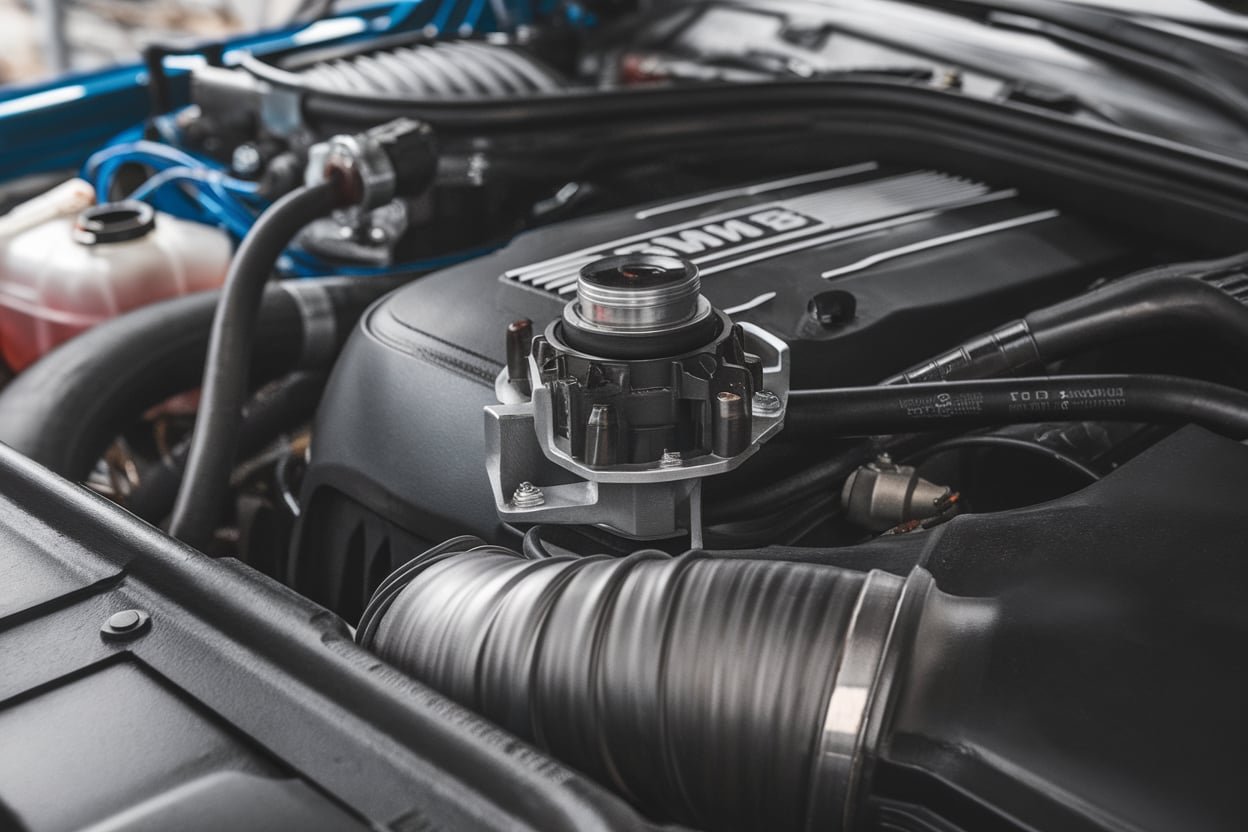
Turbo Replacement Parts We Use for BMW 320i
A proper turbo replacement is only as good as the parts used. For every BMW 320i turbo replacement, we follow a strict parts protocol: no reused components, no shortcuts, and no guesswork.
- Genuine BMW Turbochargers
We install original turbo units designed for BMW 320i engines like the N20 and B48, ensuring precise boost levels and thermal resistance. - High-Performance Aftermarket Options
For those who want alternatives, we offer Melett, Garrett, and BorgWarner turbos,built for Dubai road conditions and high-load performance. - New Gaskets & Seals
Every BMW 320i turbo replacement includes new metal-core gaskets, compressor seals, and manifold rings to avoid pressure loss and overheating. - Turbo Oil Feed and Return Lines
Fresh oil pipes are fitted to prevent clogging, overheating, or bearing failure,critical for maintaining oil pressure inside the turbo. - Vacuum Actuators and Clamps
We replace wastegate actuators, V-band clamps, and related hardware to ensure proper valve function and secure turbo mounting. - Engine Code Matching
Turbos are selected based on exact engine codes (e.g., N20B20, B48B20) to guarantee fitment, ECU compatibility, and proper boost regulation.
Every BMW 320i turbo replacement we perform uses hand-selected components tested for Dubai’s demanding driving environment, because long-term performance depends on doing it right from the start.
Additional Component Checks During Turbo Replacement
During every BMW 320i turbo replacement, we inspect related systems that directly impact turbo performance, oil flow, and airflow pressure. Ignoring these checks often leads to early failure of the new unit.
- Intercooler Leak Test
We check for internal leaks or airflow loss in the intercooler, which affects boost pressure stability and cooling efficiency. - Downpipe & Cat Converter Condition
A restricted downpipe or damaged catalytic converter increases exhaust pressure, putting extra load on the turbo. - Oil Cooler & Return Flow Check
Blocked oil return lines or sludge buildup in the cooler can starve the new turbo and reduce bearing life. - PCV & Crankcase Pressure Test
A faulty PCV valve or ventilation blockage can push oil into the intake, damaging the turbo and sensors. - Air Intake Pressure Flow
We inspect intake ducting, air filter condition, and MAF sensor readings to ensure balanced airflow and proper turbo spooling.
A complete BMW 320i turbo replacement is more than just swapping hardware. These component checks ensure your new turbo runs under the right pressure, oil flow, and airflow conditions from day one.
After Replacement Break In and Precautions
Once a BMW 320i turbo replacement is completed, following the correct break-in process is essential. These steps reduce early stress on the new unit and prevent premature wear.
- Engine Oil Flush
We always perform a full oil flush after turbo installation to remove any metal particles or residue from the old turbo system. - Controlled Driving
For the first few hundred miles, avoid hard acceleration. Let the turbo spool gradually and keep engine RPM moderate to allow proper bedding. - Boost Monitoring
Keep an eye on boost pressure through live data or dashboard behavior. Sudden spikes or hesitation may signal calibration issues or a system leak. - Throttle Management
Avoid aggressive throttle or long high-speed pulls during the first 500 miles. The new turbo needs thermal and mechanical balance under light load.
Following these post-install steps helps extend the life of your BMW 320i turbo replacement. Skipping them increases the risk of failure,even with brand-new parts.
Turbo Replacement vs Turbo Rebuild in Dubai
Not all turbo solutions offer the same outcome. In Dubai’s climate, choosing between a rebuild and a full BMW 320i turbo replacement comes down to long-term value and reliability.
Dubai Driving Conditions
Rebuilt turbos often struggle in Dubai’s harsh driving environment.
- Extreme heat and traffic load reduce rebuild lifespan.
- Frequent idling, long commutes, and high-speed bursts increase turbo stress.
- Sand and dust accelerate internal wear in non-factory components.
Performance Reliability
Consistency matters,especially under load and heat.
- Rebuilds often lack proper balancing, leading to noise and vibration.
- Delays in turbo spool-up affect throttle response.
- Cheap internals can fail under daily pressure, triggering boost faults.
Long Term Cost Impact
A cheaper repair now can lead to higher costs later.
- Rebuilds may last 10,000–20,000 miles before failing again.
- A full BMW 320i turbo replacement offers a longer service life with fewer return visits.
- Reduces future labor, avoids multiple downtime periods, and protects overall engine health.
Importance of Timely Turbo Replacement for Engine Health
Delaying a needed BMW 320i turbo replacement often results in damage beyond the turbo itself. What starts as a boost issue can escalate into major engine repairs.
- Catalytic Converter Damage
A leaking or overboosting turbo can send unburnt oil into the exhaust, clogging or overheating the catalytic converter. - Oil Starvation Risk
A blocked or leaking turbo can disrupt oil flow, leading to bearing failure inside the engine or turbo core. - Exhaust Manifold Overheating
Excess heat from a failing turbo stresses the exhaust manifold, causing cracks, warping, or gasket failure. - Chain Reaction Failures
Turbo issues left unresolved often trigger sensor faults, poor fuel economy, and EGR system stress, leading to more expensive downstream repairs.
A delayed BMW 320i turbo replacement does more than affect performance; it compromises your engine’s core systems. Replacing it at the right time protects your engine, your budget, and your driving experience.
Cost of BMW 320i Turbo Replacement in Dubai
Before committing to any repair, it helps to know exactly what you are paying for. Here is a breakdown of the estimated cost for a complete BMW 320i turbo replacement at our Dubai garage.
Service Item | Estimated Cost (AED) | Remarks |
New Turbo Unit (OEM or Aftermarket) | 3,800–7,200 | Based on engine type and turbo brand |
Labor Charges | 900–1,200 | Includes removal, installation, and ECU programming |
Oil Feed & Return Line Replacement | 350–550 | Mandatory with every turbo replacement |
Gaskets, Seals & Hardware | 200–350 | Turbo to manifold, downpipe seals, clamps |
Diagnostic Scan + Boost Calibration | 200–400 | Live data testing, sensor reset, pressure adjustment |
Total Estimated Cost | 5,500–10,000 | Final price based on inspection and part selection |
Every BMW 320i turbo replacement is unique to your car’s setup. For a detailed, accurate quote, we recommend a quick on-site inspection. Our pricing is fully transparent no hidden charges, no unnecessary extras.
FAQs BMW 320i Turbo Replacement
Does a bad turbo reduce fuel economy?
Yes. A failing turbo affects the air-to-fuel ratio, causing the engine to burn more fuel. Replacing it restores fuel efficiency, especially during acceleration and highway cruising.
Is an ECU reset needed after turbo replacement?
Yes. After a BMW 320i turbo replacement, we reset the ECU to ensure proper boost calibration and remove any residual error codes.
Will a new turbo improve throttle response?
Yes. A worn turbo causes lag. A new unit improves boost delivery and makes throttle response smoother and quicker.
Can I install a performance turbo instead of stock?
Yes, depending on your engine type. We offer Garrett and Melett turbos for some models. Tuning may be required for upgraded setups.
How do I know the new turbo is working properly?
After installation, we test boost pressure, scan for fault codes, and perform road tests to confirm proper turbo performance.
Do you offer a warranty after turbo replacement?
Yes. We provide a 6- to 12-month warranty on the turbo unit and labor, depending on the brand and service scope.
Can turbo issues affect the transmission?
Indirectly, yes. Poor boost control can stress the transmission during shifts. Replacing the turbo helps maintain drivetrain balance.
Book Your BMW 320i Turbo Replacement in Dubai
If your BMW 320i shows signs of boost loss, oil leaks, or unusual noise, it is likely your turbo is failing. Ignoring these issues can lead to engine overheating, catalytic converter damage, or oil starvation. A complete BMW 320i turbo replacement prevents further damage and restores safe, reliable performance, especially under Dubai’s harsh conditions.
We use engine-specific turbochargers, durable fitment parts, and a proven step-by-step process. Whether it is the N20 or B48 engine, our team ensures every turbo is installed, calibrated, and tested to factory-level precision. Book your inspection today and get back to smooth, responsive driving without risking costly engine repairs.