Coolant-leak repair
For repeated coolant loss, residue around joints or a fresh leak. Inspection and appropriate pressure testing help locate the source before a hose, tank, seal or larger component is replaced.

BMW Garage · Al Quoz 4
Arrange diagnosis for coolant loss, temperature warnings or a confirmed cooling-system fault. Compare radiator, water-pump, leak and overheating services, with the repair matched to your BMW’s actual cooling circuit.
Stop in a safe place, switch off the engine and arrange assistance if the car is overheating or losing coolant rapidly. Do not open a hot coolant reservoir. A top-up does not repair a leak or prove the car is ready to drive; the source of the temperature problem needs checking.
Some visits begin with an identified part, while others begin with a warning. Choose the closest service below. If the cause is uncertain, book diagnosis rather than committing to a replacement from the symptom alone.
For repeated coolant loss, residue around joints or a fresh leak. Inspection and appropriate pressure testing help locate the source before a hose, tank, seal or larger component is replaced.
For a radiator confirmed to be leaking, damaged or unable to perform correctly. The quote identifies the required radiator and the associated coolant, seals, fitting and post-repair checks.
For a confirmed pump leak or circulation fault. The fitted pump type, control system and access determine the work; not every BMW uses the same engine-cooling pump.
For a temperature warning or overheating episode whose cause is not yet known. The assessment follows coolant level, leakage, circulation, heat rejection and the reported driving conditions.
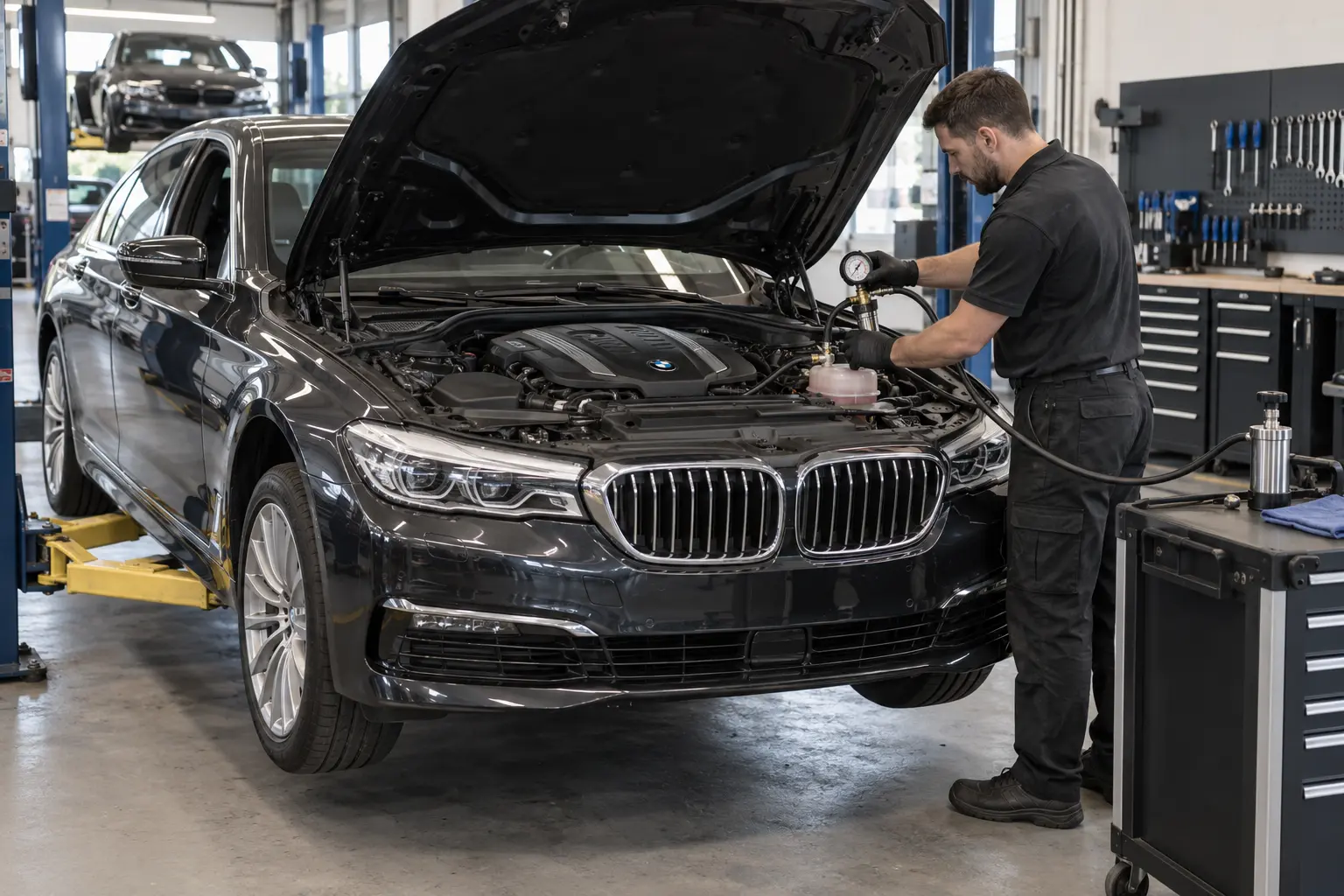
Repeated coolant top-ups deserve an investigation even when there is no obvious puddle. A leak can occur only when the system is warm or under pressure, and fluid may collect behind covers before reaching the ground.
We inspect accessible hoses, joints, the expansion tank, radiator and relevant pump or housing areas. Residue can help locate the source, but its position must be checked against a fresh leak. Old spilled coolant is not proof that the nearest component has failed.
An appropriate pressure test helps assess whether the circuit holds pressure and where external leakage appears. If the visible checks do not explain the loss, the next test follows the findings instead of replacing several parts together without a reason.
A concern that appears in traffic calls for checks of temperature behavior, fan operation and the rest of the cooling circuit. It does not automatically identify a fan fault. Low coolant, circulation problems and inaccurate sensor information can also influence the assessment.
The workshop compares the reported conditions with inspection findings and relevant live readings. The aim is to establish what the system is doing before recommending the part that should be changed.
A temperature rise under load needs assessment of the complete affected circuit. Coolant loss, restricted heat rejection, circulation and thermostat operation are among the relevant areas. A clean-looking reservoir or a running fan does not rule out the other possibilities.
If the car has already overheated, tell the workshop what happened and whether it was driven afterward. That history helps determine whether checks beyond the initial cooling repair are necessary.
Low-level and temperature warnings are different messages. A sensor, connection or control issue may require electrical testing, but the actual coolant level and condition of the circuit still need attention. Fault codes help direct checks; they are not a parts order by themselves.
Share a photo of the message if it is available. There is no need to run an overheating engine again to capture one.
A hose replacement, radiator change and water-pump repair are different jobs. The affected circuit, access, part selection and associated coolant work determine the total. A single “cooling-system repair from” price cannot usefully represent all three.
Your quote should identify the failed component, the parts being supplied, fitting, coolant and relevant seals or hardware. Where diagnosis is charged separately, its allowance should be clear before testing proceeds. The final payable amount should include the applicable VAT treatment.
For a diagnosed part, use the relevant service above to discuss a complete fitted quote. When two repairs share access or a coolant refill, the proposal should account for that shared work once.
The coolant and mixture must suit the vehicle’s requirements. Color alone is not a reliable specification, and a bottle that looks similar is not enough to establish compatibility. Mention any previous top-ups or mixing when arranging the service.
A coolant change can be part of maintenance or part of a repair. It will not cure a leaking radiator, a failed pump or another mechanical fault. Contamination or an overheating history may require additional investigation before the system is refilled.
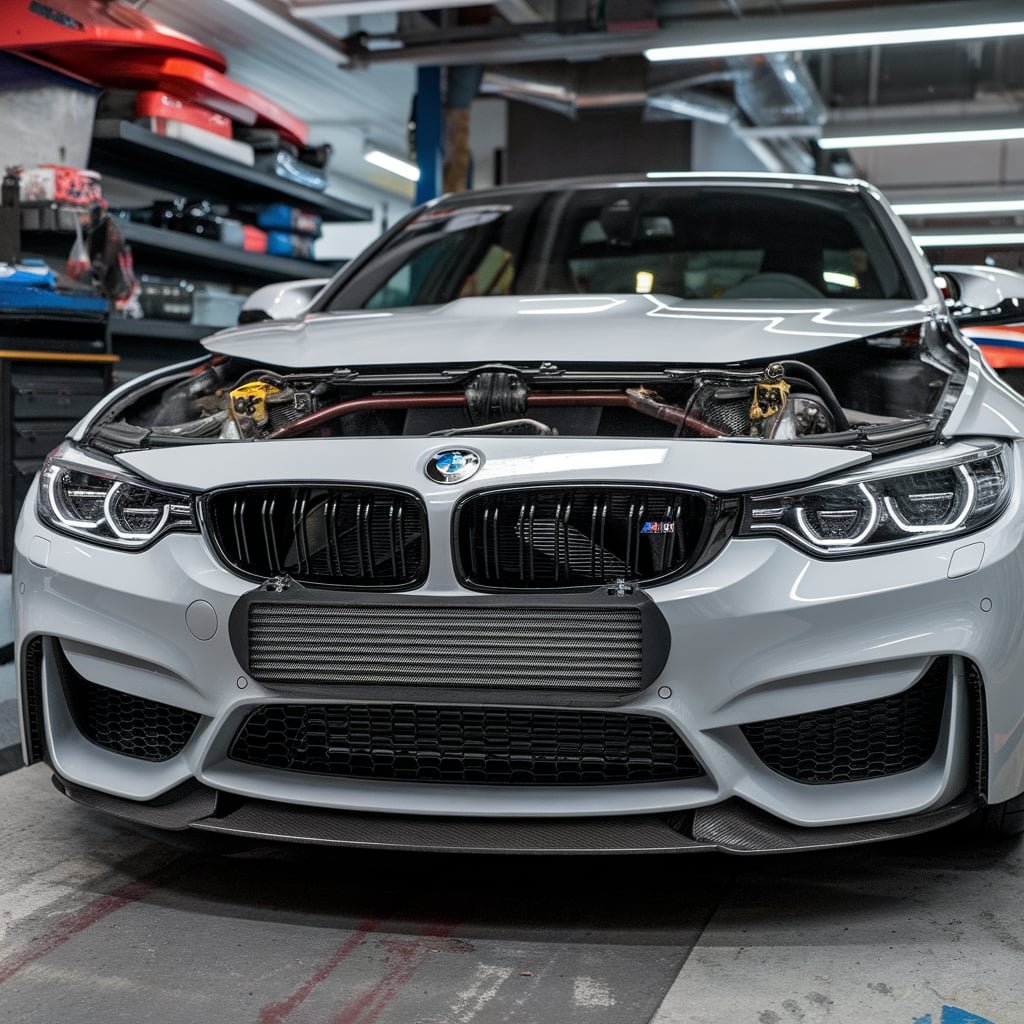
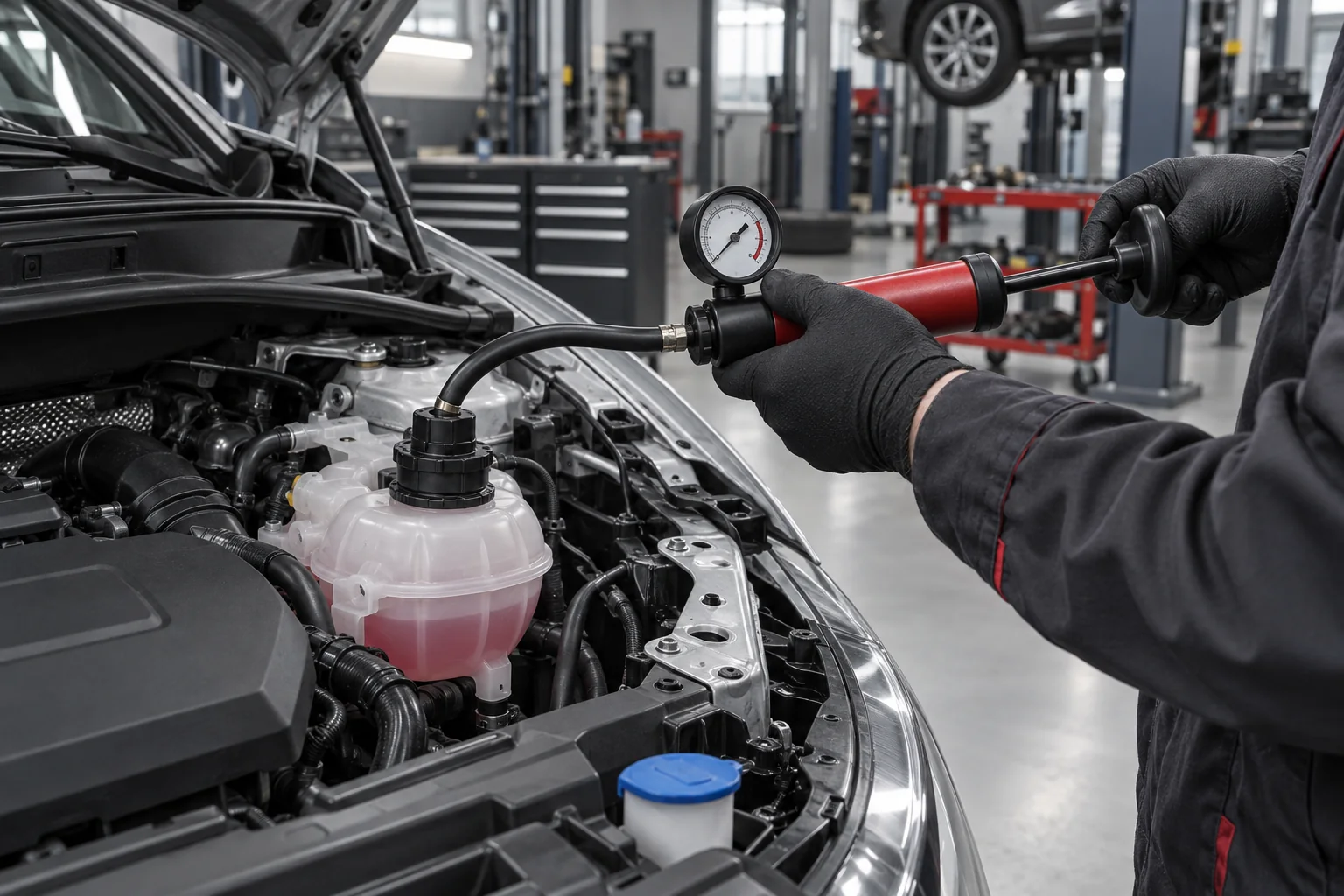
Refilling and air removal follow the procedure for the affected system. The completed repair is checked for leakage and appropriate operation, including relevant temperature and component checks. The exact sequence varies with the installed equipment.
Some BMWs have more than one cooling circuit. Hybrid battery, charge-air and engine cooling should not be treated as interchangeable jobs. The workshop identifies the circuit involved and explains any additional specialist work before it is included in the repair.
For an X5 with a recurring loss, start with X5 coolant-leak diagnosis. A confirmed pump or radiator issue has its own water-pump service or radiator replacement page. The exact engine and fitted cooling system still determine the parts.
A diagnosed pump fault can be discussed through the 3 Series water-pump service. For an unexplained warning, describe the concern first. A similar model badge does not guarantee the same pump, thermostat or repair access.
A top-up restores the level only. Repeated loss needs diagnosis, and an overheating car should not be driven on the assumption that adding coolant has repaired the cause.
Not necessarily. Leakage, circulation, thermostat operation, the radiator, fan control and other findings can lead to different repairs. The pump should be replaced when the checks establish the relevant fault.
Where the seal is the confirmed cause and the surrounding component remains serviceable, a seal repair may be appropriate. Damage to the housing or assembly can require replacement instead.
No. Engine cooling controls the temperature of the engine, while the AC system cools and conditions cabin air. The systems can interact, but they use different components and service procedures.
An obvious external leak may be found relatively quickly. An intermittent temperature concern, concealed leak or overheating-damage assessment can take longer. The workshop explains the planned checks and repair timing for the actual findings.
Tell us your BMW model and whether the concern is coolant loss, a temperature warning or an identified part. Book at our Al Quoz 4 workshop. If the vehicle is overheating, arrange assistance before attempting to bring it in.