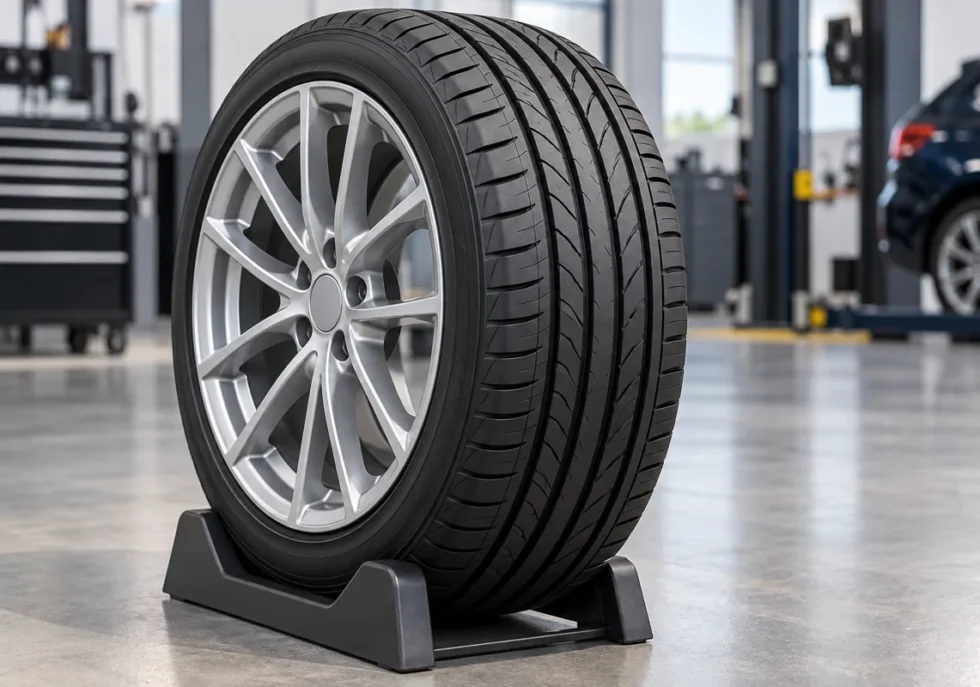
This BMW tire guide starts with fitment because the best tires for your BMW are the ones that match its approved fitment and your driving needs. Start with the vehicle placard, wheel specification and both axles, then compare wet braking, ride comfort, noise and performance using current data for the exact product.
Check fitment before choosing a brand
- Read the vehicle’s tire placard and VIN-specific wheel and tire information.
- Confirm wheel diameter, width and any approved front-to-rear differences.
- Check required load and speed ratings, including any additional load specification.
- Identify run-flat or conventional construction and the vehicle’s emergency mobility provisions.
- For xDrive, verify the applicable tire matching and rolling-circumference requirements.
- Check both axles; a photo of one tire may not describe the complete setup.
A model family such as 3 Series or X5 can use several wheel packages. Do not order a size solely because it appears in a generic model list. An existing tire is useful evidence, but it may itself be incorrectly fitted.
Read the sidewall without treating it as a recommendation
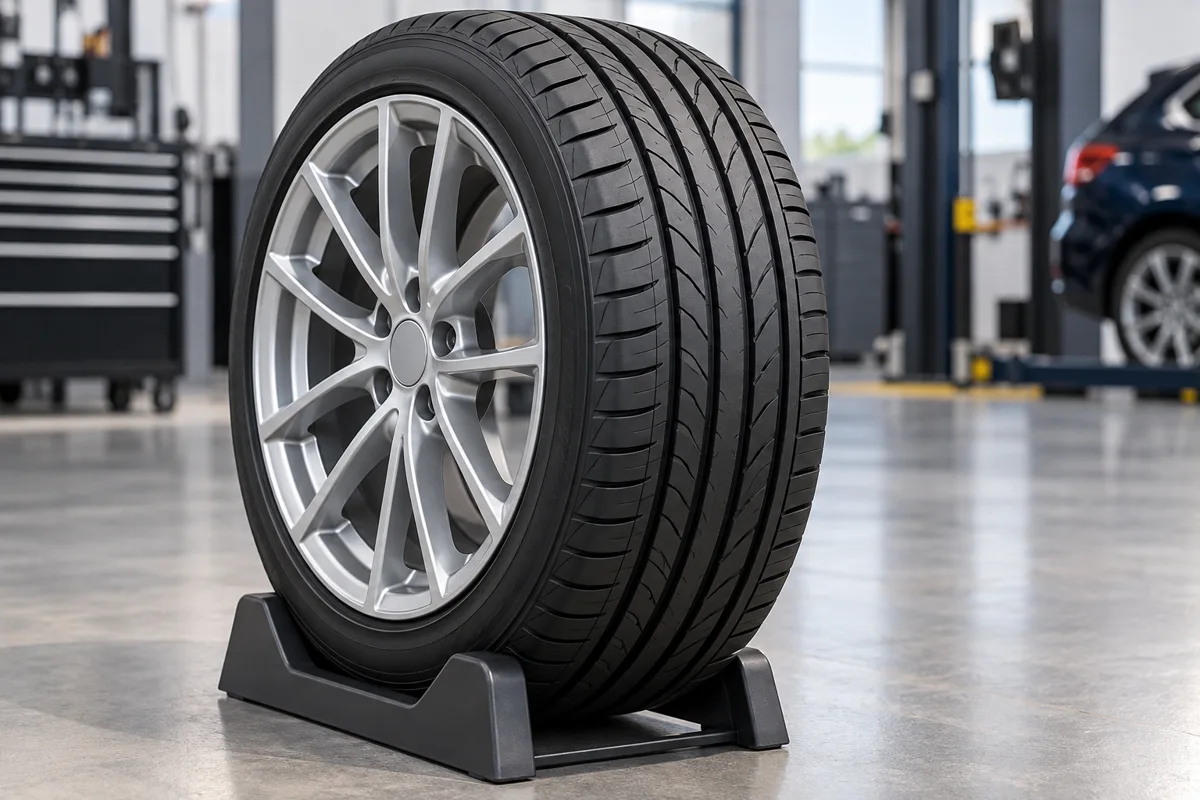
For illustration, 245/40 R18 describes a nominal 245 mm section width, an aspect ratio of 40 percent, radial construction and an 18-inch rim diameter. This example explains the marking; it is not a fitment recommendation for your BMW.
| Marking or detail | What it tells you | What it does not establish |
|---|---|---|
| Width, aspect ratio and rim diameter | The tire’s nominal dimensional specification. | That the tire fits the wheel or is approved for your vehicle. |
| Load index and speed symbol | The product’s rated capabilities under defined conditions. | Permission to use a lower rating than the vehicle requires or exceed road limits. |
| Run-flat identification | A manufacturer-specific extended-mobility construction. | Unlimited driving after a puncture or identical limits across products. |
| Rotation arrow or Outside marking | The required direction or outward-facing side where marked. | That any axle-to-axle rotation pattern is suitable. |
| BMW star marking | A BMW-specific approved tire specification for relevant applications. | Universal fitment or proof that every other tire is inferior. |
Read the full description, including load and speed ratings and any construction or homologation identifiers. Two tires with the same headline size can have different specifications. Ask the supplier to confirm the exact catalog item on the quotation.
Compare comfort and performance fairly
| Your priority | What to compare | Practical trade-off |
|---|---|---|
| Daily comfort and low noise | Exact-product ride and noise information in the required size. | A different construction or wheel package can change ride quality; fitment still controls. |
| Wet-road confidence | Current wet-braking and water-dispersion evidence for the product. | Tread condition, pressure, standing water and speed remain important. |
| Steering response and performance | The intended use, approved specification and relevant performance data. | Sharper response can come with a firmer ride or different wear characteristics. |
| Puncture mobility | Run-flat requirements or a suitable conventional-tire recovery plan. | Extended mobility has limits and does not make a damaged tire safe in every situation. |
Summer tires are not generally poor rain tires. Continental’s tire-type guidance describes summer tires as suitable for dry and wet conditions in their intended temperature range. Wet grip depends on the specific tire and conditions, not simply the seasonal label.
An all-season label is not a guarantee of better Dubai summer performance. Winter capability is a separate consideration for a trip into cold conditions. Compare relevant current manufacturer data and suitable independent testing for the exact product rather than relying on a brand hierarchy.
A change to wheel diameter or tire profile needs an approved fitment assessment, including clearance and the vehicle’s requirements. Do not choose a larger wheel merely because a different BMW uses it. Ask about the effect on ride, replacement cost and puncture support.
Give xDrive tire matching extra attention
For xDrive, check the applicable BMW requirements for tire type, size, wear and rolling circumference across all four wheels. Nominal sidewall size alone does not establish that a mixed set is suitable. Factory-approved staggered sizes can be correct when fitted to the intended axles.
BMW’s xDrive shudder diagnostic bulletin identifies incorrect fitment and uneven wear as relevant checks for the listed vehicles. It directs technicians to vehicle-specific tolerances; it does not establish one universal tread-depth or circumference limit for every BMW.
When replacing one damaged tire, ask the workshop to measure the remaining set and explain whether the proposed replacement meets the applicable requirements. A single-tire price is not enough to decide whether one, a pair or a complete set is appropriate.
Understand run-flat limits before a puncture
Run-flat construction can provide limited mobility after some pressure-loss events. The permitted speed and distance depend on the fitted tire, vehicle instructions, load and damage. Do not assume that every run-flat allows the same distance or that all punctures leave it usable.
Michelin’s run-flat explanation emphasizes the limited nature of continued travel. After a pressure warning, slow down safely, assess the situation and follow the vehicle and tire instructions. Stop and arrange assistance if control deteriorates, vibration is severe or visible damage makes travel unsafe.
A tire driven with insufficient pressure may have internal damage that cannot be judged from the outside. Inspection and the tire manufacturer’s repair policy determine whether repair is possible. A run-flat label does not guarantee repairability.
Changing to conventional tires needs a whole-vehicle decision: compatible fitment, matching construction, pressure monitoring and a workable puncture or recovery plan. Do not assume a BMW originally supplied without a spare has an adequate alternative already on board.
Pressure monitoring does not replace inspection
Set cold pressures using the vehicle’s instructions for its tires and loading condition, rather than the maximum pressure molded on the sidewall. Do not bleed a warm tire down to a cold-pressure target. Recheck under the specified cold conditions.
The tire pressure monitoring system, or TPMS, warns about supported pressure-related conditions. It does not inspect internal tire structure or guarantee advance warning of every failure. Reset or initialize it only as instructed after correcting pressures or completing the relevant work.
- Inspect for cuts, bulges, exposed cords and unusual wear.
- Investigate repeated pressure loss instead of repeatedly resetting the warning.
- Check the full tread width, including inner shoulders that are hard to see.
- After an impact, investigate vibration, pulling or visible wheel and tire damage.
Rotate only when the fitted arrangement allows it
A staggered setup with different front and rear sizes generally cannot be rotated front to rear. Directional tires must preserve their required rotation direction, and asymmetric tires must retain the correct outward-facing side. Some proposed moves require remounting or are unsuitable for the setup.
Continental’s tire matching and rotation guidance reinforces using the vehicle’s requirements. Ask for a pattern and interval appropriate to your actual wheel and tire arrangement instead of applying a universal mileage rule.
Alignment is also condition-led and procedure-dependent. Uneven wear, an off-center steering wheel, an impact or relevant suspension work can justify wheel alignment measurement. A compulsory six-month adjustment is not a universal BMW requirement, and alignment cannot restore rubber that has already worn away.
Store mounted and unmounted tires differently
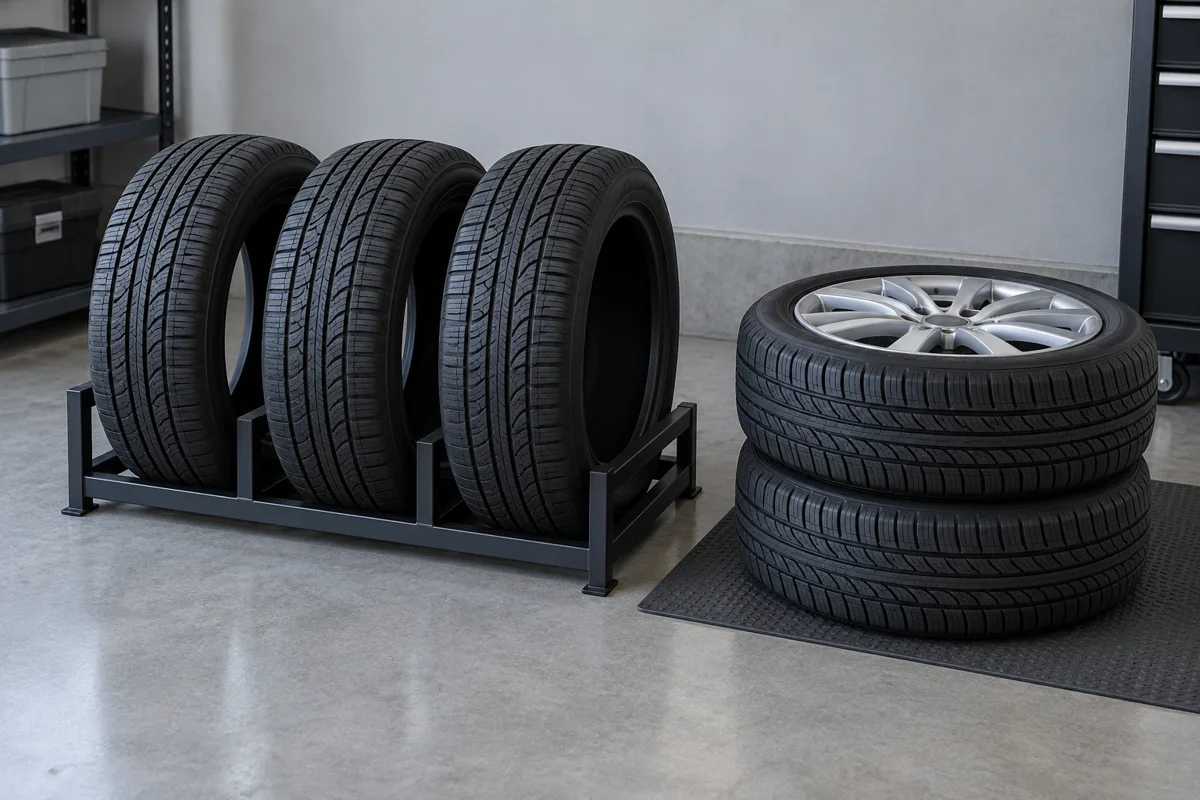
Keep stored tires clean, dry, cool and protected from sunlight, heat, chemicals and ozone-producing equipment. Michelin’s tire storage guidance distinguishes tires on wheels from loose tires: mounted assemblies can be stacked or hung appropriately by the wheels; unmounted tires should stand upright and should not be hung.
Follow the tire manufacturer’s storage instructions and inspect the assemblies before refitting. Storage does not stop aging or make damaged tires suitable again. Keep axle and direction information so the set returns to an appropriate configuration.
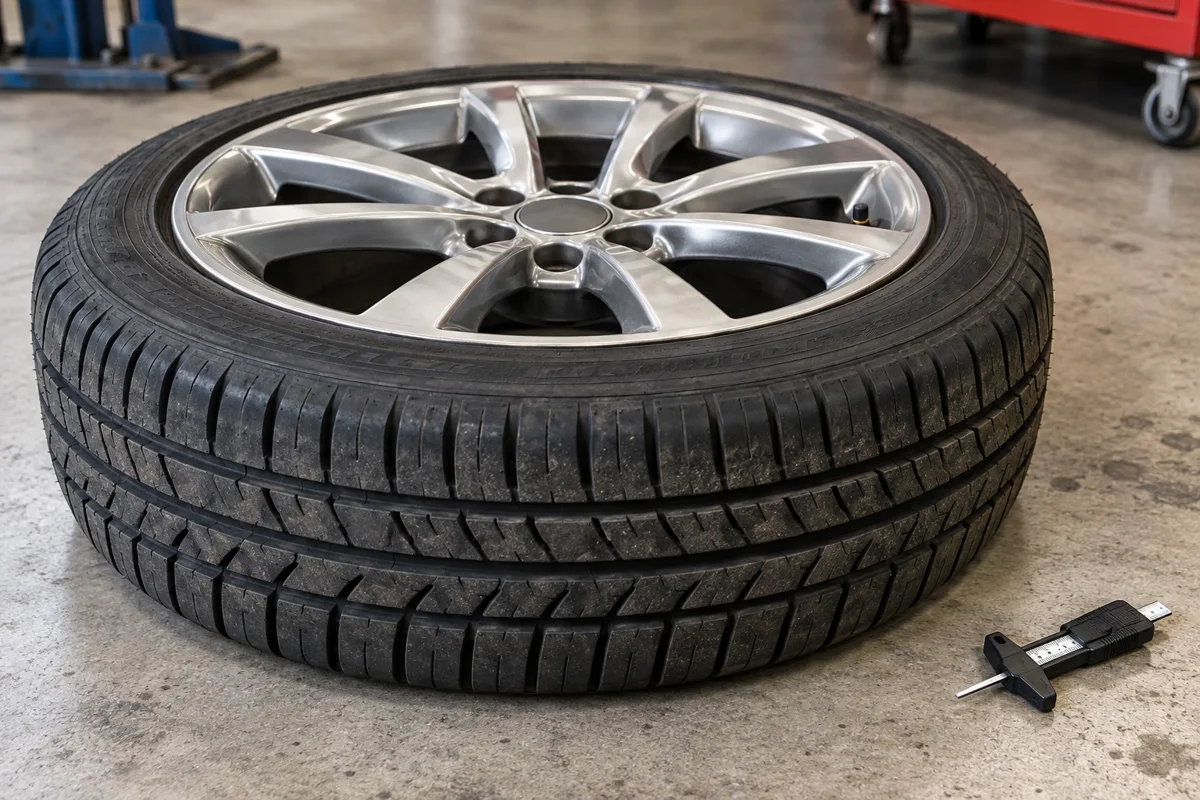
Decide whether you need tires or another check
A different tire brand will not correct every vibration or pulling complaint. Start with the condition of the fitted set and the circumstances of the problem. An assessment should explain which finding supports replacement and which needs a separate test.
| What you notice | What it may involve | Next action |
|---|---|---|
| Bulge, exposed cords or major sidewall damage | Potential structural damage | Stop using the tire and arrange professional assistance. Do not continue a comparison drive. |
| Repeated pressure warning | Tire, valve, wheel or monitoring problem | Check actual pressure safely and investigate the loss. A reset alone does not repair a leak. |
| Vibration after fitting | Balance, seating, wheel condition or another mechanical issue | Return for an inspection. Severe vibration or impaired control calls for stopping and recovery. |
| Wear concentrated on one shoulder | Possible geometry, pressure or mechanical problem | Measure wear across the tread and inspect before ordering alignment or replacement parts. |
| Firm ride with no new warning or damage | Tire construction, pressure, wheel package or suspension condition | Confirm correct cold pressure and inspect the setup before paying for a different specification. |
Check tires only in a safe parked location away from traffic. Do not crawl beneath an unsupported vehicle or reach into areas where it could move. A technician can inspect the inner shoulder and remove the assembly when access is restricted.
For a puncture, the repair decision depends on the location, size, internal condition, previous damage and the exact tire maker’s policy. An outside view cannot establish repairability after low-pressure driving. Ask whether the tire was removed for inspection rather than accepting an external plug as proof of a lasting repair.
Compare quotes with the same specification
A low advertised amount may cover one tire only. Another quote may include four tires, fitting, balancing and valve work. Write down the quantity and exact product for each axle before comparing the total. Ask which costs are optional and which are necessary for that job.
For example, a hypothetical owner with a damaged rear tire on a staggered xDrive setup should not compare a front-tire promotion with the required rear replacement. The remaining tires also need assessment against the vehicle’s matching requirements. The cheapest single item may not produce a compatible set.
- Match the complete size, ratings, construction and approved application.
- Confirm the production date information and the condition of the stock offered.
- Ask whether fitting, balancing, disposal and relevant valve or TPMS work are included.
- Separate a measured alignment requirement from an automatic package add-on.
- Get the final payable total, VAT treatment and written warranty exclusions.
A higher price does not itself prove better wet braking or comfort. Compare evidence for the named product in an applicable size. A test of a different version, size or vehicle may help frame questions, but it does not guarantee identical behavior on your BMW.
Check the car after tire fitting
Before collection, compare the installed sidewalls with the quotation. Confirm the front and rear positions, directional arrows and outside markings where applicable. Ask the workshop to document the cold-pressure targets for normal use and the relevant loaded condition.
- Confirm that wheel fastening followed the exact vehicle and wheel specification, without applying a generic torque value.
- Ask whether balancing was completed and whether any wheel damage or unusual wear was found.
- Confirm that pressure monitoring was initialized or reset only as required after the pressures and work were correct.
- Keep the invoice, product details and written coverage so a later problem can be checked against the work performed.
Follow the tire manufacturer’s initial-use advice and drive conservatively while becoming familiar with the set. Do not deliberately provoke a slide, hard braking event or hands-off steering test to judge the tires. Report new pulling, vibration or recurring warnings promptly.
If a symptom existed before replacement, agree how it will be reassessed afterward. Fitting new tires can address worn rubber, but it does not prove that a bent wheel, worn suspension joint or driveline problem has also been resolved.
Order a defined tire package
- Exact brand, product line, complete size and load and speed ratings for each axle.
- Construction and any required BMW-specific specification.
- Evidence that the set meets the vehicle’s fitment and xDrive requirements.
- Quantity, fitting, balancing, valves or TPMS work and disposal scope.
- A dated fitted price with VAT and written product and workmanship coverage.
For BMW tire replacement, provide the VIN, wheel details and clear sidewall photos from both axles. Ask the supplier to confirm suitability and current availability before paying for a named product.
The right choice is a compatible, correctly fitted set with trade-offs you understand. Brand preference comes after fitment, condition and a clear plan for pressure loss.
BMW tire questions
Are summer tires unsafe in rain?
No. Suitable summer tires can perform well on wet roads within their intended conditions. Compare the exact product, and account for tread, pressure, standing water and speed.
Can all four BMW tires be rotated?
Only when the vehicle and tire arrangement permit it. Staggered sizes, direction arrows and wheel differences can restrict or prevent a rotation pattern.
Does the BMW star marking settle the choice?
It identifies a BMW-approved specification for relevant applications. You still need the correct size, ratings, construction and axle arrangement; it is not a universal quality ranking.
Should I replace tires just to improve comfort?
First confirm correct cold pressures, tire condition and the fitted wheel and suspension specification. Discuss an approved alternative only after those checks. A construction change needs a suitable pressure-loss plan as well as a ride-comfort comparison.
Does a quiet tire guarantee strong wet braking?
No. Noise and wet braking are separate characteristics. Compare the exact product’s relevant performance information and remember that tread condition, pressure and road conditions still affect the result.