
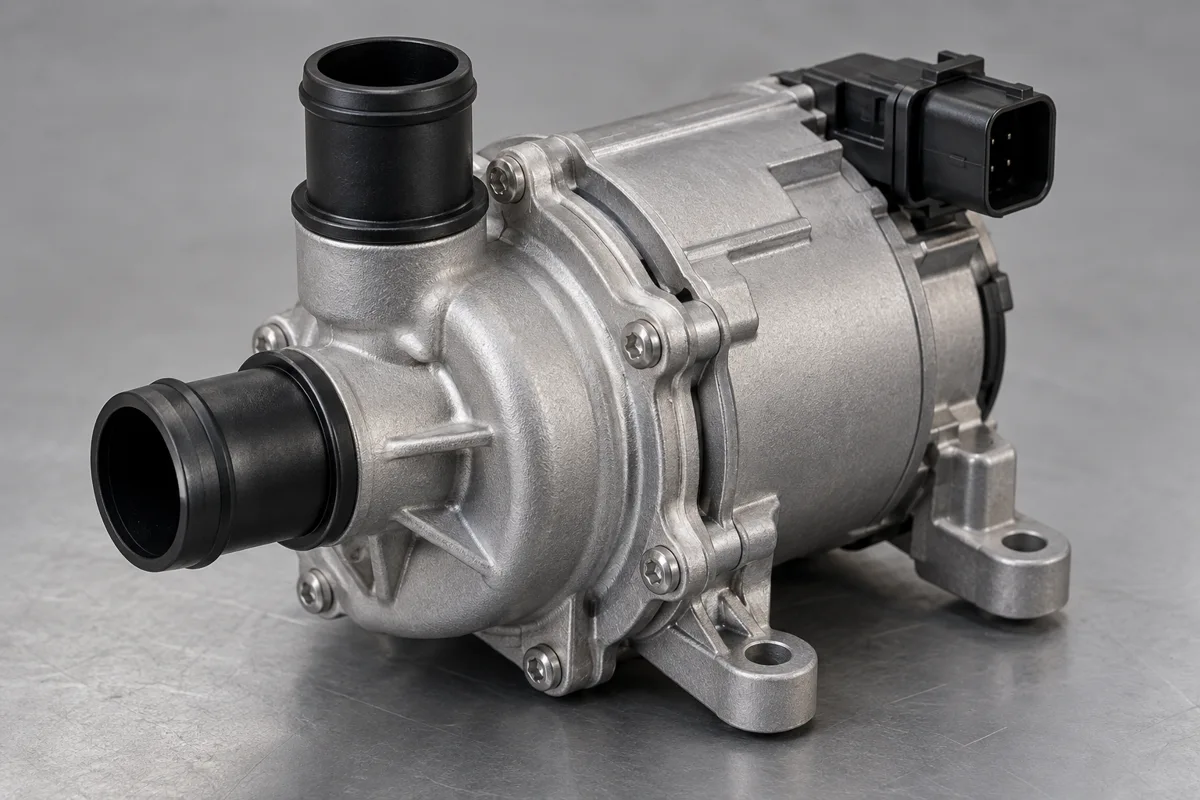
A BMW electric water pump should be replaced when testing identifies a fault, not simply because the fan runs after parking. If an overheating warning, steam or rapid coolant loss appears, stop safely, switch off and arrange assistance.
When to stop driving
Follow any stop-engine instruction immediately once you can pull over safely. Do not continue driving to see whether the temperature settles. Never open a hot coolant reservoir, and keep hands away from electric fans that may start unexpectedly.
An overheating vehicle or one losing coolant rapidly needs recovery. A low-level warning also needs assessment of the cause; topping up does not repair a leak. Check the level only under the conditions specified in the owner’s manual.
| Observation | Possible explanation | Useful next step |
|---|---|---|
| Overheating or steam | A cooling-system fault, including circulation, coolant loss, airflow or thermostat problems. | Stop safely and arrange assistance. Identify the cause before further operation. |
| Fan or pump activity after shutdown | Commanded heat management may be normal; persistent unusual activity can also need investigation. | Record the conditions. Duration alone does not diagnose a failed pump. |
| Pump-related fault code | An internal pump issue, electrical supply, wiring or communication problem. | Preserve the fault details and run the correct test plan. |
| Coolant level repeatedly falls | An external or internal leak, not necessarily at the pump. | Arrange leak diagnosis before selecting a replacement assembly. |
Identify which pump the BMW uses
BMW cooling arrangements vary by engine, production version and powertrain. A car can have more than one coolant circuit or pump. The main engine pump, an auxiliary circulation pump and a pump serving another thermal circuit are not interchangeable diagnoses.
Confirm the VIN, engine and affected circuit before ordering parts. A model badge, registration year or a familiar pump photograph cannot establish fitment. Electrified vehicles also require the correct precautions for their cooling systems and high-voltage components.
HELLA’s water pump explanation describes demand-controlled electric circulation and operation independent of engine speed. That is why pump activity after shutdown can be an intended function rather than evidence of failure.
Why fixed temperature and fan rules fail
The cooling system responds to load, ambient conditions and the vehicle’s control strategy. A single temperature reading does not establish that every BMW pump is healthy or faulty. Interpret actual values against the relevant engine’s specified operating behavior.
Likewise, one pump-speed number is not a universal pass or fail threshold. A low commanded output can be appropriate, while a high command with inadequate response needs explanation. Not every diagnostic system reports actual pump speed in the same way.
A fan running for several minutes is not enough to condemn the pump. The workshop needs the temperature inputs, requested cooling, fault context and the actual operation of the affected system. After-run noise without a warning should not be turned into a guaranteed failure prediction.
Record the warning without taking risks
The most useful owner information is the exact warning and what happened immediately before it. Record the message only after stopping safely. Tell the workshop whether the event occurred in traffic, after a restart or during another ordinary journey condition. Do not drive again just to obtain a temperature reading or a video of the fan.
- Warning history: note the wording and whether the vehicle instructed you to stop. A paraphrase such as “running hot” can omit an important instruction.
- Coolant history: describe recent top-ups, cooling-system repairs and repeated level warnings. If a product was added, keep its container details or invoice.
- Visible evidence: mention steam, an observed puddle or a smell without deciding which component caused it. Do not reach underneath an unsupported vehicle.
- After shutdown: describe unusual noise and the preceding journey. Noise duration by itself cannot identify which pump or fan is operating.
Follow the owner’s manual for any permitted cold-level check. Do not remove a hot cap, disconnect a running pump or put fingers near a fan to see whether it is working. If the vehicle has overheated, the safe next step is assessment, not a trial journey after a top-up.
Understand what the test proves
A test can answer one question while leaving another unresolved. Ask the workshop to connect each result to the complaint and to identify the next step if the evidence does not isolate the pump. “The scanner mentioned the pump” is not a complete explanation of a replacement decision.
| Reported finding | Question still worth asking |
|---|---|
| The cooling system held pressure during the specified test. | How was circulation checked? A leak test does not establish that the pump delivers the required cooling response. |
| The pump responded to an activation command. | Did it respond appropriately under the relevant complaint conditions, and were other cooling causes considered? |
| A pump communication fault is stored. | Were power, grounds and the applicable communication circuit checked before condemning the assembly? |
| Coolant was found near the pump. | Was the leak traced to the assembly rather than a nearby hose, joint or another source? |
An overheating event also raises a separate question: does the engine need further assessment before repair approval? The answer depends on what occurred and the findings. A new pump is not proof that any consequences of overheating have been excluded. Ask which additional checks are justified, what they cost and whether the quote depends on their results.
Tests before approving a water pump
The useful distinction is between a pump that cannot perform its commanded task and a pump affected by another fault. HELLA’s electric pump diagnostic overview includes fault-memory, electrical and actuation checks; the exact BMW circuit and test procedure still control the job.
| Check | What needs to be established |
|---|---|
| Fault records and freeze-frame conditions | Which circuit reported the fault, when it occurred and whether related voltage or communication faults exist. |
| Coolant condition, level and leaks | Whether the system has enough correct coolant and is sealed before circulation is judged. |
| Power supply, grounds and wiring | Whether the pump receives the required electrical support under the test conditions. |
| Communication and activation | Whether a valid command reaches the correct pump and the unit responds as specified. |
| Commanded versus observed operation | Whether available speed, current, temperature or circulation evidence supports the expected response. |
| Other cooling components | Whether thermostat operation, airflow, restrictions or trapped air explain the complaint. |
Pressure testing must use the pressure, equipment and interpretation specified for the vehicle. A universal pressure-drop rule cannot reliably identify a failed pump. An unsuccessful bleeding procedure also needs investigation of its prerequisites and the wider system before parts are condemned.
If coolant loss is the main symptom, coolant leak diagnosis should establish where it is escaping. A pump replacement cannot fix a leaking expansion tank, hose or unrelated connection.

When replacement is justified
An internal electrical or mechanical pump fault, damaged housing or verified leak at a nonserviceable assembly can justify replacement. A wiring, connection or supply problem calls for the appropriate circuit repair. The estimate should state which finding supports the proposed work.
A thermostat does not automatically need replacement with every electric pump. It may be faulty, required by the repair scope or worth discussing because of shared access and documented condition. Ask for the reason and a separate price rather than assuming a mandatory pair.
There is no universal mileage replacement rule for every BMW electric pump. Maintenance history and operating conditions help assess risk, but mileage cannot predict the exact failure point. Address warnings and confirmed defects without promising that preventive replacement eliminates future overheating.
Coolant and bleeding belong in the repair
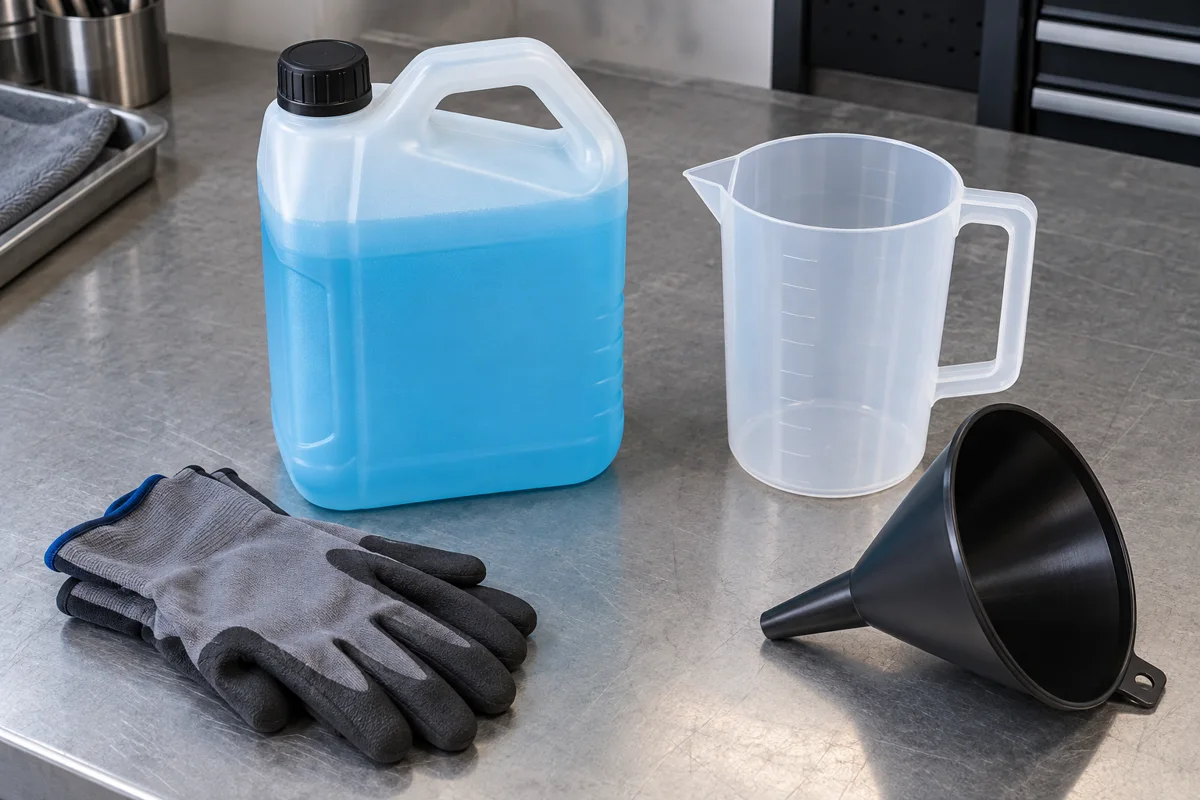
Use the coolant specification approved for the exact vehicle and repair. G48 is not a universal instruction for all BMW models, and coolant color alone does not prove compatibility. The workshop should identify the product, approval, concentration requirements and treatment of existing coolant.
Filling and bleeding procedures vary. The required activation sequence, tools and prerequisites should come from the applicable BMW instructions. Do not copy a pedal sequence or run a pump dry because a generic online procedure suggests it.
After filling, the repair needs appropriate leak checks, cooling-system operation checks and confirmation that the original complaint is resolved. A warning reset alone does not establish adequate circulation or a correctly bled system.
Compare the complete replacement quote
- VIN-confirmed pump, manufacturer, part reference and condition.
- Reason for any thermostat, hose, seal or fixing included.
- Diagnosis, access and fitting labor without duplicated operations.
- Specified coolant, required quantity, filling and bleeding.
- Post-repair checks and written parts and workmanship coverage.
- A dated total stating the VAT amount and VAT-inclusive price.
Ask about BMW water pump replacement after the failed component and repair scope are established. A pump-only estimate and a pump, thermostat and coolant package do not describe the same work.
Before approving the job, request the diagnostic finding, exact replacement specification and final fitted total. Those three details are more useful than a generic lifespan or a temperature threshold applied to every engine.
Compare three possible outcomes
These hypothetical examples show why a complete diagnosis changes the work you authorize. They are not evidence of completed workshop jobs or fixed-price packages.
- The pump itself is confirmed faulty: compare quotations for the same compatible assembly and necessary fitting materials. Require the coolant, filling procedure and final operating checks to be included or clearly priced separately.
- The pump lacks the required electrical supply: request a scope for the confirmed circuit fault. Ask whether the pump was retested after the supply problem was corrected before approving an additional assembly.
- Coolant loss comes from another component: approve the verified leak repair and the necessary system checks. Do not add a pump simply because the vehicle previously displayed an overheating warning.
If a thermostat or hose is proposed at the same time, ask the workshop to distinguish a failed component from optional work discussed because access overlaps. Both may be reasonable subjects for a quotation, but the reason, additional labor and parts cost should be visible. You should know what is necessary to resolve the diagnosed fault and what is a separate recommendation.
What to keep after the repair
Request an invoice recording the fitted part reference, coolant product and completed work. Keep the diagnosis alongside it so that a future technician can distinguish the original fault from a new complaint. A statement that the warning was cleared is less useful than a record of the relevant checks and their outcome.
- Confirm which operating conditions were checked after filling and bleeding.
- Ask whether any additional inspection is required after the overheating event.
- Obtain written instructions for any follow-up level check, including the required cold conditions.
- Keep the written parts and workmanship coverage, exclusions and contact details.
A new warning, renewed coolant loss or steam needs a fresh safe-driving decision. Do not treat a recent replacement as permission to continue an overheating journey. Contact the workshop with the exact message and arrange recovery when safe operation is uncertain.
Electric water pump questions
Does a loud cooling fan mean the pump has failed?
No. Fan operation can respond to temperature, control inputs and protective strategies. The cooling system needs diagnosis; fan noise does not identify a failed component.
Can I drive if the warning disappears?
A disappearing message does not prove that overheating or coolant loss has been resolved. After overheating, rapid loss or a stop-engine instruction, arrange assessment before further driving.
Should the thermostat always be included?
Only when its condition, the applicable procedure or an explained repair decision supports it. The quotation should identify why it is included.
Does a successful pressure test prove the pump works?
No. A pressure test addresses leakage under its specified conditions. The workshop still needs the relevant electrical, activation and cooling-response checks to assess pump operation.
Can coolant be selected by color?
No. Confirm the approval and filling requirements for the exact vehicle. Similar colors do not establish that two products are compatible or suitable for that cooling circuit.
Need help with your BMW?
Tell the garage what you have noticed, what you want checked and which BMW you drive. The team can explain the sensible next step before you book.