
BMW brake warning signs need an immediate safety decision. If braking is impaired, the pedal sinks or a brake-fluid leak is suspected, stop safely and arrange recovery. Noise and warning messages require inspection, but they do not identify a failed part by themselves.
Stop and arrange recovery for these symptoms
- A sinking pedal, unexpectedly long pedal travel, a suddenly hard pedal requiring much greater effort, or substantially reduced braking.
- A suspected brake-fluid leak, particularly with a low-fluid warning or changed pedal feel.
- Severe pulling, grinding with reduced braking, smoke or an overheating brake.
- A dashboard instruction to stop, or brake-system warnings together with abnormal operation.
Get out of moving traffic as safely as the situation allows. Once stopped, do not drive to the workshop to test whether the brakes improve. Follow the vehicle’s emergency instructions and arrange suitable assistance; do not touch hot brake components or crawl under the car.
Take a photograph of the exact message only when safely parked. A symbol’s color or a short description over the phone may omit important instructions. BMW’s VIN-specific owner information helps identify the warning for the equipped vehicle.
A hard pedal also needs a safety decision
A suddenly hard pedal with reduced stopping ability can indicate a problem with brake assistance or another part of the braking system. It is different from a soft or sinking pedal, but neither should be treated as an automatic pad-replacement diagnosis. Stop safely and arrange recovery when braking effort or performance changes substantially.
Do not perform repeated emergency stops to compare pedal feel, release the steering wheel to test pulling, or use a quiet road as a brake-test area. Tell the recovery operator if a wheel appears locked, the parking brake will not release or the car cannot be moved normally. The vehicle and fault determine the suitable recovery method.
Separate wear reminders from system warnings
| Message or warning | What it can indicate | What to do |
|---|---|---|
| Brake pad wear or pad service due | A wear-service requirement or a sensor-circuit issue needing confirmation. | Arrange prompt pad and sensor inspection. Changed braking overrides a routine service appointment. |
| ABS warning | A fault affecting anti-lock braking; associated stability functions may also be affected. | Follow the exact message and seek prompt diagnosis. Do not assume normal emergency braking capability. |
| Low brake fluid or brake-system warning | A condition requiring immediate assessment, which may involve leakage or another brake-system problem. | Follow the stop instruction where shown. With low fluid, leakage or abnormal braking, arrange recovery. |
| Parking-brake indication | May describe application of the parking brake or a parking-brake fault, depending on the message. | Check the vehicle instructions. Do not assume every brake symbol has the same meaning. |
An ABS warning does not automatically call for pads or a wheel-speed sensor. The workshop needs fault information, relevant live data and circuit or component tests. A pad-service reset cannot repair an ABS or hydraulic fault.
A low reservoir level can accompany pad wear, but it can also indicate leakage. Do not dismiss it as normal evaporation or simply top up and continue. The cause needs to be established and any braking-safety concern resolved.
A fluid service date is not a low fluid warning
A scheduled brake-fluid service entry concerns maintenance timing. A low-fluid message concerns the fluid level or its monitoring and needs a different assessment. Read the complete entry rather than using the word “brake” or the color alone to decide what the car needs.
If a maintenance item is due but braking remains normal and there is no system warning, arrange the indicated service or inspection. That advice does not extend to a sinking pedal, suspected leak, stop instruction or impaired braking. A current service record also does not rule out a new fault.
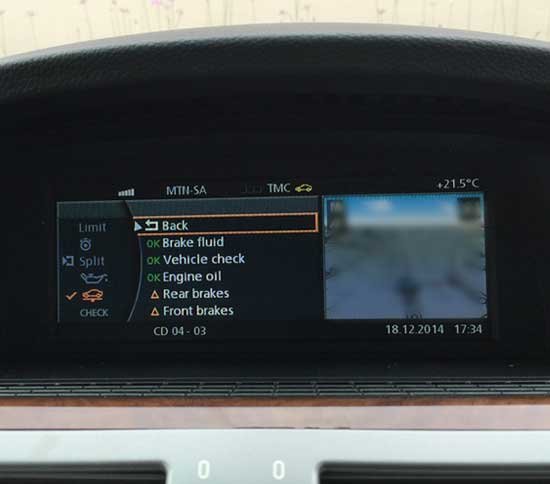
Record intermittent warnings before anyone resets them
A warning that disappears after restarting still belongs in the diagnostic history. Record its exact wording and whether it appeared with other messages. Ask the technician to preserve stored faults, their status and available operating data before clearing memory.
Several warning lights do not automatically mean several failed parts. A shared supply or communication issue can affect more than one system, while a genuine brake fault can also disable associated functions. The workshop must test the relevant circuits and components instead of replacing a battery, ABS unit or sensor solely because its name appears in a code.
Read symptoms without guessing the repair
| Symptom | Possible areas to inspect | Useful evidence |
|---|---|---|
| Squeal | Friction surfaces, contamination, pad compound, hardware and installation. | When it occurs, measured pad condition and inspection of the assembly. |
| Grinding | Severe wear, damage or trapped material. | Prompt inspection; recovery if braking is affected or the noise is severe. |
| Vibration during braking | Disc condition or variation, mounting surfaces, calipers and relevant suspension parts. | Measurements and checks under a safe, controlled assessment. |
| Pulling to one side | Unequal braking, tire condition or suspension and alignment issues. | Severity, brake operation and checks of both sides. |
| Suddenly hard pedal with reduced braking | Brake assistance and the applicable hydraulic or control system. | Stop and arrange recovery; identify the fitted system before testing. |
| Soft or sinking pedal | Hydraulic leakage, air or other hydraulic/control faults. | Urgent hydraulic assessment rather than an assumed pad replacement. |
Electronic pad-wear sensors provide an electrical warning where fitted. Squeal is not proof that this sensor is scraping against a disc. Brembo’s pad-wear sensor information describes the warning function; physical inspection remains necessary.
Brake judder is also not automatically a “warped rotor” diagnosis. Ask for the measurements and contributing checks. Replacing discs without resolving a mounting, caliper or suspension issue may leave the complaint unexplained.
New noise after brake work deserves a follow up
Tell the workshop whether the noise began before or after a repair, which axle was serviced and whether pedal feel changed. Do not accept severe grinding, pulling, overheating or reduced braking as ordinary bedding-in. Those symptoms need assessment before the car is driven again.
Brembo’s brake noise and vibration checks extend beyond pads and discs to the surrounding assembly. For your BMW, ask whether mounting surfaces, hardware and caliper movement were checked using the applicable specifications. A new part does not exclude an installation issue or a separate worn component.
Any bedding procedure must suit the actual pads, discs and vehicle. It is not a substitute for diagnosing an unsafe symptom. Avoid copying a fixed number of hard stops from another model or an online video.
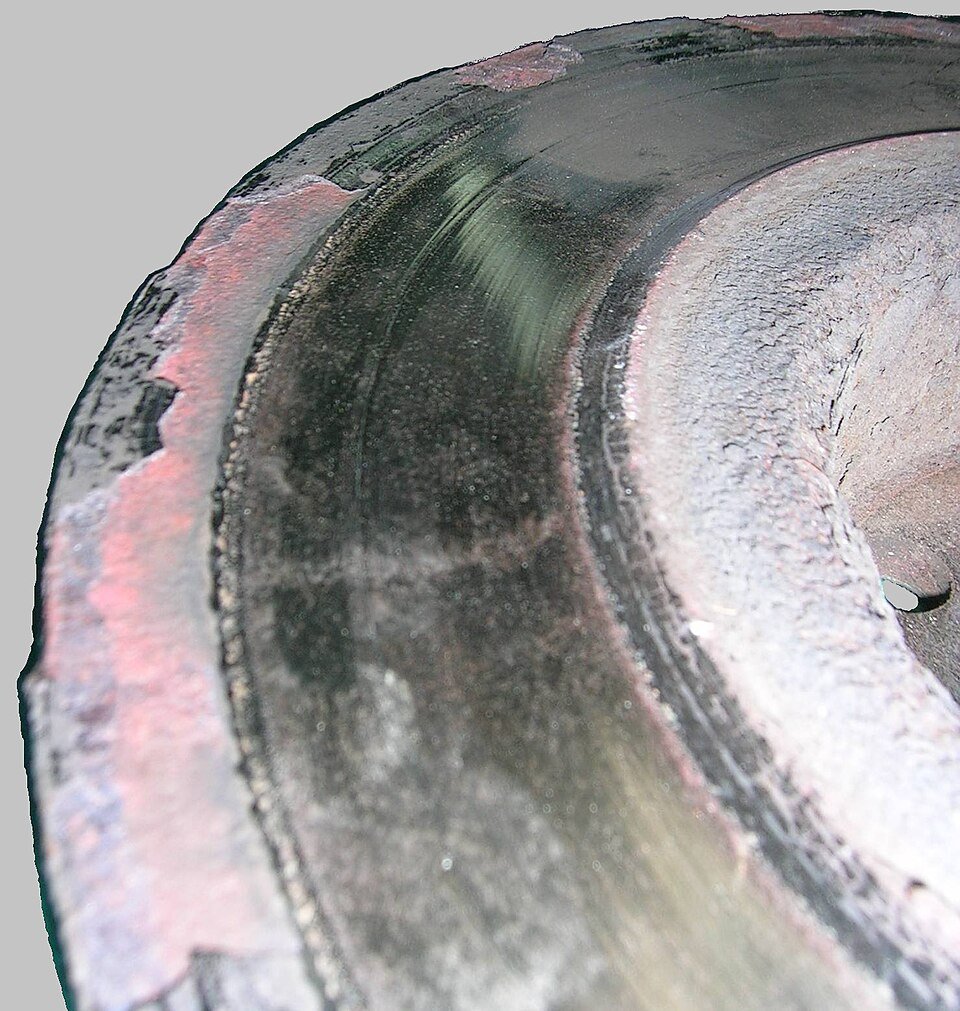
Do not identify a leak by color alone
An amber puddle cannot reliably identify brake fluid. Different vehicle fluids, contamination and the surface beneath the car can affect appearance. Location and color are clues to report, not enough to decide which system is leaking.
From a safe standing position, note where a puddle appears and whether a warning or pedal change occurred. Do not touch, taste or deliberately smell unknown fluid. Avoid reaching near hot or moving parts.
Suspected brake-fluid loss needs recovery and inspection. A technician must trace the source and assess the hydraulic system. Brake fluid maintenance is a separate task from finding and repairing a leak or a soft-pedal fault.
Keep owner observations separate from hydraulic work
If the owner’s manual provides a safe, accessible way to read the reservoir level without removing covers or reaching into hazards, you can report what it shows. Do not open a reservoir, disconnect a hose or remove a wheel just to investigate a warning at the roadside. If access or identification is uncertain, leave the check to the technician.
A level reading cannot locate a leak, measure braking performance or prove that the fluid is suitable. Do not add an unidentified fluid to silence a warning. Photograph visible evidence only from a safe position and tell the workshop if any fluid has already been added.
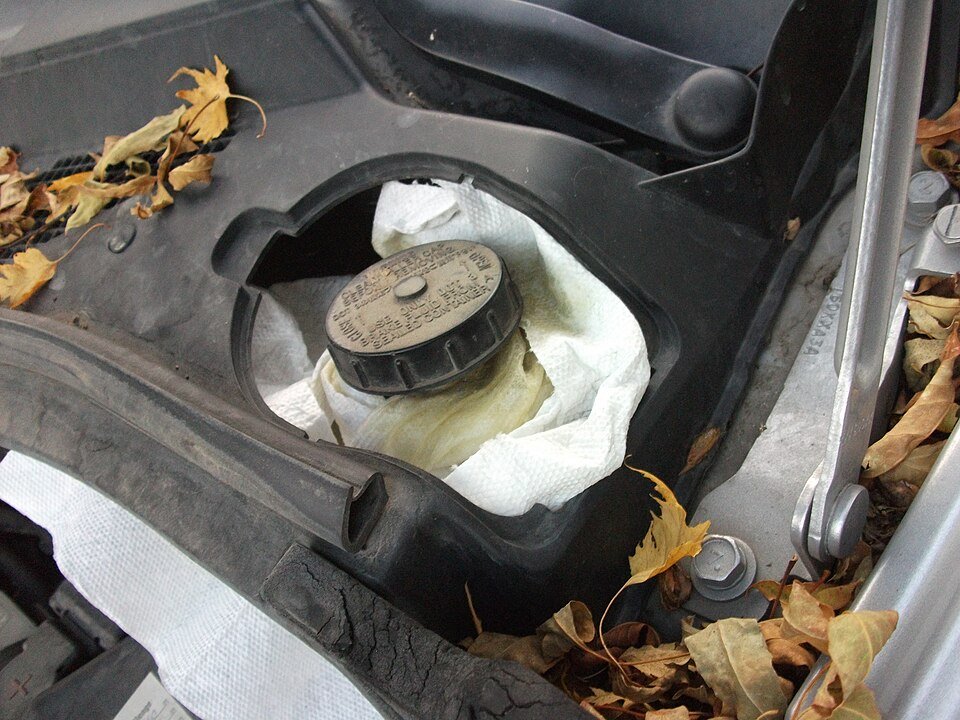
Burning smells and hot brakes need caution
A burning smell can come from a dragging brake, overheating or another vehicle system. It does not establish a caliper fault by itself. Smoke, reduced braking or a strongly abnormal condition means stop safely and arrange assistance.
Do not cool a hot disc by spraying water on it, and do not touch a wheel or brake to compare temperatures. The workshop can assess temperature differences and operation using suitable methods once the vehicle can be handled safely.
Dubai driving conditions can influence the load placed on the brakes, but they do not prove that a specific symptom is “just the heat.” A new symptom deserves the same inspection discipline as it would in another climate.
Replace parts when the inspection supports it
There is no universal Dubai mileage limit for pads or discs. Brake pad replacement timing depends on measured condition, the applicable service information and the fitted brake package. Front and rear axles can reach their limits at different times.
- Measure relevant pads, including inner pads that may not be visible through the wheel.
- Compare disc measurements and damage with the correct specification.
- Check caliper operation, hardware, sensor wiring and relevant hoses.
- Use the vehicle’s fluid-service requirement and any documented condition-based findings.
- Separate maintenance items from repairs needed to restore safe braking.
A flush is not a guaranteed cure for a sinking pedal, ABS fault or caliper problem. Likewise, new pads cannot repair a hydraulic leak. The report should connect each proposed part or operation to an actual finding.
The fitted brake equipment controls the limits
Provide the VIN and details of any brake conversion. Standard brakes, optional performance packages and carbon-ceramic systems can require different components and assessment methods. Do not order from the model badge, caliper color or wheel size alone. The exact installation and service information must agree.
An electronic parking-brake fault needs the procedure for the fitted system; forcing a mechanism or using a generic reset can make matters worse. On a hybrid or electric BMW, unfamiliar deceleration behavior also needs the correct vehicle assessment. An owner should not assume that regenerative braking makes a friction-brake warning less important.
Ask for a report that connects the symptom to the finding
- Document the complaint. Preserve the exact warning, pedal description and relevant scan data. Identify any reason the vehicle cannot be road-tested safely.
- Inspect the relevant system. Check for leakage, wear, damage, sticking components and appropriate fluid condition, according to the complaint.
- Measure against the correct limit. Record the axle and component, actual readings and the applicable specification rather than simply writing “brakes weak.”
- Test an electrical fault before ordering parts. Use relevant fault data, live readings and circuit checks to separate the component from its wiring or supply.
- Define the repair and finishing checks. Explain which finding each operation addresses and what will confirm safe operation afterward.
A clean fault scan is not proof that pads, discs or hydraulic components are healthy. Equally, visibly worn pads do not explain every ABS warning. Mechanical inspection and electronic diagnosis answer different questions and may both be needed.
What to bring to the brake assessment
Provide the model, year, mileage, exact message and when the symptom started. Explain whether it occurs cold, after repeated braking, at one speed or continuously. Mention recent brake, tire or suspension work and any change in pedal travel.
Ask for measurements or photographs supporting replacement, the affected axle, named compatible parts and the checks planned after repair. You should be able to understand why the job requires pads alone, discs as well, a hydraulic repair or electrical diagnosis.
Detailed brake service pricing and scope belong with the proposed repair. Request an axle-specific written quotation stating parts, sensors, labor, extra diagnostic work and the final VAT-inclusive total. Do not compare “full brake” figures without knowing what each includes.
Three examples of different repair scopes
These are possible assessment outcomes, not customer case histories or fixed quotations. They show why the same broad request for “brake repair” can lead to different work.
- Pad wear confirmed on one axle. The quote identifies the affected axle, compatible pads, required sensor or hardware and the measured condition of the discs. It does not automatically include replacing every brake component.
- A hydraulic leak is located. The quote names the leaking component, the applicable repair or replacement, required fluid and bleeding work, and checks for contamination or other affected parts. A fluid change alone is not the repair.
- An ABS circuit fault is confirmed. The quote explains the electrical finding and whether the fault lies in wiring, a connector, the sensor or another tested component. Pads are added only if their separate condition justifies it.
Check the result before returning to normal use
Ask the workshop to confirm the original concern was reassessed, relevant warnings were resolved, the hydraulic system was checked where applicable and any required service reset followed completed work. Verification may include a controlled brake test or road assessment only when the vehicle is safe to test.
Keep the invoice, findings and any aftercare instructions. A returning warning, new leak, altered pedal feel or reduced braking needs fresh assessment. Do not continue driving because a repair was recently completed or because the warning went out once.
Reduce avoidable wear without ignoring new symptoms
Follow the vehicle’s maintenance requirements and arrange inspection when the service display or a new symptom calls for it. Report persistent noise, pulling or changes in stopping effort early. After brake work, follow the applicable bedding and aftercare instructions without using public roads for aggressive tests.
Preventive maintenance can address identified wear and deterioration. It cannot guarantee that a hose, electrical circuit or control component will never fail. Safety decisions still depend on the present warning and how the car is behaving.
The practical order is simple: decide whether the car must stop, preserve the symptom information, and approve repairs supported by inspection. A familiar noise or a dashboard icon is the start of that process, not the final diagnosis.
Brake warning questions
Can I drive with an ABS light if the pedal feels normal?
A normal pedal does not establish that all braking assistance is available. Follow the exact vehicle warning and obtain prompt advice. If braking changes, another brake warning appears or safety is uncertain, stop and arrange recovery.
Does a soft pedal mean the pads are worn?
It cannot be assumed. A soft or sinking pedal needs urgent assessment of the hydraulic system and related components. Do not drive to test it or approve pads as the presumed cure.
Do discs need replacement every time pads are changed?
No. Their measured condition and the applicable limits determine whether they can remain in service. The workshop should explain the findings supporting either reuse or replacement.
Can the brakes have a fault without a dashboard warning?
Yes. A warning system does not monitor every possible mechanical or hydraulic problem. Changed pedal feel, reduced braking, severe noise, pulling or suspected leakage still need assessment even if the dashboard shows no message.
Should I reset a brake warning before visiting the workshop?
Preserve the message and fault information first. A service reminder should be reset after its required work is completed. Clearing an ABS or brake-system fault does not establish that the underlying problem is repaired.
Need help with your BMW?
Tell the garage what you have noticed, what you want checked and which BMW you drive. The team can explain the sensible next step before you book.