
BMW brake pad replacement should follow measured pad condition, the service display and the exact brake package. There is no reliable mileage rule for every Dubai driver. Arrange an inspection when wear is reported, even if the car still stops normally.
If the pedal sinks, braking is reduced, or a fluid leak is suspected, stop safely and arrange recovery. Do not drive to a routine pad appointment with impaired braking.
Decide by condition rather than a mileage target
Two BMWs covering the same distance can use their brakes differently. Vehicle weight, repeated braking, hills, towing and driving style affect wear. The inspection needs to establish how much friction material remains and whether it is wearing evenly.
| Finding | What it means | Next action |
|---|---|---|
| Service display predicts pad work | An estimate or service status for the equipped vehicle, not a measurement of every pad. | Arrange an inspection in line with the displayed requirement. |
| Friction material reaches the applicable limit | Replacement is required for the affected axle according to the fitted brake specification. | Confirm measurements and the parts scope before work. |
| Inner and outer pads wear unevenly | Pad life alone may not explain the problem. | Check caliper movement, hardware and other causes before fitting new pads. |
| Squeal with otherwise normal operation | Noise has several possible causes and does not prove pads are worn out. | Have pad, disc and installation condition checked. |
| Pedal sinks, braking is impaired or a leak is suspected | A potentially serious braking fault, not a routine wear reminder. | Stop safely and arrange recovery rather than driving to a pad appointment. |
Do not wait for a mileage target if an inspection finds a limit has been reached. Equally, do not replace serviceable pads solely because an unsupported “Dubai lifespan” has elapsed. Ask the technician to show the relevant measurement and limit.
Set the next inspection from the last finding
Ask for a recheck plan when the pads are still serviceable. The plan should use the measured condition, recent wear history, upcoming journeys, and the applicable service requirement. An inspection appointment and a replacement appointment are different decisions.
A motorway commute, repeated stop-and-go trips, and a heavily loaded journey do not create the same braking demands. Tell the technician if your use is changing. Dubai traffic is relevant context, but it does not establish a fixed 20,000–30,000 km replacement interval.
Do not calculate a guaranteed remaining distance by dividing pad thickness by kilometers driven. Wear can change with use, and the thinnest pad may be hidden. A past inspection is a dated observation, not permission to ignore a new warning or change in braking.
What the wear sensor can tell you
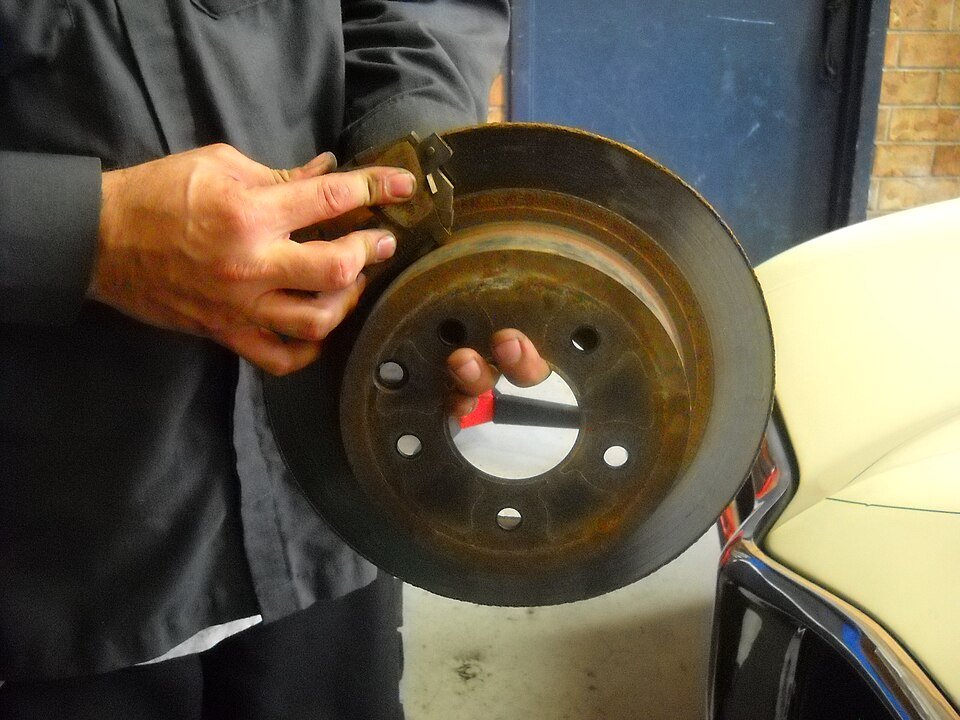
Many BMW brake packages use an electrical pad-wear sensor at selected pad locations. It provides a wear signal to the vehicle. It is not a mechanical squeal alarm, and it does not continuously measure every pad, disc and caliper.
Electronic pad-wear sensors must match the brake application and be handled according to the replacement instructions. Brembo recommends replacing applicable sensors with its pad replacements. Sensor wiring and connections also need checking if the warning and measured pad condition disagree.
The number, location and display behavior vary by vehicle. A normal display cannot exclude uneven wear on a pad that is not directly monitored. A warning can also require investigation of the sensor circuit rather than an assumption about all four wheels.
BMW’s 2025 US maintenance booklet illustrates model-dependent front and rear brake service information. It is not a universal GCC schedule. Use the vehicle’s own instructions and Condition Based Service status, often shortened to CBS, to identify the due item.
When the display and inspection disagree
Photograph the exact message while parked and keep any previous repair invoice. Ask whether it refers to front pads, rear pads, brake fluid, or a braking-system fault. Those messages should not be treated as interchangeable.
A warning soon after replacement can involve the sensor, wiring, connection, or an incomplete service procedure. It can also coincide with a separate fault. The workshop should compare the message with the installed parts and inspection findings before proposing another pad set.
Do not unplug, bridge, or reset a wear circuit simply to remove a warning. If a service item will not reset, preserve the information and investigate the reason. A cleared reminder cannot establish that the assembly is safe.
What a useful brake inspection records
- Friction-material thickness on the relevant inner and outer pads, excluding the backing plate.
- Disc thickness against the correct minimum, together with condition and any required runout checks.
- Wear pattern, contamination, cracks or other damage that changes the replacement decision.
- Caliper operation, applicable sliding parts, hoses, hardware and signs of leakage.
- Wear-sensor condition, fault information and the service item shown by the vehicle.
A quick look through a wheel can miss the inner pad and much of the disc surface. Owners can report noises or visible concerns, but removing wheels and measuring the assembly should be left to someone with the right equipment and repair information.
A single universal millimeter figure cannot replace the specification for every BMW brake system. Ask which limit applies to the fitted package, especially if the car has optional sport brakes, an M brake system or aftermarket hardware.
Read the inspection as a set of findings
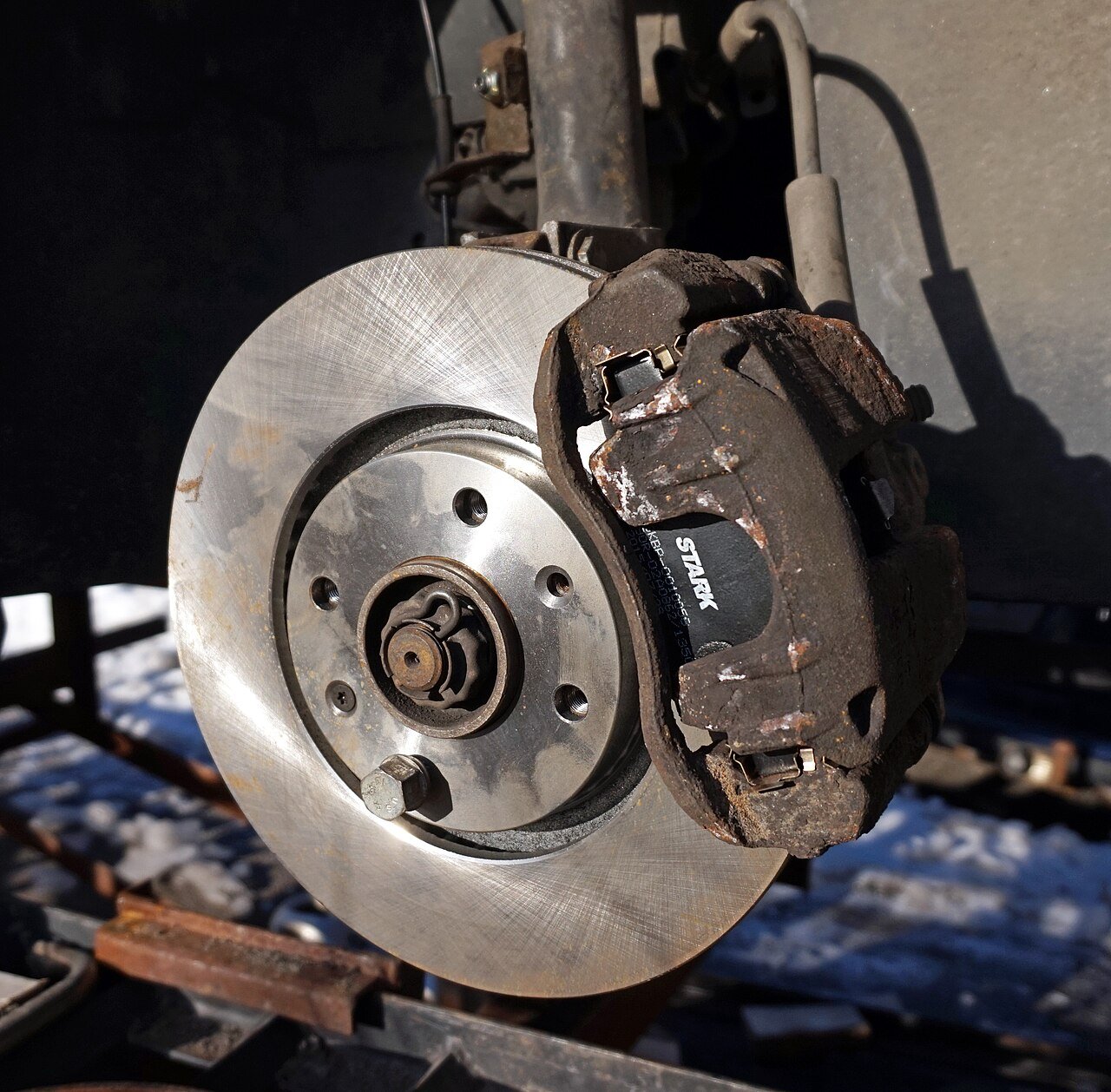
A useful report identifies the wheel position, inner and outer pad measurements, and the relevant limit. It should state whether the recommendation is immediate replacement, further diagnosis, or a planned recheck. “Pads low” alone does not explain a both-axle recommendation.
| Record | Why it matters | Question to ask |
|---|---|---|
| Thinnest pad on each axle | An average can hide a pad that has reached its limit. | Which pad determines the recommendation? |
| Difference between pads | The wear pattern may need investigation beyond replacement. | Is the difference within the applicable specification? |
| Disc measurements and surface condition | Enough pad material does not prove the disc is serviceable. | What makes this disc suitable for reuse or replacement? |
| Sensor and warning status | A circuit warning and physical wear are related but separate findings. | Does the warning agree with the measured condition? |
Uneven wear needs an explanation
Where wear is uneven, the technician should assess the fitted caliper design, pad movement, piston operation, and applicable sliding hardware. A fixed caliper and a floating caliper do not have identical inspection requirements. Do not condemn a caliper solely from one photograph.
For example, if one pad is near its limit while its partner has noticeably more material, replacing the axle set may still be necessary. The additional question is why the difference developed. New pads alone will not correct a confirmed restriction or damaged hardware.
Pads alone or pads and discs
Pads are normally replaced as an axle set using the applicable procedure. Front and rear wear can differ, so a front-axle recommendation does not automatically justify replacing the rear pads too.
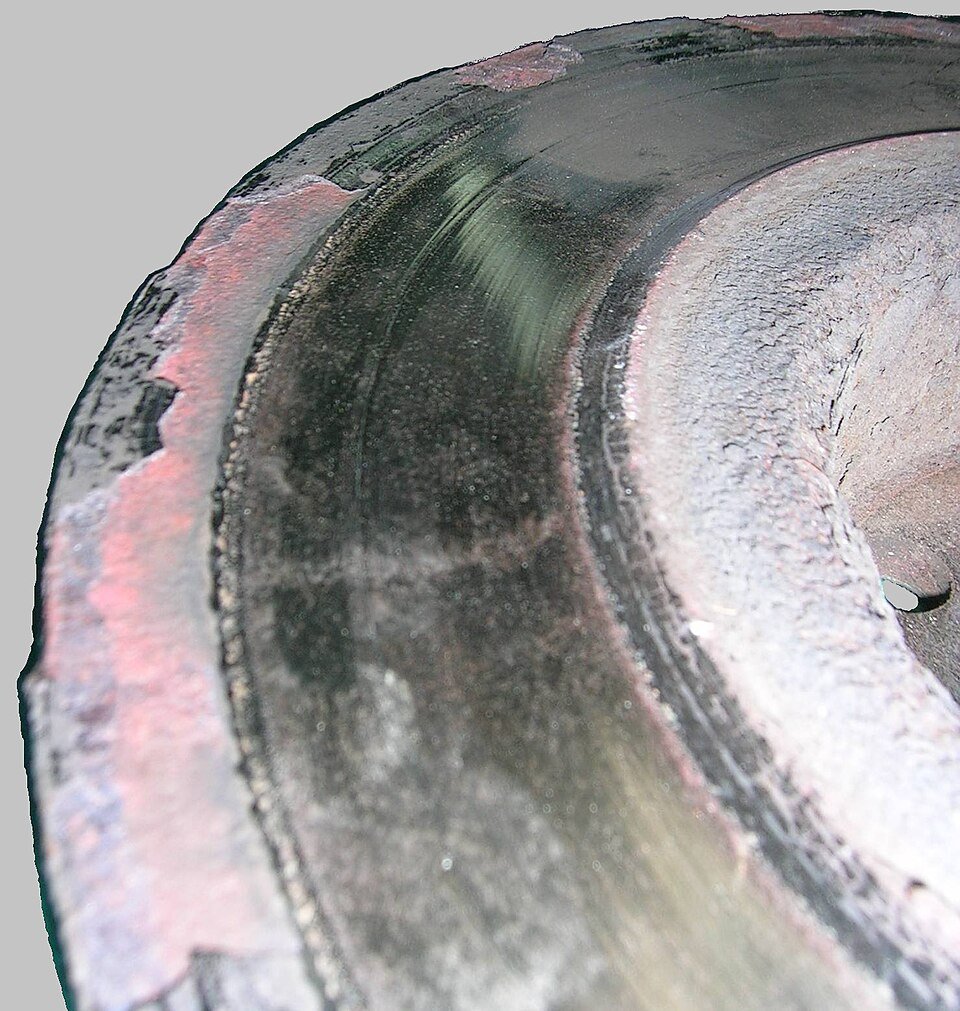
Discs do not automatically need replacement at every pad change. Their measurements, surface condition and manufacturer requirements determine suitability for reuse. Conversely, installing new pads cannot make an undersized, cracked or otherwise unserviceable disc acceptable.
| Proposed work | Evidence to request |
|---|---|
| Pads on one axle | Recorded pad condition and confirmation of the matching brake package. |
| Pads and discs on one axle | Disc measurements or documented damage supporting replacement. |
| Pads on both axles | Separate front and rear inspection findings. |
| Caliper or hydraulic repair | The specific fault and tests supporting repair, beyond a pad-wear warning. |
A soft or sinking pedal needs urgent hydraulic assessment. Air, leaks and other faults need investigation; assuming the pedal will recover after a pad change can leave the actual problem unresolved. Stop driving if braking is impaired.
Separate necessary work from optional work
A recommendation can contain several decisions. Worn pads may need replacement, serviceable discs may remain, and a faulty caliper may need a separate repair. Ask the workshop to mark each item as required, conditional on dismantling findings, or optional.
Caliper repair, remanufactured exchange, and replacement are different options where an approved solution exists for the exact assembly. Request the confirmed defect, proposed scope, and written coverage. A pad-wear reminder alone is not evidence that a caliper needs rebuilding.
If the inspection supports continued use, monitoring may be more sensible than buying parts early. That decision needs a recorded recheck plan and normal braking. It never overrides a stop instruction, a reached wear limit, or a confirmed safety fault.
Match the parts and fitting procedure
Standard and optional brake packages can require different pads, sensors, discs and fasteners on the same model. Use the VIN and fitted hardware to confirm compatibility. Compare genuine and named replacement parts by their exact application and written coverage.
There is no universal tightening torque for a BMW brake job. Wheel fasteners, caliper bolts and carrier bolts have different requirements, and some hardware has replacement or angle-tightening instructions. The technician must use the correct vehicle procedure for each fastener.
Electronic parking-brake systems may require a specified service mode and finishing procedure. Lubricant placement, cleaning and hardware replacement also depend on the assembly. These details are reasons to request a documented repair, not a generic DIY sequence.
Bedding instructions depend on the installed pads and discs. Follow the instructions supplied for those products and the vehicle, with emergency braking taking priority. Do not perform a fixed series of high-speed stops on public roads based on a generic article.
Brembo’s brake noise and vibration checks also emphasizes inspection of the wider brake assembly during replacement. Recurring noise or judder should be investigated rather than repeatedly replacing pads without finding the cause.
Confirm the actual equipment
Give the workshop the model, year, VIN, and any known brake modifications. A model badge, caliper color, or wheel size is not enough to order a pad set. Ask for the selected part reference and confirmation that the catalog application matches the fitted assembly.
M Sport equipment, an M model, and a carbon-ceramic system must not be treated as one brake specification. Carbon-ceramic discs have their own assessment requirements. BMW’s maintenance booklet distinguishes their surface wear checks from ordinary disc thickness checks; use the instructions for your actual vehicle.
For a battery-electric or plug-in hybrid BMW, identify the powertrain as well as the brake package. Do not assume low mileage or frequent energy recuperation makes friction-brake inspection unnecessary. A pad service does not authorize work on the high-voltage system.
Make both-axle costs comparable
A useful quotation names the vehicle, brake package, axle, part numbers and work included. “Full brakes” can mean pads only or pads with discs and sensors, which are substantially different scopes.
- Show front-axle and rear-axle parts and labor separately.
- List wear sensors, hardware and discs explicitly, including any items not required.
- State the agreed both-axle fitted total without counting shared charges twice.
- Identify diagnostic work, brake-fluid work or repairs outside the pad replacement.
- Show the VAT amount and final VAT-inclusive total, plus written parts and workmanship coverage.
The brake service options distinguish pad, disc, fluid and warning-related work. Request a vehicle-specific written quote before approving both axles; a general planning range does not verify your final price or tax treatment.
Compare three possible job scopes
These are hypothetical scope examples, not completed customer jobs or fixed quotations. Each starts with a different inspection result.
- Front pads only. The front pads have reached their applicable limit, the discs remain serviceable, and the rear pads do not need replacement. Price the front axle, required sensor or hardware, fitting, and finishing checks.
- Rear pads and discs. The rear pads need replacement and the discs fail their condition or measurement criteria. Include the matched axle components and the applicable parking-brake procedure. Do not add front work without its own findings.
- Both axles with an additional fault. Both pad sets require replacement, but one assembly also has a confirmed mechanical or hydraulic problem. Separate normal wear work from fault diagnosis and repair so the extra charge has a clear reason.
Check an advertised starting price before comparing it with a complete estimate. Ask whether it covers labor only, one axle, sensors, consumables, and VAT. A lower headline figure is not necessarily a lower final bill, and a higher price does not establish a better repair.
Agree on how additional work will be authorized if dismantling reveals a problem. Request the revised amount and explanation before that work starts. Keep the parts references and written coverage with the final invoice rather than relying on a verbal promise.
Checks after the work
The workshop should verify safe brake operation, correct assembly and any relevant fault or service status before release. Reset the applicable wear-service item only after the required work and checks are complete. A reset does not diagnose or repair a hydraulic problem.
Keep the measurements, parts references and invoice. At subsequent inspections, these records make it easier to assess the wear trend. They are more useful than adopting a fixed replacement interval that ignores how the vehicle is used.
Before collecting the car
- Confirm which axle was serviced and whether discs, sensors, or hardware were changed.
- Ask whether any separate braking fault remains unresolved.
- Get the applicable bedding instructions for the installed parts.
- Keep the inspection measurements and agreed next inspection plan.
Report new grinding, pulling, vibration, or warning messages promptly. Do not accept “it needs bedding in” as an explanation for a sinking pedal or reduced braking. If braking is impaired after collection, stop safely and arrange recovery instead of attempting repeated test stops.
Reduce avoidable wear without delaying repairs
Use smooth, anticipatory driving and a safe following distance. Avoid unnecessary repeated acceleration and braking. Follow the vehicle’s instructions for descents and towing, and address confirmed dragging or damaged components rather than trying to compensate with driving style.
Do not apply oil or household lubricants to brake friction surfaces to silence noise. Do not touch a disc or caliper to judge its temperature after driving. Owners can record when a symptom occurs, but cleaning, dismantling, and functional testing belong with trained personnel.
Brake pad timing questions
Can I drive until the pad display reaches zero?
Treat the displayed requirement as a prompt to arrange the necessary inspection or work, not a guaranteed remaining distance. Stop if braking changes, a stop instruction appears or a serious fault is suspected.
Do squealing brakes always need new pads?
No. Noise can relate to friction material, surface condition, contamination, hardware or installation. Inspection determines the cause; a squeal alone cannot establish remaining thickness.
Does a clean wheel mean the pads are barely wearing?
No. Visible dust is not a reliable measurement of remaining friction material. Compare recorded pad condition and the fitted product specification, not wheel cleanliness.
Do new pads require a brake fluid change too?
Only when the applicable fluid service is due or separate findings justify the work. Ask for each item to be explained. A hydraulic fault requires diagnosis, not an assumption that routine maintenance will cure it.
Replace BMW brake pads when their measured condition and the fitted system require it. Keep front and rear decisions separate, investigate uneven wear, and approve a complete written scope. Treat any loss of braking as an urgent fault.
Need help with your BMW?
Tell the garage what you have noticed, what you want checked and which BMW you drive. The team can explain the sensible next step before you book.