
Choosing BMW OEM vs aftermarket parts starts with the exact component, not the label on the box. Compare verified compatibility, part condition, complete fitted cost and written coverage. A reputable alternative can be suitable; a counterfeit is a different problem.
By Ahmad, BMW Garage.
Confirm the repair before ordering parts
First establish whether the car needs scheduled maintenance, a measured wear item, or a diagnosed repair. A warning code, noise, or online symptom list does not identify the part to buy. Ask what test or inspection supports replacement and what other causes have been excluded.
Stop safely and arrange recovery for impaired braking, a sinking brake pedal, an oil-pressure stop warning, severe overheating, or a suspected fuel leak. Do not keep driving while comparing brands or waiting for a cheaper delivery. For a routine service item without symptoms, use the vehicle’s applicable schedule to plan the work.
Understand the four parts categories
“OEM” means original equipment manufacturer, but sellers use the term inconsistently. Ask what the quotation actually supplies: a BMW-branded part, a named manufacturer’s replacement, or an unidentified alternative. A familiar supplier name alone does not prove that two products are identical.
| Category | What it means | What to verify |
|---|---|---|
| Genuine BMW | A part sold under BMW’s brand and part-number system. BMW may source its manufacture from a specialist supplier. | Correct current part number, traceable supply, condition and applicable written coverage. |
| Supplier-branded replacement | A replacement sold under the manufacturer’s own brand. That manufacturer may also supply vehicle makers. | The specific product’s application and specifications. Supplier status does not establish original fitment for every BMW part. |
| Independent aftermarket | A replacement developed or marketed outside BMW’s genuine-parts channel. Quality and design vary by product. | Named manufacturer, catalog reference, required specifications and installation compatibility. |
| Counterfeit | A product falsely presented as an authentic brand or genuine item. | Stop the purchase if identity or provenance cannot be established. A lower price alone does not prove counterfeiting. |
Supplier-branded products are also part of the aftermarket in the broad sense. The distinction here helps you understand an invoice, rather than dividing every non-BMW box into a single quality category.
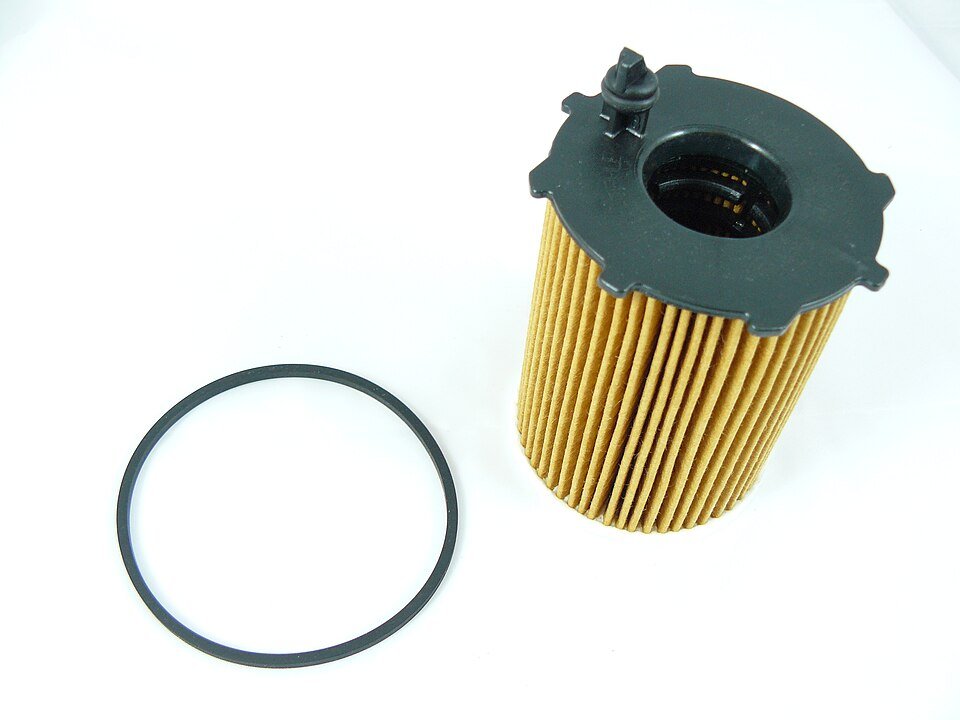
Compare actual part numbers
A useful comparison names the items being offered. “Original quality” and “German type” leave too much unanswered. The workshop should match the VIN, production details, engine and fitted equipment before ordering, including any previous modifications or replacement assemblies.
For a concrete catalog example, MANN-FILTER HU 816 x lists BMW 125i E82/E88 applications with the N52 B30A engine from March 2008 through October 2013. Its OE cross-references include BMW 11 42 7 953 129. These are application clues, not permission to order without checking the vehicle.
| Named option for an eligible application | Condition and contents | Comparison required |
|---|---|---|
| Genuine BMW filter at the VIN-confirmed current BMW reference | Specify new condition and the seals supplied. Check whether a listed reference has been superseded. | Compare the complete oil-service scope, including oil specification, quantity, labor and written coverage. |
| MANN-FILTER HU 816 x | Specify a new, traceable product and the gasket contents. The manufacturer lists this as an oil-filter element with gasket. | Confirm the catalog application and installed filter housing before comparing the same service scope. |
This example does not establish that either product is made on the same production line or has an identical commercial warranty. It shows the level of detail a comparison should contain. Different engines within one model range may need different filters.
Verify fitment before paying
The badge on the trunk and registration year are useful starting points, but they are not a complete parts specification. Record the VIN, production date, installed engine, and relevant equipment. If an engine, gearbox, brake assembly, or suspension system has been changed, tell the workshop before it orders against the original vehicle configuration.
- Confirm the application. Ask the supplier to identify the catalog entry used, including production-date or equipment restrictions.
- Record the complete reference. Keep the part number and any suffix. A similar number is not automatically an equivalent item.
- Check supersessions. If a new reference replaces an old one, confirm the documented replacement relationship and any associated fitting requirements.
- List the contents. Establish whether seals, bolts, clips, sensors, or other required materials are included.
- Agree the return process. Resolve a fitment question before the item is installed, coded, modified, or sent back as an exchange core.
A photograph helps identify markings and physical differences, but appearance alone cannot confirm an internal specification. Likewise, finding a matching electrical connector does not demonstrate that an electronic component has the correct operating characteristics. Treat physical comparison as one check within the application assessment.
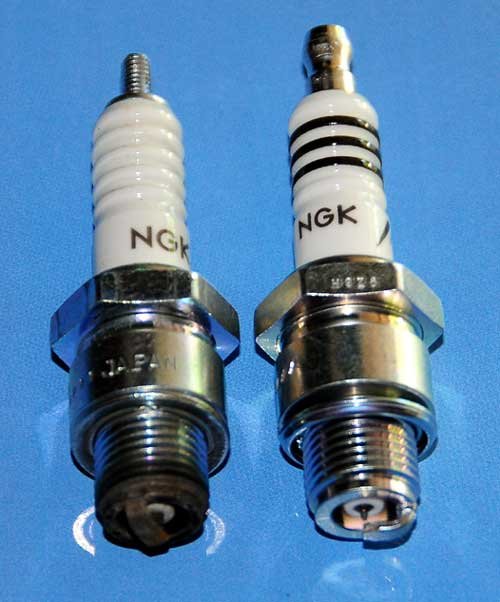
For spark plugs, the complete manufacturer reference matters more than recognizing the logo. The pictured products are identification examples, not a recommendation for every BMW engine. Use the exact application and fitting procedure rather than selecting a plug by appearance or assuming that every product from an original-equipment supplier has the same specification.
Let the component determine the decision
- Filters: match the exact housing, seals and application. A part that looks similar can still be wrong.
- Brake parts: identify the axle, caliper, disc specification and pad application. Standard, optional sport and carbon-ceramic systems cannot be treated as one package.
- Suspension parts: compare the correct side, suspension option and any adaptive-control requirements. Include alignment when the repair procedure calls for it.
- Electronic modules: establish hardware and software compatibility, programming requirements and whether the proposed unit can be configured for the vehicle.
For brakes, measured pad condition determines whether replacement is needed before the brand comparison begins. A premium part will not correct a sticking caliper or an unresolved hydraulic fault.
Dubai traffic, dust exposure and driving load are relevant to inspection and service planning. They do not prove that every aftermarket component will fail or that every genuine part will last longer. Ask for evidence about the proposed component’s intended use.
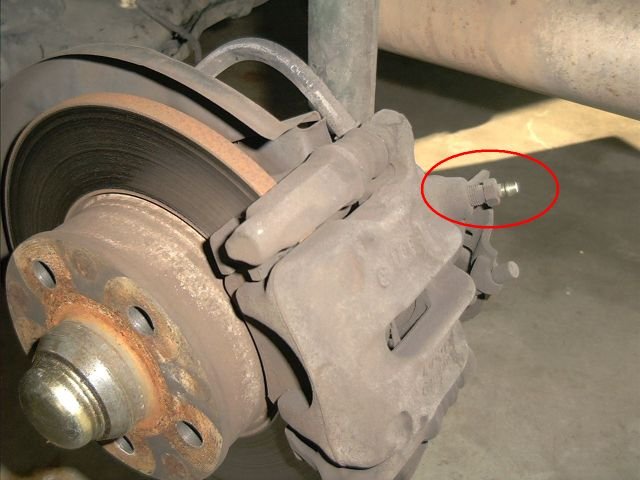
A brake assembly contains several separate components. Before comparing pad brands, ask whether the complaint concerns friction wear, disc condition, caliper operation, or the hydraulic system. Replacing the most visible item can leave the actual problem unresolved. The generic assembly photograph is useful for understanding that distinction, not for identifying your BMW’s fitted brake package.
Decide what a proposed upgrade changes
A replacement advertised as an upgrade may change a characteristic you notice, such as noise, ride comfort, or dust, as well as its intended performance. Ask the manufacturer or installer to explain the relevant trade-offs for the exact product. Do not interpret a sport label, brighter finish, or higher price as proof of a better daily-driving choice.
Keep condition separate from brand
New, remanufactured, reconditioned and used describe different supply conditions. A genuine used assembly is still used. A remanufactured component should come with a stated rebuilding and testing scope; the word alone does not show which internal parts were renewed.
| Condition | Question to ask |
|---|---|
| New | Is it unused, traceable and supplied with all required fitting materials? |
| Remanufactured or reconditioned | Who performed the work, what was replaced or tested, and what written coverage applies? |
| Used | What is known about its history, compatibility, testing and return conditions? |
| Exchange unit | Must the old part be returned, and is there a refundable core charge or acceptance condition? |
Safety-critical or complex assemblies need a suitability decision based on their condition and the manufacturer’s instructions. Price is meaningful only after the workshop explains why the proposed item is appropriate for that repair.
When repair or an exchange unit deserves consideration
A complete new assembly is not automatically the only sensible option. Ask whether a confirmed fault can be repaired using an applicable procedure, or whether a properly specified exchange unit is available. The comparison should include what is renewed, how the unit is tested, and who supports it after installation.
Do not accept a used electronic module merely because its casing number appears similar. Compatibility, configuration, security restrictions, and the supplier’s return conditions must be resolved first. If those questions cannot be answered, the lower purchase price does not give you a reliable fitted-cost comparison.
For an exchange unit, ask when the core must be returned, what condition it must be in, and what happens if it is rejected. Request photographs or an inspection report before the old unit leaves the workshop if you need a record of the original fault. An exchange requirement can mean that the old part cannot simply be retained by the owner.
Compare the complete fitted quotation
Ask for two quotations using the same diagnosis and scope. If one includes sensors, seals and programming while the other lists only a bare component, the totals do not describe the same job.
- Vehicle details and the confirmed fault or maintenance requirement.
- Manufacturer, full part number, quantity and new or replacement-unit condition.
- Labor, required hardware, fluids, coding, calibration, alignment and final checks.
- Any diagnostic or dismantling charge and the process for approving additional work.
- A dated total with the VAT amount and VAT-inclusive amount clearly identified.
- Separate written terms for parts and workmanship, including duration, mileage limits, exclusions and claims handling.
Hypothetical example: two brake quotations can use compatible pads but differ because one includes replacement discs and the other reuses measured, serviceable discs. Ask for the measurements and repair reason before interpreting the difference as a brand premium.
There is no single fitted price that represents every BMW component. A discount also needs a stated scope, validity date and exclusions. Compare the current written total rather than an undated promotional percentage.
Compare three common repair situations
These are hypothetical purchasing situations, not completed workshop jobs or fixed-price offers. Each shows why the parts label is only one part of the estimate.
| Situation | Compare like for like | Resolve before approval |
|---|---|---|
| A scheduled oil service | The same approved oil specification, quantity, compatible filter, seals, labor, and disposal. | Whether one quote omits oil or required seals and whether associated scheduled work is separate. |
| Measured brake wear | The same axle and brake package, with pad, disc, sensor, and fitting-hardware scope stated. | Whether discs are being replaced for a documented reason or retained within the applicable limits. |
| A confirmed electronic-module fault | The same repair objective, unit condition, configuration work, and post-installation verification. | Whether the supplied unit can be configured and who pays for removal or repeat diagnosis if it cannot. |
Write the comparison as a complete payable total: parts plus labor, required consumables, applicable configuration or alignment, agreed diagnostic charges, and the stated tax amount. Keep any refundable core deposit separate from the final retained cost. Do not compare a parts-only online listing with a fully fitted workshop quotation.
Customer-supplied parts need an agreement first
Before buying a part yourself, confirm that the workshop will install it. Agree who checks compatibility, who handles a damaged delivery or return, and which costs apply if the part is unsuitable. A part seller’s replacement promise may not include workshop labor, recovery, or the time needed to repeat diagnosis.
Ask the installer to state its workmanship terms and any exclusions for customer-supplied products in writing. Do not assume that supplying your own part removes all workmanship responsibility, or that the workshop will fund every problem associated with the supplied component. The actual agreement and applicable terms need to be clear before work starts.
Check identity and written coverage
Keep the invoice, part references and packaging identification. Use the manufacturer’s own verification route where available. Logos, holograms, QR codes and country-of-origin markings vary, so one packaging feature cannot authenticate every brand or every product.
Ask the seller to resolve an inconsistent part number, altered label or unclear supply chain before fitting. A legitimate independent aftermarket product identifies its own manufacturer; it should not pretend to be a genuine BMW item.
Treat vehicle warranty, replacement-part coverage and workshop workmanship coverage as separate questions. Ask the relevant provider for the terms applying to the proposed work. Avoid assuming either blanket cancellation of unrelated coverage or automatic acceptance of every alternative.
A part choice also does not establish a workshop’s manufacturer authorization, regulatory approval or a guaranteed resale value. Keep documented maintenance and repair records without treating them as a promise about a future sale price.
Use the verification method for that manufacturer
For example, verify MANN-FILTER product authenticity using the manufacturer’s published process where the feature is available. Its secure-code system applies to selected products and packaging. The absence of that feature on another product is not, by itself, proof of a counterfeit.
If a check is inconclusive, retain the packaging and ask the seller or manufacturer to investigate. Do not alter a label to make a product look correct, and do not fit a disputed safety-critical item just because the vehicle is already dismantled. A documented delay is preferable to proceeding with an unresolved identity or fitment concern.
Ask who handles a claim
Identify the business responsible for the part and the business responsible for installation. Ask whether a claim requires inspection of the vehicle or return of the component, what documents are needed, and whether diagnostic and refitting charges are included. A warranty duration alone does not explain the practical claims process.
If the car has an active vehicle warranty or service contract, send the proposed repair and part references to the relevant provider when clarification is needed. Get its answer about that work. Do not rely on a seller’s general claim that every alternative is warranty-safe or that using one automatically cancels unrelated coverage.
Choose the option you can verify
For a routine item, a named compatible replacement with traceable supply may be a reasonable choice. For a component with uncertain compatibility, configuration or support, resolve those gaps before choosing it solely to reduce the initial bill.
The strongest comparison is specific: the same repair, two identified parts, clear condition, complete fitted totals and written coverage. That gives you a defensible decision without assuming that an entire parts category is always best.
When not to buy the more expensive option
A higher-priced part needs a relevant reason, such as confirmed application, required configuration support, a documented specification difference, or useful written coverage. Paying more does not resolve a missing diagnosis. If both proposed products are appropriate, compare the complete terms and the characteristics that matter to your use.
Equally, do not postpone a necessary safety repair solely to find the lowest price. Ask whether a suitable available alternative can complete the same repair properly. If no safe, compatible option is available, agree storage or recovery arrangements instead of fitting an unverified substitute.
For Dubai commuting, tell the advisor about repeated short trips, heavy loads, dust exposure, and any track use. Those details help frame the application and maintenance discussion. They do not support a blanket claim that all non-genuine parts are unsuitable for UAE roads.
Parts comparison questions
Does an OE supplier sell the identical BMW part in another box?
Sometimes products have closely related specifications, but the supplier’s name alone does not establish that. Compare the exact references and documented application rather than assuming identical design, material or coverage.
Are aftermarket parts the same as counterfeit parts?
No. A legitimate aftermarket product is sold under its own identity. Counterfeiting involves falsely presenting a product as something it is not.
Should I choose genuine parts for every repair?
Choose against the specific repair requirement, compatibility and written terms. Some jobs favor a genuine assembly for configuration or support; other applications have suitable named alternatives. Ask the workshop to explain the choice for your vehicle.
Can I choose a part using only my BMW model and year?
Not reliably for every component. Confirm the VIN, production details, engine, and relevant fitted equipment. Tell the workshop about modifications or previous assembly changes before it checks the catalog.
What should happen if the same problem returns after fitting a part?
Report the symptoms and keep the invoice. Ask the workshop to assess the original diagnosis, installation, and supplied part rather than assuming the brand is at fault. Stop driving if braking or another safety-critical function is affected.
Choose the option whose compatibility, condition, complete fitted cost, and support you can verify. Keep the approved quote and final invoice together so the next repair decision starts with a reliable record.
Need help with your BMW?
Tell the garage what you have noticed, what you want checked and which BMW you drive. The team can explain the sensible next step before you book.