Fresh oil near the housing
A wet joint or drips warrant inspection. Oil can travel from the filter cap, housing-to-engine joint, cooler connection or a leak above. The lowest wet point does not identify the failed seal.

Find the leak before replacing parts.
Oil around the cooler or filter housing? BMW Garage traces the leak before recommending a cooler seal, housing gasket or replacement assembly. Get the correct parts, access labor and fluid work itemized for your engine. Send your model, year and symptoms to arrange an assessment in Al Quoz 4.
What have you noticed?
A wet joint or drips warrant inspection. Oil can travel from the filter cap, housing-to-engine joint, cooler connection or a leak above. The lowest wet point does not identify the failed seal.
Oil on hot surfaces or the drive belt needs prompt attention. We assess the leak and contamination separately. Replacing the gasket does not restore an oil-damaged belt.
Contamination needs diagnosis of the relevant circuits. A heat exchanger, housing or another engine fault may be involved. It does not automatically prove a cooler gasket or head gasket has failed.
Similar names, different repairs
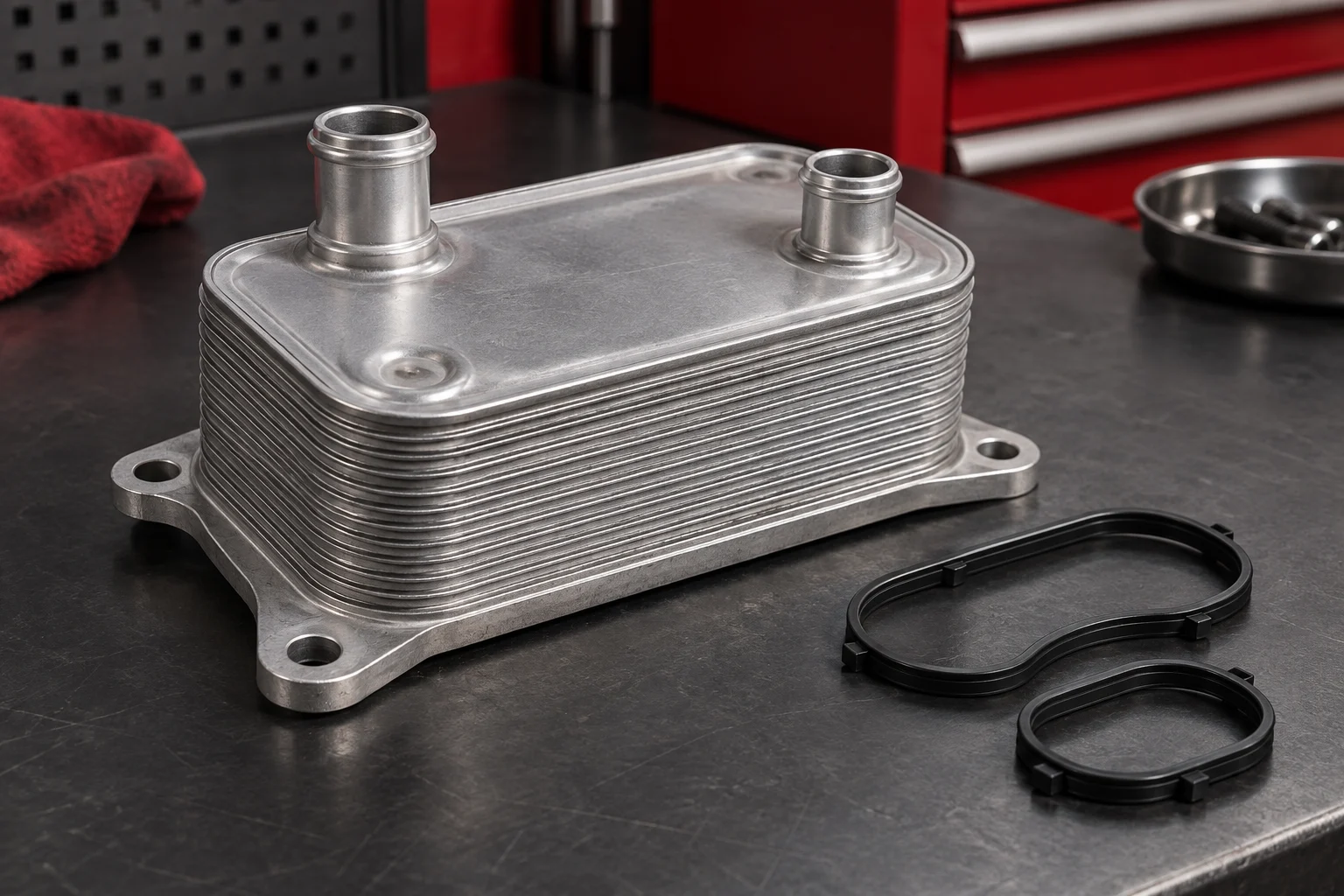
On a suitable oil-to-coolant heat exchanger, seals separate the passages at the mounting interface. A confirmed interface leak may be repaired with matched seals if both mating parts remain serviceable.
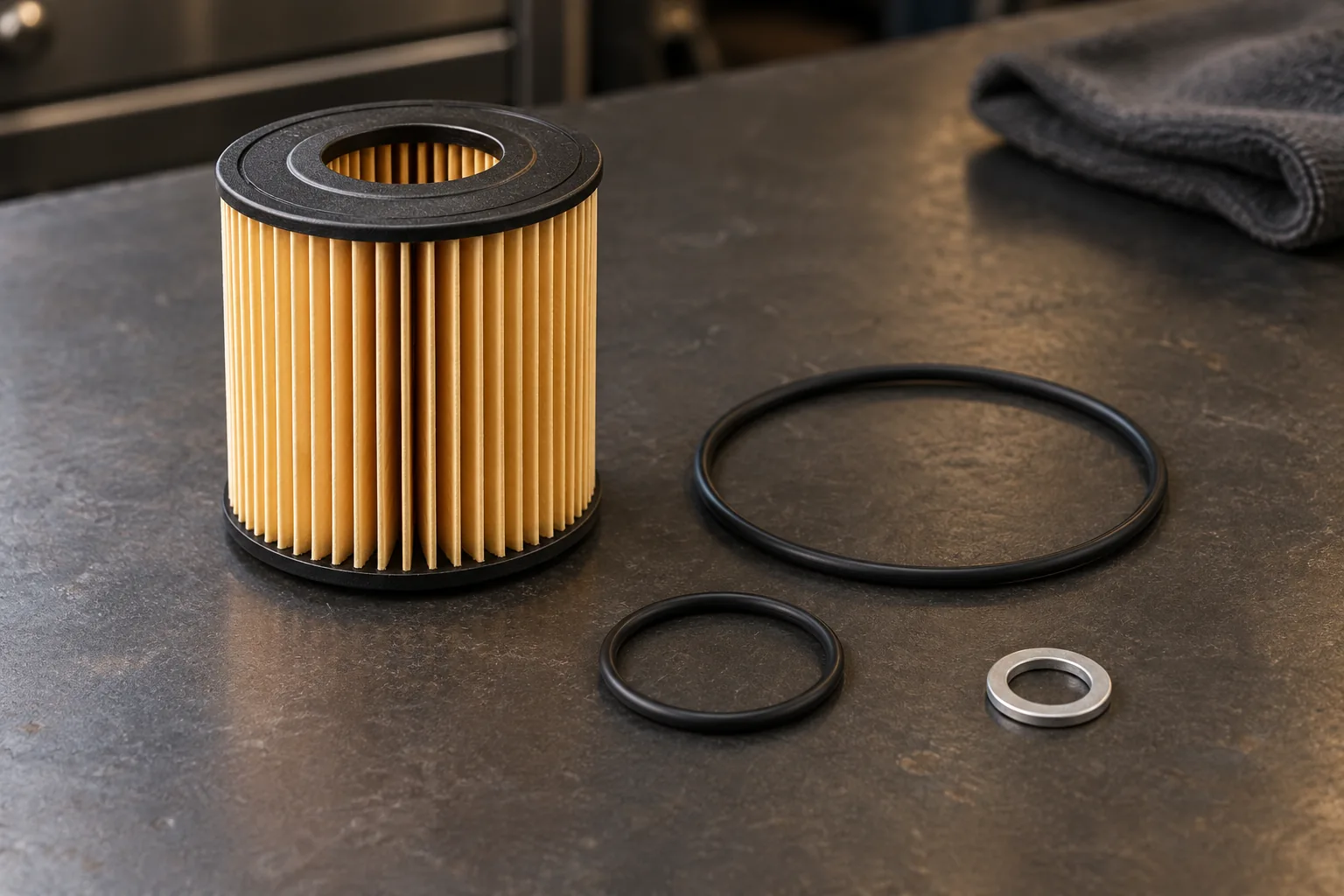
This seals a different joint, commonly between the housing and engine. It may share access with cooler work, but it should be named separately in the quote. A filter-cap O-ring is another distinct service part.
A cracked assembly, internally leaking exchanger or damaged oil line needs its own repair. Remote air-to-oil coolers use a different arrangement from coolant-fed exchangers. A transmission cooler is outside this engine-oil gasket scope.
If the leak source is still unknown, start with BMW oil-leak diagnosis. This page focuses on the confirmed cooler interface and closely related repair choices.
Compare repair routes
Estimated AED ranges for selected applications, not fixed offers for every BMW. The figures budget the described parts and normal labor. Confirm VAT, diagnosis, fluids and the final payable total before approval.
Selected accessible applications. Matched seals, normal removal/refitting, joint cleaning and final leak checks.
AED 850–1,400Damaged cooler, full housing and separate fluid work excluded.For two confirmed leaking joints with shared access. Your quote identifies both seals and accounts for overlapping labor.
AED 1,200–2,000Only suitable reusable assemblies; no automatic need to reseal both.Compatible heat exchanger, required mounting seals, normal access labor and leak checks.
AED 1,600–3,000Engine, supplier and cooler design govern the final cost.Selected replacement housing/module with the required seals, normal fitting and checks.
AED 2,200–4,000Complex, V8 and performance applications may cost more.Allow from AED 350 for the initial engine assessment, separate from the repair ranges above. Before testing, agree which checks this covers and whether any repair credit applies. Do not assume cooler removal, dismantling or extended contamination testing is included. Further access and its charge need approval first.
Your written quote should list required oil/filter work, coolant, cleanup, hoses, belt repairs, recovery and VAT treatment. Seal repair and assembly replacement are alternative routes. The final payable amount depends on the selected repair and necessary extras.
A useful diagnosis before a parts order
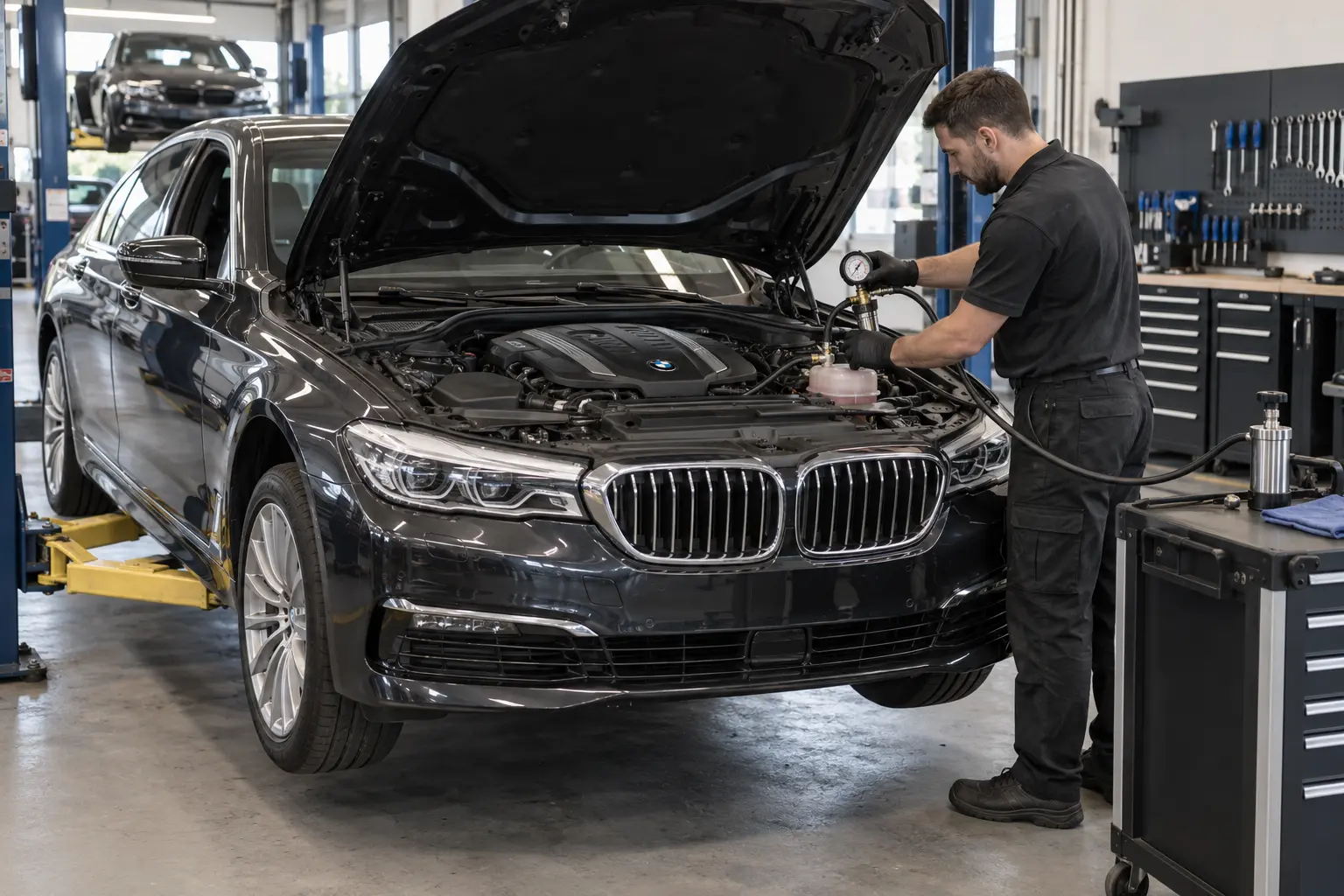
Keep sound components where appropriate
| Finding | Suitable decision | What to confirm |
|---|---|---|
| Leak at a serviceable seal | Replace the exact gasket or sealing rings and retain the sound assembly. | Seal specification, surface condition, disturbed joints and fluid losses. |
| Both adjacent joints leak | Consider a combined reseal where the same access is used. | Which joints actually need repair and how shared labor is charged. |
| Cracked or distorted component | Replace the affected cooler or housing when sealing cannot be restored reliably. | Complete assembly versus separate component, included seals and parts availability. |
| Confirmed internal cross-leak | Repair the established source and address contamination in the affected circuits. | Testing findings, cleaning scope, damaged hoses and follow-up checks. |
Compare genuine BMW parts with a correctly specified supplier part where available. “OEM” should identify an actual brand and specification, not serve as a vague quality label. Used coolers can carry unknown internal contamination or damage; discuss testing and warranty before choosing one.
Know what the quotation includes
Intake removal, a complete housing, contaminated belts, brittle hoses or other leaking gaskets may change the scope. We explain additional work and its cost before you approve it.
An oil change or coolant renewal is included only when stated. A routine external gasket leak does not automatically need a chemical engine flush. Contaminated oil or coolant needs a specific cleanup and fluid-replacement plan.
Agree diagnostic charges and the likely access before parts are ordered.
See parts, labor, fluids, VAT and any uncertainty requiring removal.
Complete the approved reseal or replacement and required fluid procedures.
Check levels, leaks and operation under suitable conditions before handover.
Selected straightforward seals may take about 3–5 workshop hours. More involved housing work may need a full day or longer. Parts supply, cool-down time and contamination cleanup affect collection time.
Three different scopes
Three hypothetical planning scenarios, not completed customer jobs or fixed offers. Each subtotal already includes an AED 350 assessment allowance, with no repair credit assumed. Required fluids and other listed extras are excluded. VAT treatment and the final payable amount must be confirmed in the written quote.
Fresh oil is traced to the cooler interface, with a serviceable cooler and housing.
Proposed: matched seals, normal access, cleaning and leak checks. AED 350 assessment + AED 1,000 seal work.
Inspection confirms separate leaks at the cooler connection and housing-to-engine joint.
Proposed: both matched seals, shared access labor and checks. AED 350 assessment + AED 1,500 combined work.
A confirmed housing fault makes another gasket-only repair unsuitable.
Proposed: selected replacement assembly, required seals, fitting and checks. AED 350 assessment + AED 2,800 assembly work.
Match the engine and cooling arrangement
Four-cylinder model badges and market specifications vary. Confirm the housing, exchanger and individual seal locations before ordering. A seal beside the filter is not automatically the cooler seal.
Oil-cooling equipment varies by vehicle and specification. Identify whether the complaint involves a housing-mounted connection, thermostat or remote cooler lines. We match the repair to the fitted arrangement.
Housing construction, exchanger packaging and access vary with engine generation and chassis. Inspect the housing itself and connections before deciding whether a separate seal or an assembly is the appropriate purchase.
These need their own parts and access assessment. Additional cooling circuits and different layouts mean the compact-engine estimate may not apply. Engine oil and transmission oil-cooling repairs are quoted separately.
There is no universal replacement mileage. Age, heat cycles, service history and the condition of the actual joint matter. We confirm the fitted arrangement and serviceability rather than promising that every listed engine accepts the same repair.
Keep the repair reliable
Ask for the parts and labor coverage in writing, including its duration, mileage limit and return process. Confirm how separate leaks and pre-existing component damage are treated before approving the work.
Follow the handover instructions for level checks and any return inspection. Fresh drips, renewed odor or recurring warnings should be reported promptly. Photos taken safely when parked can help.
Do not use stop-leak products or overtighten bolts to hide a leak. Checking levels and noting symptoms are useful owner steps; access, surface checks and fluid procedures belong with the correct repair equipment.
An easier repair appointment
Before approving the repair, ask to see the identified leak and the condition of the cooler or housing. Your quote should name the parts brand, seals, labor and required fluids so you can compare the proposed work.
“The repair was finished in 36 hours and cost exactly what was quoted.”
Khalid A., BMW X5, Business Bay. General gearbox-service feedback from our homepage, not an oil-cooler job or timing guarantee.
Free Dubai pickup and drop-off is available by arrangement. Confirm scheduling, access and vehicle condition. Recovery for an unsafe car is agreed separately. Detailed leak testing is separate from any complimentary initial visual check.
Need BMW oil-cooler repair near you? Visit our Al Quoz 4 workshop in Dubai. Owners traveling from Sharjah, Ajman or Abu Dhabi can confirm the appointment and transport arrangements before setting out.
Before booking
Selected cooler-seal repairs are estimated at AED 850–1,400 for the stated parts and normal labor. Combined joint work or complete component replacement costs more. Confirm assessment, fluids, VAT and the final total in writing.
No. They can seal different joints on the same assembly. The cooler interface, housing-to-engine gasket and filter-cap O-ring should be identified separately. Some repairs share access, but the parts are not interchangeable.
Yes, if the leak is at a serviceable seal and the cooler, housing and mating surfaces remain suitable. A crack, distortion or confirmed internal leak may require replacement of the affected component.
No. It identifies a contamination concern, not the failed part. The exchanger, housing passages and other possible engine causes need appropriate testing. Do not authorize a head gasket or cooler solely from residue in the reservoir.
It depends on the disassembly, fluid condition and contamination. The quote should list draining, refilling, bleeding, oil/filter renewal or cleanup where required. A simple external seal leak does not automatically justify a chemical engine flush.
Arrange prompt inspection and discuss the actual loss and location. Stop safely for an oil-pressure warning, overheating, smoke, rapid loss or serious belt contamination. A top-up does not prove the car is safe to drive.
Only when their condition or the repair procedure supports it. If both are leaking or must be disturbed, shared access may reduce duplicate labor. Ask the quote to name each joint and explain the additional work.
Selected straightforward cooler seals may take about 3–5 workshop hours. Housing replacement, difficult access or contamination can need a day or longer. Confirm parts availability and collection time after assessment.
Ask for the brand, part number, included seals, parts condition and written parts/labor coverage. Confirm duration, exclusions and the return process. A supplier label alone does not establish compatibility or warranty scope.
Contact the workshop with the invoice and symptoms. The source should be rechecked, including nearby joints and the housing condition. Residual oil and a fresh leak need distinguishing; do not assume another gasket is automatically the answer.
Confirm the component before buying parts
Send your model, year and symptoms. We will help arrange the right checks and compare a seal repair with replacement only where the findings support it.