
BMW Garage · Al Quoz 4, Dubai
BMW Fuel Pump Replacement in Dubai
Resolve a confirmed fuel-supply fault with the correct pump and a clear installation quote. We separate low-pressure supply, high-pressure delivery and electrical-control faults before recommending parts.
Replacement guides: Low-pressure pump AED 950–1,300 · High-pressure pump AED 1,800–2,500.
Free initial inspection · Free pickup and drop-off within Dubai
New customer? Ask for 15% off your first service.
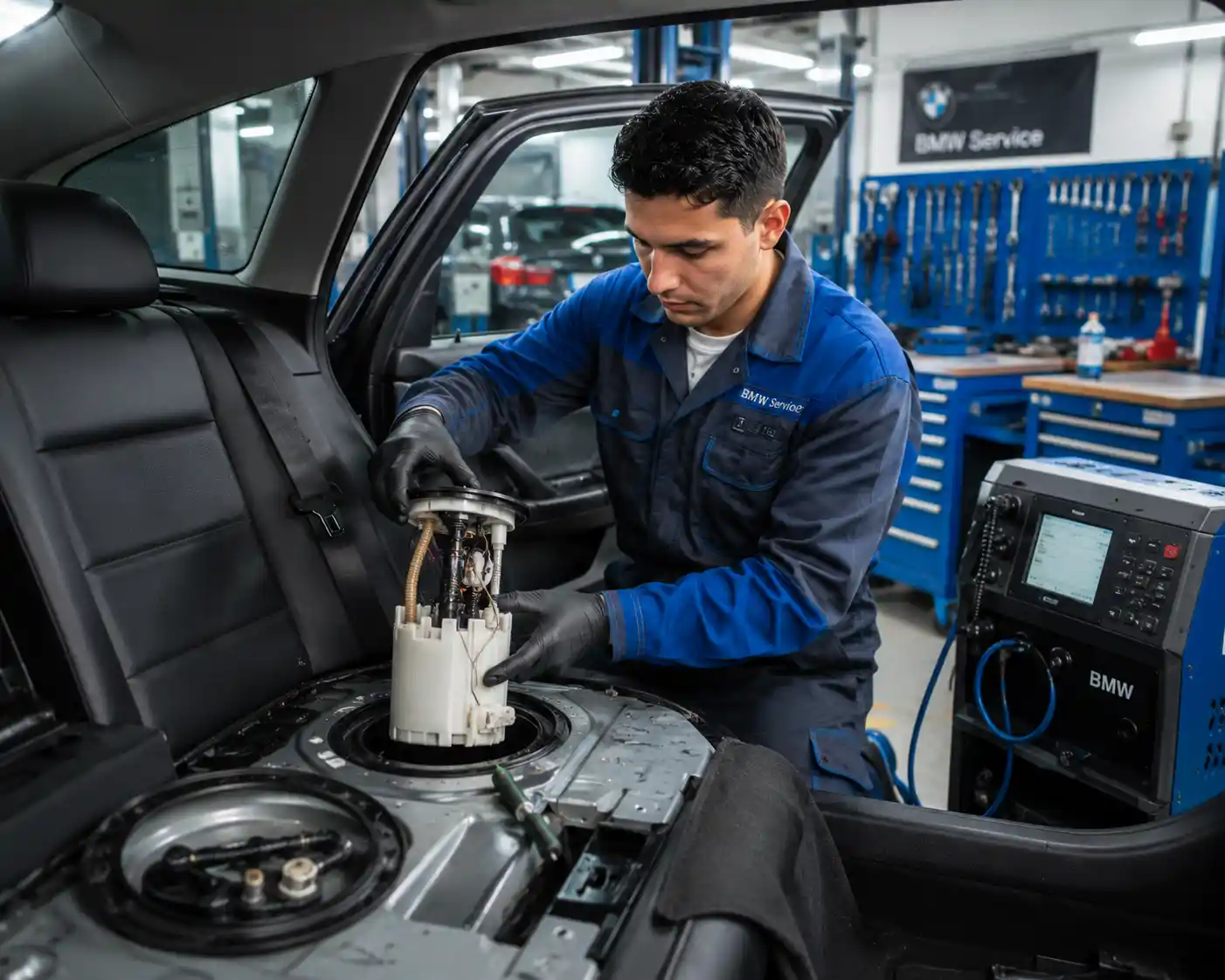
Which fuel pump does your BMW need?
Fuel-pump prices make sense only when you know which component is involved. The fuel system depends on the engine, injection design and vehicle generation.
Low-pressure fuel pump
The supply pump delivers fuel from the tank toward the engine. Depending on the application, the job can involve a pump insert or a complete delivery module.
A faulty electric supply, connection or pump-control module can create similar symptoms. Those checks help establish whether the pump itself needs replacement.
High-pressure fuel pump
On engines that use one, a separate pump raises pressure for the injection system. It is a different component and repair from the in-tank supply pump.
The supply pressure and relevant rail-pressure behavior need to be considered together. A high-pressure fault message does not automatically prove the pump has failed.
Fuel pump replacement price guide
| Work to compare | Guide price |
|---|---|
| Low-pressure pump replacementSelected in-tank applications; pump insert or module confirmed before ordering. | AED 950–1,300 |
| High-pressure pump replacementSelected compatible applications; engine and exact part confirmed. | AED 1,800–2,500 |
| Controller, wiring or supply repairThe electrical finding determines the required work. | By quotation |
| Multiple failed parts or contaminationAdditional pumps, injectors or cleaning only where the findings justify them. | By quotation |
Planning ranges based on the work and prices listed by BMW Garage. The written estimate confirms compatibility, parts, labor, any additional work and VAT before approval. These are not fixed offers for every model.
The finding should explain the repair
We use the reported symptoms, Autel diagnostic information and appropriate fuel-system checks to distinguish the failed part from related causes.
Low supply pressure
Check fuel delivery and the relevant electrical supply and control. A weak pump is one possibility; its connections, controller and other supply restrictions also need consideration.
High-pressure delivery does not meet demand
Consider the low-pressure feed, measured values and related fuel-system condition before deciding on a high-pressure pump. The injection system and regulation can also affect the finding.
The pump is not being powered correctly
A wiring, connection or control fault needs the corresponding repair. Installing a new pump without addressing its supply may leave the original problem unresolved.
Fuel-system contamination
Establish the affected components and an appropriate repair plan. A pump-only estimate may be insufficient if contamination has reached other parts of the system.
Describe what happens, not just the warning
Long cranking, a no-start, hesitation or stalling can suggest a fuel-delivery problem, but these symptoms are shared with other faults. Mention whether the problem occurs from cold, after a hot stop or under acceleration.
If the engine does not crank at all, the starting and electrical system needs a different initial assessment. If it cranks but does not start, fuel supply is one area to check alongside other relevant causes.
A reduced-power or drivetrain message also needs diagnosis. It is not an instruction to replace a pump. Share any fault report you have, and explain whether the symptom changed after recent work.
See BMW electrical repair for wider supply or starting concerns, and fuel injector services when an injector fault has been identified.
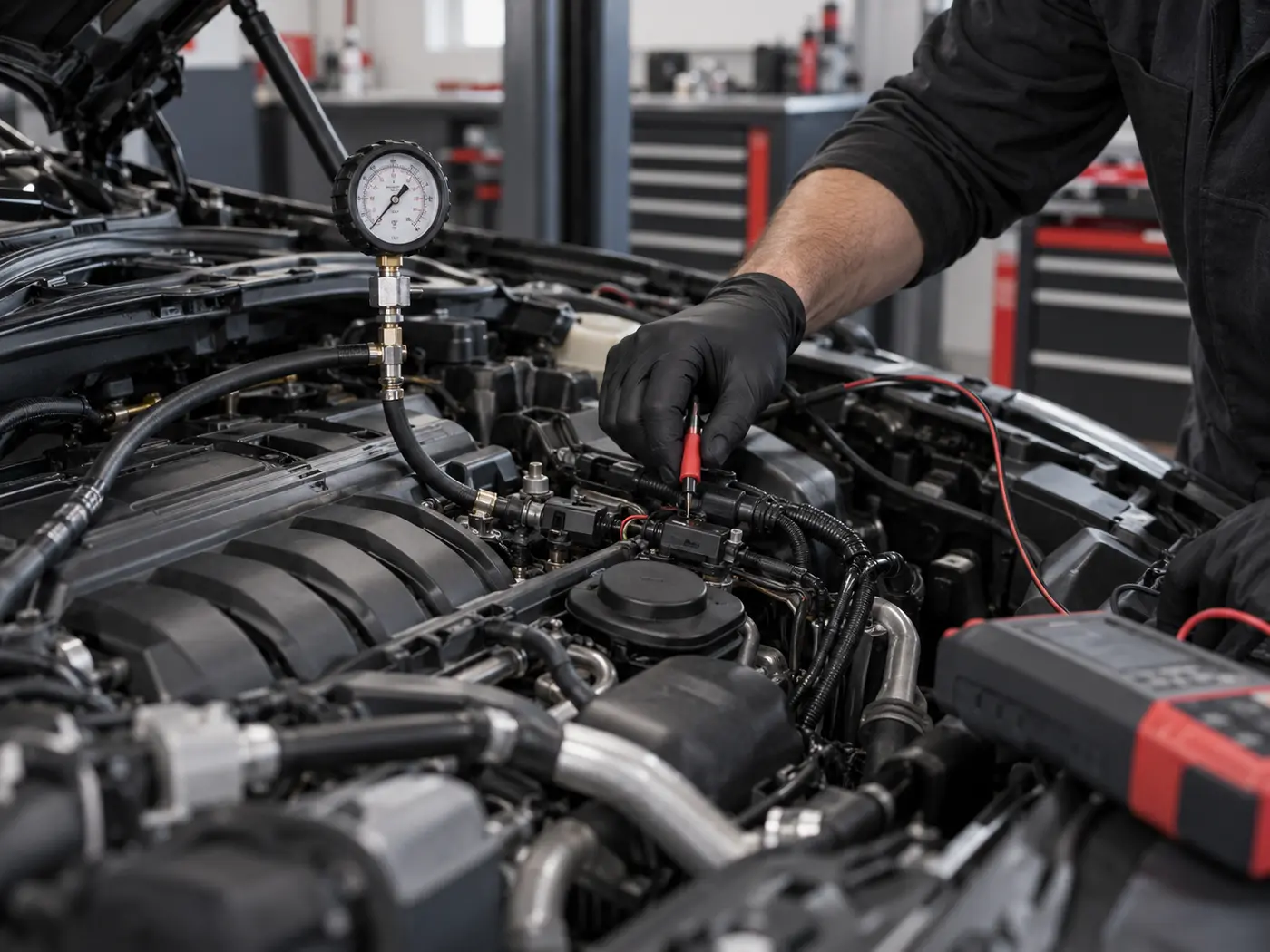
Follow the fuel, identify the part
A fuel-system estimate should identify where the fault sits. The tank supply, high-pressure delivery where fitted, and injection components have different jobs. A clear component description prevents two very different repairs from being compared under one pump label.
Tank and delivery module
The vehicle’s tank arrangement and delivery system determine the suitable pump or module. Confirm whether the quote supplies a complete module or a serviceable pump component for that application.
High-pressure pump
On the relevant injection systems, a separate pump supplies the high-pressure side. Its assessment considers the fuel supply and related operating information rather than a fault message in isolation.
Rail and injectors
These are separate components. The estimate should explain whether the pump is the confirmed fault or whether an injection or regulation issue needs a different repair.
Simplified component relationship. The exact arrangement varies by engine and injection system; it is not a universal BMW parts diagram.
Pump insert or complete module?
Some applications allow an appropriate pump component to be serviced separately; others require a particular module or assembly. The quote should describe the actual supplied product and why it is suitable for the vehicle. A pump insert price is not automatically a complete-module price.
Consider the condition of the parts that will remain in service. If a component-level replacement is offered, ask what has been inspected and what is retained. If a complete module is proposed, ask which parts are included in that assembly so you can compare the option with another quotation accurately.
Pressure fault or pump failure?
A stored pressure-related fault identifies something for the workshop to investigate. It does not, on its own, specify which part should be purchased. The assessment needs to connect the operating symptoms and test findings with the recommended repair.
For an electric supply pump, its power supply and control are relevant checks. For the high-pressure side, the condition of the feed and other relevant parts of the system also matters. Ask the team to explain the finding in plain language: what was checked, what was abnormal and how the proposed work addresses it.
When additional fuel-system work is justified
If contamination or another failed component is identified, the job can extend beyond a single pump. The team should describe the affected areas and the necessary work before asking for approval. Do not assume that every fuel-pump fault needs injectors, or that a pump-only replacement is sufficient in every damaged system.
Bring information about recent fuel-system work and any existing diagnosis. If parts have already been replaced without resolving the problem, tell us which ones and how the symptoms changed. That history helps focus the next assessment and makes the repair conversation more useful.
Compare the part and the installation together
Ask whether the quote supplies a pump insert, a complete in-tank module or the separate high-pressure pump. Those are different products even if each is described as a “fuel pump.” Compatibility is checked against the vehicle and engine details.
The written estimate should identify the part brand, installation labor, required seals or associated parts, and the relevant completion checks. If more than one suitable part option is available, compare its warranty terms and expected availability as well as the price.
Programming or adaptation is included only where the vehicle and replacement component require it. It should be explained for the actual job, not sold as a mandatory step for every BMW fuel pump.
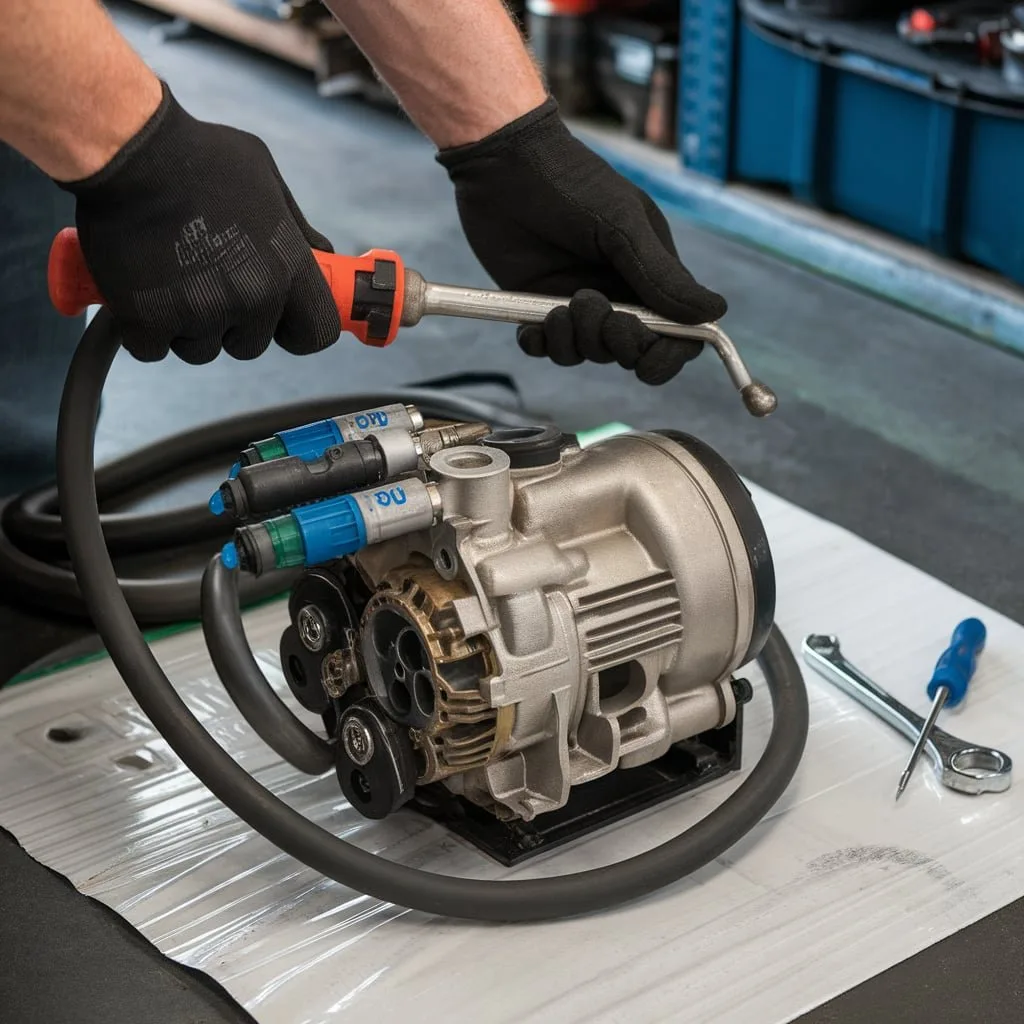
A replacement needs a result you can check
After the agreed repair, the relevant system checks should confirm fuel delivery, check for leaks and review the original starting or running concern. Further operating checks depend on the fault and whether the vehicle can be tested safely.
Replacing both pumps is not an automatic package. If additional work is recommended, ask which finding justifies it and obtain an updated quotation before approval.
BMW Garage is in Al Quoz 4, Dubai. Call with the vehicle’s condition before arranging a visit. If it repeatedly stalls, has a suspected fuel leak or will not start, discuss suitable pickup or transport instead of trying to drive it to the workshop.
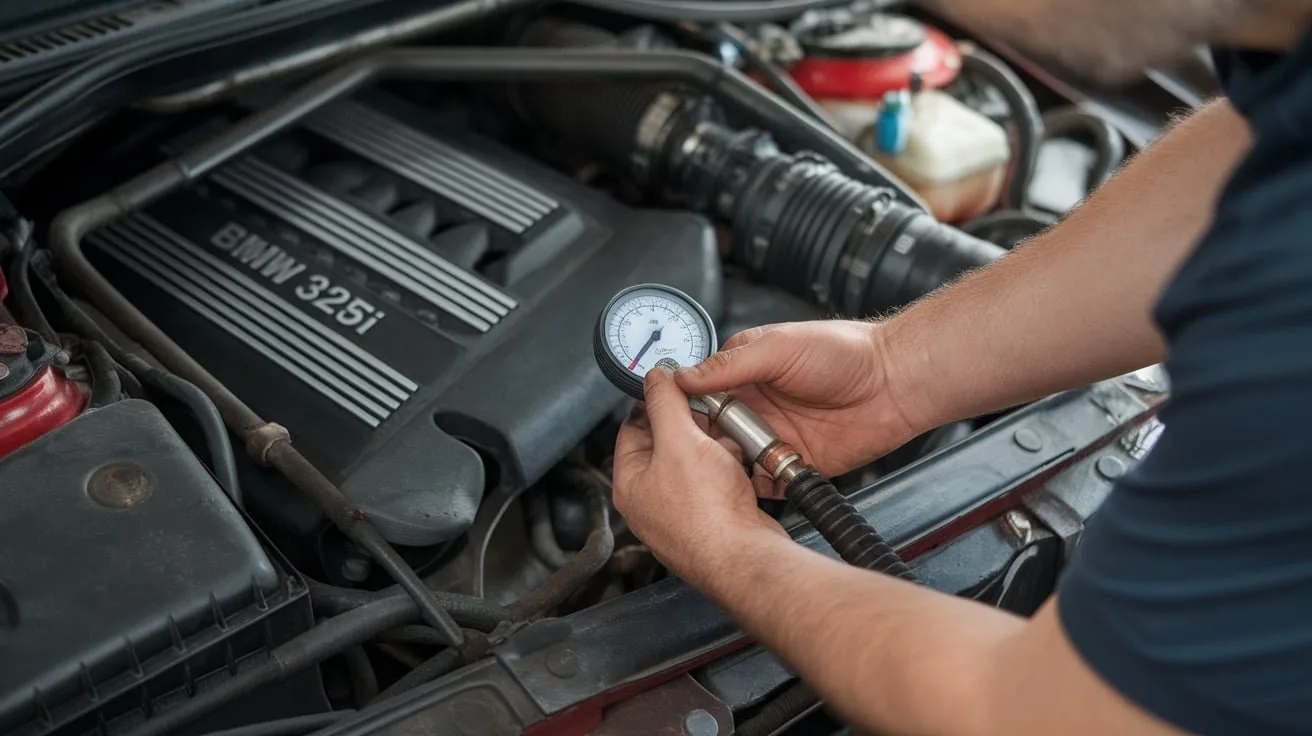
Compare the fitted pump quotation
Ask for the complete work, not just a part price. A useful quotation identifies the pump, the fitting operations, associated items and the checks that show whether the original fuel-delivery problem has been resolved.
What should be listed
- Supplied component
- Exact application, pump or module, supplied brand and clearly stated condition.
- Installation work
- Access and fitting labor, plus the seals or associated parts required for the identified job.
- Related procedures
- Programming or adaptation only where the vehicle and replacement component require it.
- Completion checks
- Relevant fuel-delivery, leakage and operating checks tied to the starting or driving concern.
- Additional work
- A separate explanation and approval for any further fault or contamination-related repair.
Compare new parts accurately
Ask which manufacturer and part are included and whether more than one suitable new option is available. A familiar brand name is useful only when the supplied product matches the vehicle and the required job. The quotation should not leave the pump’s identity vague while presenting the labor as the only difference between options.
If you are considering supplying your own part, check compatibility and installation arrangements before buying. Discuss the warranty responsibilities for the part and the fitting work. This prevents a lower purchase price from becoming a costly unsuitable-part problem when the car is already in the workshop.
Agree what happens if findings change
The inspection may identify a controller or supply fault instead of a failed pump, or it may uncover additional fuel-system damage. The recommendation should change with the evidence. Ask for the revised component list and total before authorizing work outside the original estimate.
Where both a low-pressure and high-pressure pump are proposed, ask which findings justify each one. They should not be replaced together merely because the car uses both stages. The appropriate repair follows the condition of the system and the test results.
Book around the vehicle’s condition
Tell us whether the car starts, runs reliably, stalls or has a suspected fuel leak. Those details determine whether a normal workshop visit is suitable or whether transport should be arranged. Avoid trying to reproduce a dangerous fault simply to describe it more precisely.
Keep the final invoice and the description of the completed work. At collection, discuss the original symptom, relevant test results and any follow-up advice. Call BMW Garage in Al Quoz 4 to arrange an assessment, compare the complete replacement estimate and ask about the current first-service and Dubai pickup offers.
Fuel pump questions
Get a clear answer before booking. Call with your BMW model, year and the work you need.
How much does BMW fuel pump replacement cost in Dubai?
Published guides are AED 950–1,300 for selected low-pressure pump replacements and AED 1,800–2,500 for selected high-pressure pump replacements. Confirm the engine, pump and complete work before comparing prices. Additional fuel-system damage is quoted separately.
Does a long crank prove the fuel pump is failing?
No. A starting problem can involve fuel supply, ignition, electrical supply or another engine fault. The team should compare the symptoms with the relevant pressure, control and electrical checks before recommending a pump.
Does my BMW have a low-pressure and a high-pressure pump?
The arrangement depends on the engine and injection system. Many direct-injection applications use a low-pressure supply stage and a separate high-pressure pump. The model name alone does not identify every component fitted to the vehicle.
Should both pumps be replaced together?
Only if the findings justify work on both. Low supply pressure can affect the high-pressure side, so the supply system must be considered before condemning a second pump. Replacing two pumps is not a standard requirement for every fault.
Could the pump controller or wiring be responsible?
Yes. An electric pump may not work correctly if its power supply, connections or control module have a fault. The repair should distinguish a failed pump from a problem supplying or commanding it.
Does a replacement pump always need coding?
No universal coding rule applies to all BMW pumps. Any programming, adaptation or related procedure depends on the component and vehicle. Ask the team to identify what your replacement actually requires in the quote.
Can I drive if the engine stalls or smells of fuel?
Repeated stalling makes continued driving unsafe. If you notice a fuel smell or suspected leak, stop safely, switch off the engine and seek assistance. Avoid repeated attempts to restart the vehicle until the cause has been assessed.
Can you confirm the price before inspecting the car?
The model, year, engine details and any existing diagnosis can support an initial guide. The final quote depends on confirming the pump and the fault. Tell the team if the car does not start so suitable workshop or transport arrangements can be discussed.
Get the fuel-supply problem resolved
Tell us the model, year and starting or driving symptoms. We will explain the appropriate assessment and replacement options.