
A new rattle, coolant warning, difficult start, or change in braking can leave you wondering whether your BMW is safe to drive. BMW problems need to be assessed by the symptom, the exact warning message, and the driving conditions, not by guessing a failed part. Stop safely for overheating, an oil-pressure warning, smoke, a strong fuel smell, reduced braking, or severe shaking. For less urgent changes, record what happened and arrange the appropriate checks before approving repairs.
This guide helps BMW owners in Dubai choose the next sensible action. The examples are possible diagnostic paths, not a failure forecast for every BMW. Engine type, production date, equipment, service history, and previous repairs all change what needs checking.
BMW symptoms and the next check
Follow any instruction to stop shown by the vehicle. The absence of a warning light does not rule out a mechanical problem, and a stored fault code does not automatically identify the part to replace.
| What you notice | Immediate action | What needs checking |
|---|---|---|
| Overheating warning, steam, or rapid coolant loss | Stop safely, switch off, and arrange recovery. Do not open a hot cooling system. | Leak source, coolant level when cold, circulation, fan operation, and temperature data. |
| Oil-pressure warning or heavy mechanical knocking | Stop safely and switch off. Do not restart to see whether it clears. | Actual oil pressure, oil supply, and the source of the noise using the correct engine procedure. |
| Soft or unusually hard brake pedal, reduced stopping power, or brake-fluid loss | Stop safely and arrange recovery. Do not road-test the brakes yourself. | Hydraulic integrity, assistance, brake components, fault data, and applicable campaigns. |
| Severe shaking, flashing engine warning, smoke, or strong fuel smell | Stop safely and seek assistance. Avoid repeated starting or acceleration tests. | Combustion, fuel leakage, electrical or mechanical faults, according to the symptoms. |
| Long cranking, intermittent hesitation, or uneven idle | Arrange prompt diagnosis. Stop if stalling, severe shaking, or loss of safe control occurs. | Starting speed, electrical supply, ignition where fitted, fuel delivery, and air leaks. |
| Mild vibration at speed, under acceleration, or during braking | Arrange inspection and describe when it occurs. Do not accelerate to reproduce it. | Tires, wheels, brakes, mounts, or driveline components according to the pattern. |
| Warning message with otherwise normal operation | Read the complete instruction and the vehicle handbook before continuing. | The affected system, stored faults, operating conditions, and supporting measurements. |
If smoke suggests a fire, move away from the vehicle and contact emergency services. Do not open the hood to investigate a suspected fire. Recovery arrangements must suit the drivetrain and follow the vehicle’s towing instructions.
Oil smells and visible leaks
A burnt-oil smell can come from a leak reaching a hot surface, but the smell alone does not identify a valve-cover gasket. Depending on the engine, the cover, oil-filter housing, seals, ventilation system, or spilled oil from recent servicing may need inspection. Fluid can travel across components before it drips.
The next useful check is to locate the source, assess the rate of loss, and identify anything the oil has reached. Oil near hot exhaust components or a drive belt deserves prompt attention. A technician may clean the affected area and recheck it to distinguish active leakage from old residue.
Oil level and oil pressure are different. A correct level does not make an oil-pressure warning safe to ignore. Do not continue driving with a pressure warning or a rapid loss of oil. Avoid reaching into the engine bay to wipe a leak while the engine is running.
Before authorizing repair, ask whether the leak is from a replaceable seal or from a damaged housing or cover. Replacing a gasket without checking its mating component can leave the original problem unresolved.
Coolant loss and overheating
A loud cooling fan, a low-coolant message, and an overheating warning are different observations. A fan can run because cooling demand is high or because the control system has detected a fault. None of these symptoms alone proves that the water pump has failed.
BMW cooling layouts vary. Identify the engine and cooling circuit before deciding whether an electric pump, mechanically driven pump, thermostat, fan, sensor, hose, or another component needs testing. Some vehicles have several cooling circuits, particularly hybrids.
Do not touch radiator hoses to diagnose circulation, and never open a coolant cap while the system is hot. Keep clear of fans and moving components. If the engine overheats or coolant is escaping, stop safely, switch off, and arrange assistance rather than repeatedly topping up and continuing.
Once the vehicle is cold and safe to inspect, a workshop can check for external leaks, compare temperature readings, assess circulation, and test relevant controls. Any pressure test must use the vehicle-specific procedure, equipment, and pressure limit. A single pressure setting is not suitable for every BMW or every cooling circuit.
A cracked tank or damaged hose needs the appropriate repair, followed by correct filling, bleeding, and verification. Replacing the most visible leaking part is not enough if overheating or another unresolved fault remains.
Long cranking and rough idle
A difficult start does not automatically mean a high-pressure fuel pump is faulty. First distinguish an engine that turns slowly from one that cranks at its normal speed but takes longer to start. Battery condition, connections, starting equipment, fuel supply, engine-management inputs, and mechanical condition can lead to different investigations.
On gasoline engines, rough running can involve spark plugs, ignition coils, injectors, or an air leak. Diesel diagnosis follows a different path. A misfire code identifies a combustion event to investigate; it is not an instruction to replace every coil or injector.
A useful workshop assessment compares fault records, starting behavior, cylinder contribution where supported, and measured values with the correct specifications. Fuel-pressure testing belongs with trained technicians because the system can retain hazardous pressure.
Tell the technician whether the problem occurs from cold, after a hot restart, after refueling, or after several days parked. Those details are more useful than assuming Dubai heat has damaged a particular part.
Rattles and timing concerns
A new mechanical rattle needs investigation, but sound alone cannot separate a timing-chain problem from an accessory, tensioner, exhaust component, or valve-control issue. Record an existing noise only from a safe position. Do not keep restarting or revving an engine with a pronounced abnormal noise.
For an N20-powered BMW, N20 timing-chain checks explain the more specific inspection path and the distinction between the timing chain and oil-pump drive chain. Production date and engine identification matter. A US warranty extension should not be described as a recall covering every UAE vehicle.
VANOS variable valve timing also requires diagnosis rather than a parts guess. Relevant checks can include oil condition and specification, pressure where indicated, electrical controls, and commanded versus actual timing. A timing-related code or cold-start sound does not establish that a solenoid, chain, or complete engine must be replaced.
Hesitation and reduced power
Reduced acceleration can involve ignition, fuel delivery, air measurement, a charge-air leak, boost control, or a protective engine-management response. It is not proof of internal turbocharger damage. The operating conditions and accompanying codes help determine which branch to investigate first.
Where appropriate, a technician checks pipework and connections, compares requested and actual boost, and tests the relevant control system before recommending a turbo. A rattle near a wastegate needs identification and application-specific assessment. An actuator-only repair is not suitable for every unit.
Intake deposits can contribute to some running complaints, but rough idle does not prove that carbon cleaning is needed. The reason for cleaning should come from inspection and test results. There is no blanket intake-cleaning interval in this guide, and no promise that one cleaning method fixes every hesitation.
Battery warnings and electrical faults
Several warnings appearing together can make it look as though multiple control units failed at once. Supply voltage, connections, communication faults, and individual components all need consideration. Start with the evidence rather than replacing modules because their names appear on a scan.
The Intelligent Battery Sensor belongs to battery and energy management. It is not the integrated braking system. BMW’s battery energy-diagnosis bulletin explains why a discharged battery needs investigation of the cause, not simply repeated replacement.
Record warnings before clearing codes or disconnecting the battery. Tell the workshop about recent battery replacement, jump-starting, added accessories, water entry, or long periods parked. Testing may need to distinguish battery condition from a charging problem or unwanted current draw.
The wording of BMW malfunction warnings helps determine the immediate response. Read the full message and its conditions. Warning color alone cannot establish that continuing is safe.
Brake symptoms and recall checks
A soft pedal, unusually high pedal effort, reduced braking, or visible brake-fluid loss calls for a safety assessment and recovery rather than an owner road test. An ABS warning alone is a different situation, but still needs prompt attention and the instructions for that vehicle. Do not assume a warning is harmless because the brakes appear to work.
Two different systems can be abbreviated IBS. The Intelligent Battery Sensor concerns energy management. In braking-campaign material, Integrated Braking System refers to braking equipment. A battery warning is not evidence that an integrated brake module has failed.
As a documented example, BMW’s US integrated braking recall 24V-104 addresses specified vehicles and describes possible reduced brake assistance and affected ABS or stability-control operation. This US bulletin does not establish whether a particular UAE vehicle has an open campaign.
Use the 17-character VIN in BMW’s recall checker, then confirm the current campaign status and remedy with an authorized BMW partner serving your market. For an imported vehicle, provide its original delivery market too. A campaign record and a diagnosis answer different questions: an open recall needs action, while a current braking complaint still needs assessment.
Harsh shifts and vibration
A delay selecting Drive, a harsh downshift, or an acceleration shudder does not automatically mean the transmission requires rebuilding. Engine running quality, mounts, fluid leakage, transmission control, and internal wear can produce overlapping complaints. Identify the gearbox and reproduce the condition safely before selecting a repair.
Fluid servicing is maintenance, not a guaranteed cure for slipping or damaged components. The correct fluid, service method, temperature procedure, and filling level depend on the transmission. ZF’s 8HP oil-change instructions illustrate why a universal annual flush recommendation is inappropriate.
For xDrive shudder, correct tire fitment and tire condition belong in the investigation before assuming transfer-case failure. Different front and rear sizes can be correct on a factory staggered setup; they must match the approved vehicle combination.
Vibration at idle, speed, or braking leads to different checks. Wheel balancing does not fix a shake already present while stationary, and alignment is not the same as balancing. Stop if vibration is severe or steering or braking is affected.
Match the advice to your BMW
| Vehicle detail | Why it changes the inspection |
|---|---|
| Engine code and production date | Model badges alone do not establish the engine, pump layout, timing system, or bulletin applicability. |
| Gasoline or diesel | Ignition and fuel-system checks differ. Diesel EGR or emissions concerns need the correct engine and campaign information. |
| Rear-wheel drive or xDrive | Driveline components and tire-fitment requirements differ. |
| Hybrid or battery-electric | Combustion-engine checks do not apply to an electric-only vehicle. High-voltage work requires qualified personnel. |
| Original delivery market | Recall, specification, and warranty information from another market may not establish local eligibility. |
For an N47 or N57 diesel, investigate new noise or unexplained coolant loss on its own merits. Do not assume every noise is a rear timing-chain fault or every coolant loss comes from an EGR cooler. Check relevant campaigns by VIN rather than treating all diesels as affected.
What to record before an inspection
- Model, year, VIN, engine if known, and current odometer reading in kilometers.
- The exact warning text and whether it appeared from cold, in traffic, during acceleration, or after parking.
- Any change in starting, temperature, braking, steering, shifting, or vibration.
- Recent repairs, fluid top-ups, tire changes, battery work, and available service invoices.
Make notes or take photographs only after parking safely. Check fluid levels only by the method in the vehicle handbook. Do not reach near belts or fans, touch hot brakes, open pressurized systems, or crawl under an unsupported car. Never disconnect orange high-voltage cables to investigate a hybrid or electric BMW.
What a useful diagnostic result should include
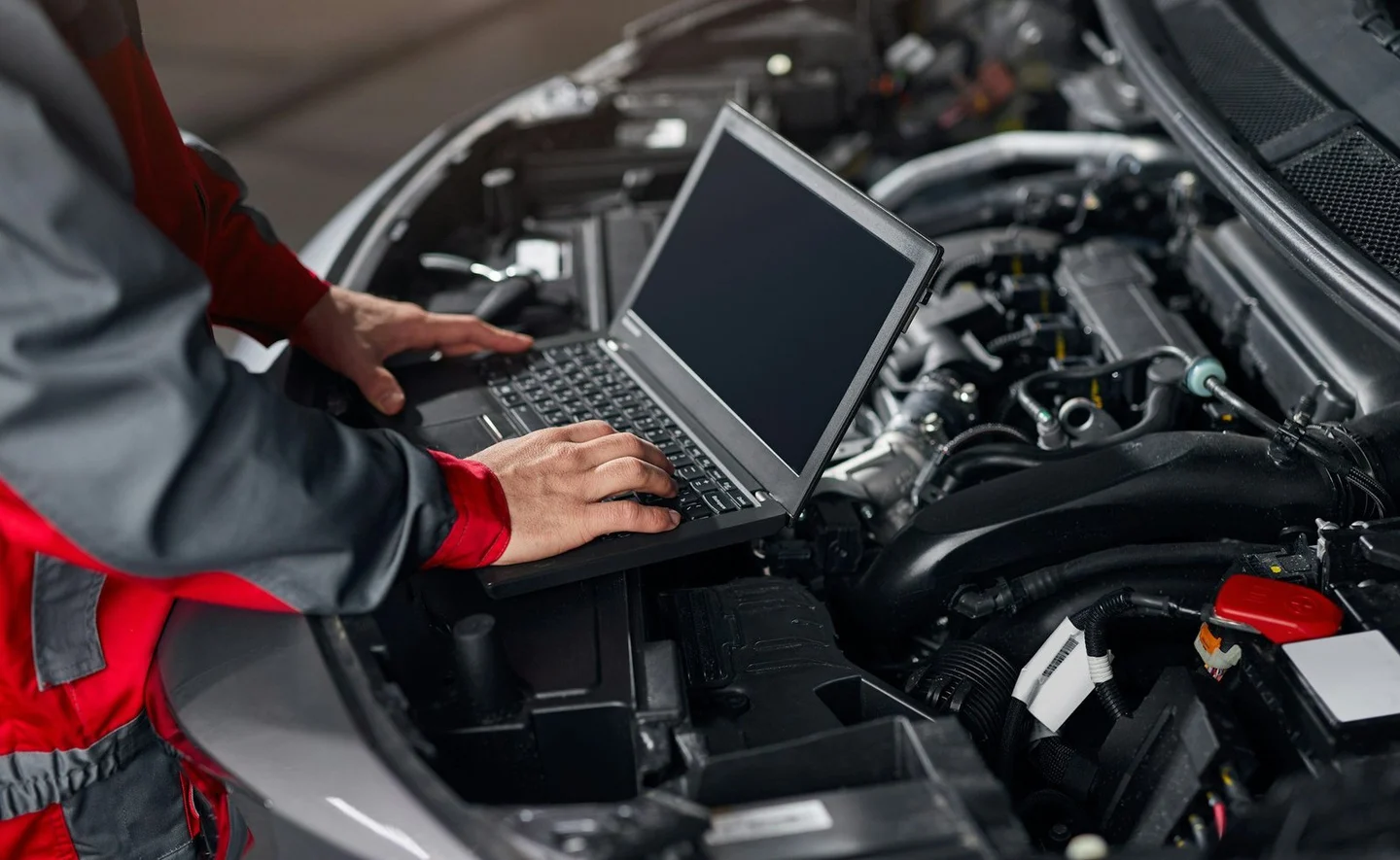
Ask which finding explains the symptom. A useful result separates observations, fault codes, measured values, and the conclusion. Where the fault could not be reproduced, that uncertainty should be stated instead of presenting a suspected part as confirmed.
A scan is one part of diagnosis. BMW-capable equipment, such as ISTA where applicable, supports fault investigation; physical inspection and appropriate electrical or mechanical tests remain necessary. Clearing the warning is not proof that the underlying problem has been repaired.
Repair before replacing an assembly
A confirmed leak, damaged connection, or replaceable control component may justify a focused repair. A rebuild or complete assembly replacement needs evidence of the relevant internal damage or repair limitation. Ask what is included, what remains uncertain, and how the original symptom will be checked after the work.
Do not approve a turbo, fuel pump, transmission, or engine solely because a general symptom list mentions it. Equally, avoid delaying a confirmed safety repair while searching for a cheaper explanation. The decision should follow the findings and urgency.
Maintenance without unnecessary replacements
Follow the service information for your VIN, applicable Condition Based Service items, and documented service history. Engine oil, brake fluid, coolant, transmission fluid, and filters do not all share one replacement interval. A missing record is a reason to assess what is due, not to prescribe an annual change of every fluid.
Dubai operating conditions are useful context for an inspection. Discuss frequent short trips, long idling periods, dust exposure, and any history of overheating. Use the correct fluid specification and investigate recurring top-ups instead of treating them as routine.
Regular maintenance can reduce avoidable problems and reveal developing faults, but it cannot guarantee a fixed prevention percentage. Keep invoices showing the date, odometer reading, parts, and fluid specifications so future decisions start with a reliable history.
Questions about BMW problems
Can I wait until the next service if the warning disappears
A disappearing warning does not confirm that the fault is resolved. Record it and arrange advice based on the message and symptoms. Stop-driving instructions, braking changes, overheating, or oil-pressure warnings need immediate attention rather than waiting for scheduled service.
Should I replace several suspected parts together
Only when the findings and repair procedure justify the combined work. Ask which parts failed testing, which related items are required for the repair, and which are optional maintenance. Several possible causes do not mean several confirmed failures.
Does a clear recall check mean the car has no faults
No. A recall search checks campaign applicability. It does not inspect the car, rule out wear, or diagnose a current complaint. Ask the BMW partner to confirm an uncertain campaign result, and have the actual symptom assessed separately.
Can a video diagnose an engine noise
A recording can help describe an existing noise, but it cannot establish oil pressure, mechanical condition, or the exact source. Do not restart a potentially damaged engine just to obtain a better recording.
The useful next step is the check that explains your symptom. Record what changed, follow the vehicle’s safety instructions, and ask for the findings behind a repair recommendation. That approach helps separate urgent faults from scheduled maintenance and avoids replacing expensive components on guesswork.
By Ahmad, BMW Garage.
Need help with your BMW?
Tell the garage what you have noticed, what you want checked and which BMW you drive. The team can explain the sensible next step before you book.