
BMW overheating warnings need prompt action. Reduce load, find a safe place to stop and follow the displayed instructions. Switch off after safely stopping when instructed. Steam, substantial coolant loss or an uncertain warning calls for stopping and arranging assistance.
Do not open a hot coolant reservoir or radiator cap. Hot pressurized coolant can cause serious burns. A fixed waiting time or a cool-feeling hood does not establish that the cooling system is safe to open.
What to do when the warning appears
- Prioritize a safe stopping place. Reduce engine load, avoid hard acceleration, and move out of traffic when safe. Use hazard lights where appropriate.
- Follow the exact warning. If instructed to stop the engine, do so after stopping safely. Do not keep driving toward a workshop in the hope that airflow will fix the problem.
- Keep clear of steam and hot components. Do not remove cooling-system caps or reach near fans, belts, or hot surfaces.
- Arrange help when needed. A red or stop warning, steam, obvious coolant loss, or a recurring warning calls for professional assessment and may require recovery.
- Record useful information only when safe. Note the warning text, driving conditions, and any visible leakage. Do not restart the engine just to reproduce the warning.
Turning the cabin heater on is not a substitute for these steps. Advice to switch off the engine and then rely on heater operation mixes different operating conditions. Follow the vehicle’s warning rather than adding an improvised cooling sequence.
Keep occupants in a safe location appropriate to the road and conditions while waiting for assistance. Do not stand in traffic or carry out roadside repairs where passing vehicles create a hazard.
Use the instructions for your BMW model for the exact warning and coolant-checking procedure. Instructions can differ between powertrains, model years, and cooling-system layouts.
What the symptom does and does not establish
| Observation | Possible significance | What it does not prove |
|---|---|---|
| High-temperature or stop warning | The vehicle has detected a condition requiring action | Which pump, sensor, or other component caused it |
| Steam or substantial coolant loss | A potentially serious cooling-system problem | That topping up alone will make driving safe |
| Repeated low-coolant message | A loss, filling problem, or sensing issue needs investigation | That hot weather normally consumes coolant |
| Warning mainly in slow traffic | Airflow and fan operation are relevant checks | That the fan must be replaced without testing |
| Warning under load | Cooling performance needs assessment under comparable conditions | That the radiator alone is responsible |
Dashboard displays are not interchangeable across BMW models. A gauge may show oil temperature rather than coolant temperature, and some vehicles rely on messages. Do not apply an internet temperature threshold without identifying the actual measurement and vehicle specification.
A loud fan can be a normal response to operating conditions or part of a fault response. A quiet fan does not, by itself, prove a failure. Commands, operating conditions, electrical supply, and actual fan response need comparison.
When coolant can be checked
Only check or open the cooling system under the conditions specified in the owner’s manual. The system must be sufficiently cooled and safe for the prescribed procedure. Elapsed time, outside temperature, and touching the hood are not reliable substitutes.
If you cannot establish safe conditions, leave the cap closed and wait for assistance. Do not pour cold water over a hot engine, remove hoses, or attempt to release pressure from a hot reservoir.
A low visible level may help explain a warning, but it does not identify where the coolant went. An empty reservoir, major leak, or overheating event should not be treated as an ordinary top-up before continuing a journey.
When the manual permits topping up, use the approved product and mixing instructions for the vehicle. Do not mix coolants by color alone. If the correct fluid or procedure is uncertain, get assistance rather than improvising a mixture.
What the cooling system assessment may cover
The pump circulates coolant, temperature-control components regulate the available paths, and the radiator transfers heat to airflow. The fan supports airflow when commanded. The expansion space accommodates changing coolant volume; it is not a universal starting point for every circuit.
HELLA’s engine-cooling explanation describes the basic roles. Actual BMW layouts can add bypasses, valves and separate circuits. A simplified loop does not establish how every engine, charge-air or hybrid circuit is connected.
| System area | Useful checks | Reason for checking |
|---|---|---|
| Reservoir, cap, hoses, and joints | Visible damage, leakage, sealing, and suitable pressure testing | Find external loss or a pressure-control problem |
| Coolant pump and circulation | Applicable drive, electrical supply, control, and performance tests | Establish whether coolant circulation is adequate |
| Thermostat and temperature control | Operating behavior against the specified test conditions | Check regulation without assuming every warm engine has a stuck thermostat |
| Radiator and airflow | External obstruction, damage, fan response, and appropriate thermal checks | Assess heat rejection |
| Filling and bleeding | Recent repair history and the required filling procedure | Investigate an incorrectly filled or inadequately bled circuit |
| Internal leakage where indicated | Targeted tests chosen from the symptoms and initial findings | Investigate causes that an external inspection may not reveal |
BMW cooling layouts vary. Some engine coolant pumps are electric; others use a mechanical drive. Auxiliary pumps and separate circuits may also be fitted. A belt inspection is relevant to a belt-driven pump, but it does not establish the condition of an electric pump.
Hybrid and electric-drive components may have separate cooling requirements. Do not identify every reservoir as the engine circuit or apply one bleeding routine to every BMW. Work around high-voltage systems belongs with appropriately trained personnel.
A cracked expansion tank, leaking hose, failed cap, or circulation fault is a diagnosis to establish, not a part to replace because summer has arrived. Age and service history can guide inspection without creating an automatic replacement schedule.
How a workshop should confirm the cause
Start with the warning history, coolant level under safe conditions, visible evidence, and recent repairs. Ask whether the problem occurred in traffic, at speed, under load, or soon after coolant work. These details guide testing without proving the cause.
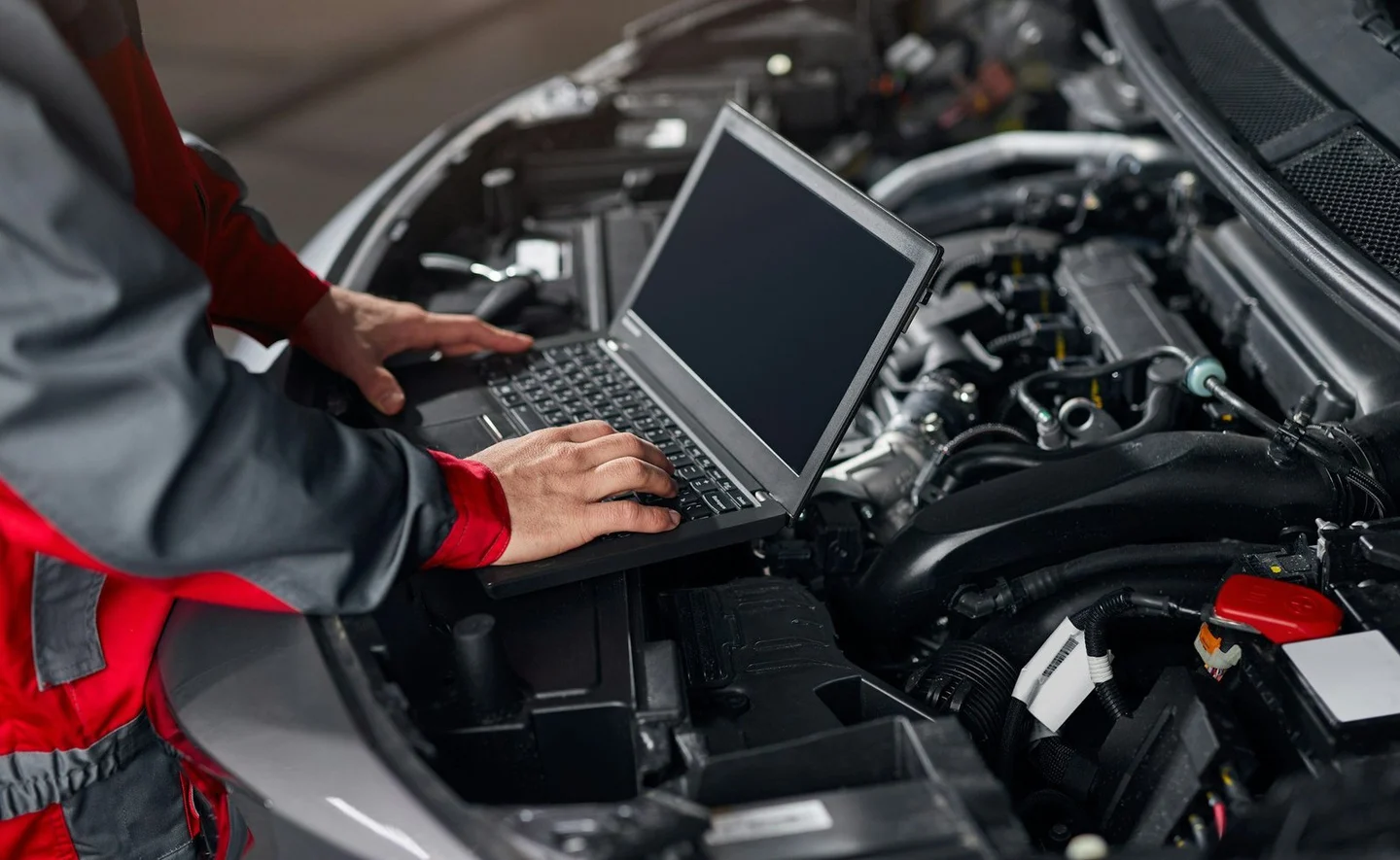
Fault codes and live data are useful clues. A temperature-related code can involve the sensor, wiring, actual overheating, or a related operating problem. The technician should compare the data with physical checks and the applicable test plan.
A pressure test checks leakage under the specified test pressure and conditions. It does not reproduce every running load or prove that a pump, thermostat or fan performs correctly. A pressure drop needs investigation, including the test connection; it is not automatically a head-gasket diagnosis.
A system holding pressure during one test can still have an intermittent, hot-running or internal fault. Cap operation may require a separate check. HELLA’s cooling-system diagnostic checklist separates cap, circulation, airflow and temperature checks; the exact BMW test procedure controls the assessment.
Temperature comparisons across components can help assess circulation and heat transfer. Their value depends on measurement method, operating state, and expected behavior. A single thermal image or hose temperature should not become a diagnosis without corroboration.
If overheating was severe, the assessment may need to check for consequential damage before authorizing a limited repair. The extent of testing should follow the event and evidence, not an assumption that every overheating episode destroys the engine.
Ask for the confirmed fault, supporting results, and any remaining uncertainty. Replacing a pump, thermostat, radiator, and tank together without explaining why each is required makes the decision harder to assess.
Choose coolant by specification
Use the coolant approval, concentration, water requirements, and service procedure specified for the vehicle. “UK coolant” and “UAE coolant” are not useful substitutes for that information. Local heat does not automatically justify a different fluid or an unapproved mixture.
Coolant color is not a reliable compatibility check. Record what product is already present when known, and follow the applicable instructions if its identity or condition is uncertain. A flush should have a stated reason and a suitable procedure.
Likewise, there is no single replacement interval that this article can apply to every BMW. Follow the relevant maintenance requirements and address contamination, incorrect filling, or a confirmed fault when found.
What should happen after the repair
The repair plan should identify the affected circuit, required parts, approved coolant, and filling or bleeding procedure. Separate essential repairs from optional work, and confirm whether the quote includes diagnosis, fluids, VAT, and follow-up checks.
- Confirm that the identified leak or failed function has been addressed.
- Fill and bleed using the procedure for the fitted cooling system.
- Check relevant operation, readings, and warning status under appropriate conditions.
- Inspect for fresh leakage and recheck the level when the prescribed conditions are met.
- Explain any follow-up visit and the warnings that require immediate stopping.
The BMW engine diagnostic service is the relevant workshop route when an overheating event needs assessment. Provide the warning details and discuss recovery if driving may be unsafe.
For routine preparation once the fault is resolved, use the pre-trip summer checks. Preventive inspection supports maintenance; it does not replace investigation of a temperature warning or recurring coolant loss.
Common overheating questions
Can I drive again after the warning disappears
A disappearing warning does not prove the cause has been repaired. Follow the vehicle’s instructions. After a stop warning, steam, substantial loss, or a repeated event, arrange assessment before assuming the car is safe to continue.
Is the cooling system safe after thirty minutes
There is no universal thirty-minute guarantee. System temperature and pressure depend on the vehicle and circumstances. Keep caps closed until the manufacturer’s safe checking conditions are met; if uncertain, leave the check to a technician.
Does Dubai weather require stronger coolant
Use the vehicle-approved specification and concentration. More concentrate is not automatically better, and regional weather does not justify an arbitrary mixture. Cooling performance also depends on a sound system and correct filling.
Does low coolant always mean a failed head gasket
No. External leaks, recent service issues, and other faults can explain loss. Internal leakage is one possibility to investigate when evidence supports it. A low level alone does not justify a head-gasket diagnosis.
Safety comes before diagnosis. Respond to the warning, avoid hot pressurized components, and have the cause established before treating the event as solved.
Need help with your BMW?
Tell the garage what you have noticed, what you want checked and which BMW you drive. The team can explain the sensible next step before you book.