
Measure BMW fuel economy before buying parts or changing software. Record liters added and kilometers traveled over several comparable fill-ups, then calculate liters per 100 kilometers = liters used ÷ kilometers traveled × 100. Lower L/100 km means lower consumption.
Compare similar routes, traffic, temperature, load, tire setup, and climate-control use. A sudden persistent change deserves investigation, but one short journey or a lower dashboard range estimate does not establish a fault.
Measure consumption over complete fill-ups
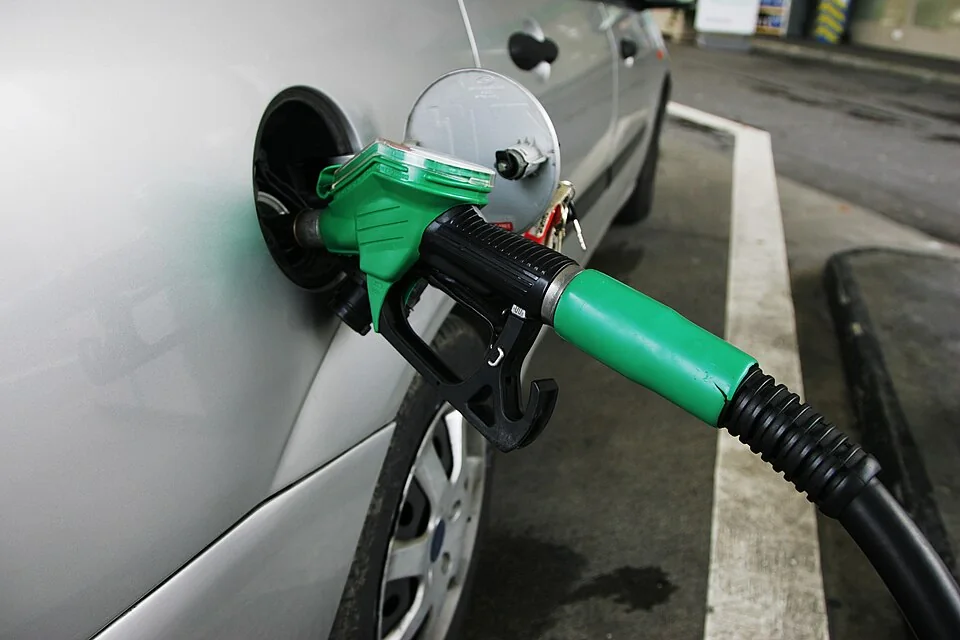
Start with a safely filled tank and a recorded odometer reading. At the next comparable fill-up, note the fuel quantity and distance since the previous fill. The liters added at that second fill approximate the fuel used over the measured distance.
- Use the correct fuel for the vehicle and follow the station's safety instructions.
- Fill consistently to the pump's normal automatic shutoff. Do not keep topping up after it stops.
- Record the odometer and reset a trip counter if useful while parked.
- At the next full fill, record liters added and distance traveled.
- Calculate L/100 km and note unusual traffic, idling, load, or route changes.
- Repeat across several comparable fills before judging a trend.
Pump shutoff variation and incomplete fills introduce measurement error. One tank is a useful observation, not a precise laboratory result. Keep partial fills in the record and include all fuel added between the starting and ending full-tank points.
Calculate a useful baseline
The following numbers are worked arithmetic examples, not measured results from a BMW or promised consumption figures.
| Recorded journey period | Fuel added | Distance | Calculation | Result |
|---|---|---|---|---|
| Example fill one | 45 liters | 500 km | 45 ÷ 500 × 100 | 9.0 L/100 km |
| Example fill two | 48 liters | 500 km | 48 ÷ 500 × 100 | 9.6 L/100 km |
| Both periods combined | 93 liters | 1,000 km | 93 ÷ 1,000 × 100 | 9.3 L/100 km |
For periods with different distances, add the liters and kilometers first. Do not take an unweighted average of individual consumption figures, because a short journey would then influence the answer as much as a much longer one.
If you prefer kilometers per liter, divide distance by liters instead. Keep the units visible. US miles per gallon and imperial miles per gallon use different gallon sizes, so figures from different market reviews are not automatically comparable.
To estimate fuel spending, multiply the liters actually purchased by their invoice price. Do not hard-code a monthly pump price into your long-term comparison. A higher fuel bill can reflect a price change, more distance, worse consumption, or a combination.
Record the conditions beside the number
A baseline is useful only when you know what produced it. Your usual school run, an airport trip, and a long highway journey can give different results in the same healthy car.
| Record | Why it changes the comparison |
|---|---|
| Route and average journey length | Short trips and repeated warm-up periods differ from steady longer travel |
| Traffic and stationary waiting | Fuel can be consumed while little or no distance is added |
| Outside conditions and climate use | Cabin cooling load and operating conditions can change |
| Passengers, cargo, and roof accessories | Added load and aerodynamic drag can affect energy demand |
| Tire size, specification, and pressure | Different setups can alter rolling resistance and displayed distance |
| Fuel grade and recent work | A change helps identify the timing of a new complaint |
| Hybrid charging and battery state | Electric contribution changes how much gasoline a journey requires |
Do not compare your traffic-heavy Dubai result directly with a certification figure or another owner's highway result. Test-cycle data are useful for controlled model comparisons, but they do not reproduce every route, temperature, or driving pattern.
The dashboard's predicted remaining range also changes with recent use. A lower range after several congested journeys is not the same as a measured loss of tank capacity or proof that the fuel gauge has failed.
Start with safe checks that cost little
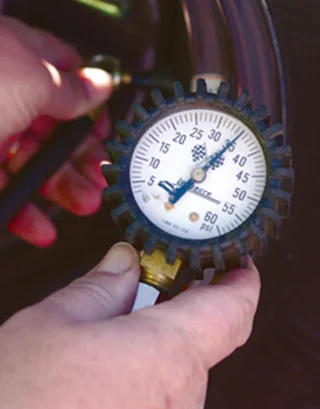
Check cold tire pressures against the vehicle placard or applicable manual settings for the fitted tires and load. Do not use the sidewall maximum as the normal target, and do not bleed warmed tires simply because their pressure rose during driving.
Look for an unexplained pressure loss and arrange inspection if it repeats. An economy target does not justify overinflating tires, fitting an unsuitable size, or continuing on a visibly damaged tire.
Remove unnecessary cargo or roof accessories when practical, while keeping essential safety equipment. Combine suitable errands and avoid unnecessary stationary engine running. Keep visibility, passenger safety, and effective climate control ahead of a small fuel-saving attempt.
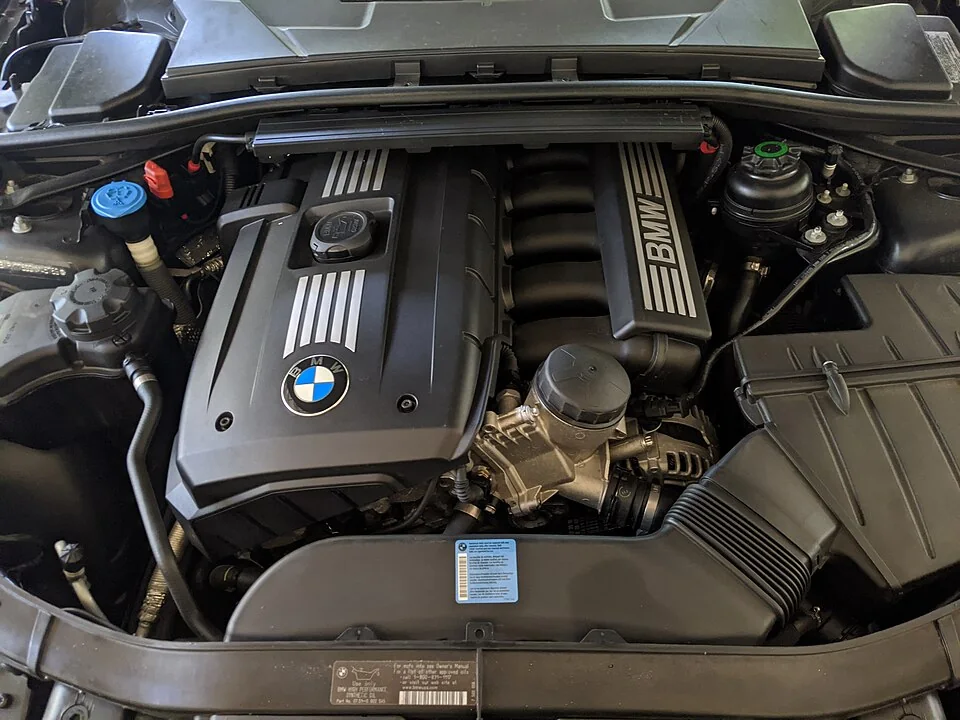
Check whether the air filter and other service items are actually due. Use the applicable BMW oil approval and the required parts specification. Maintenance should follow the vehicle's requirements rather than a list of products advertised as fuel-saving upgrades.
Choose fuel by the vehicle specification
Follow the fuel-flap label and owner's manual for recommended and minimum requirements. Identify the rating system as well as the number. UAE gasoline grades use RON; a US manual may use AKI, so the numbers should not be compared directly.
Higher octane measures resistance to knock. It is not a universal promise of better economy. Some engines can adapt within approved fuel requirements, but the result depends on the application and conditions. Do not choose fuel below the stated minimum to conduct an experiment.
Likewise, buying a higher grade than required does not prove that its higher price will be recovered through lower consumption. If comparing approved grades, measure comparable journeys and the actual cost per distance rather than relying on the range display immediately after filling.
If the wrong fuel type was added, stop the normal measurement exercise. Follow the vehicle's instructions and obtain assistance before starting or continuing. A gasoline-versus-diesel misfueling event is different from a question about approved gasoline octane grades.
Keep driving modes and start stop in context
Eco Pro, Comfort, Sport, and other available modes can alter responses or functions according to model and equipment. A mode label does not guarantee a particular fuel-saving percentage, and Sport does not make every steady-speed journey equally inefficient.
Use a mode that suits normal legal driving and the conditions. For equipment differences, compare BMW driving modes and their intended use. Avoid repeating hard accelerations or changing multiple settings while trying to measure a baseline.
Automatic start/stop is intended to reduce unnecessary engine idling when its operating conditions permit. The vehicle may keep the engine running or restart it to meet climate, battery, temperature, or other system requirements. An inhibited stop is not automatically a malfunction.
Do not assume switching the feature off saves fuel in Dubai or prevents inevitable alternator damage. Follow the manual, and investigate abnormal starting, warning messages, or recurring battery concerns on their own evidence.
Separate an air restriction from a rich mixture
The claim that a dirty air filter makes every modern engine add extra fuel is too simplistic. Engine management adjusts fueling using operating information. A restricted filter can affect performance without establishing an excessively rich mixture.
The US Department of Energy and EPA's vehicle-maintenance guidance distinguishes the performance effect of a clogged air filter from fuel-economy claims on modern fuel-injected vehicles. Replace a filter when due or when its condition justifies it, not on a promised percentage improvement.
Worn plugs, intake faults, unsuitable operating temperature, fuel-system issues, or control faults can affect running. However, a symptom list cannot establish which is present. Ask for the test result supporting the proposed repair.
There is no single “fuel trim sensor” to replace. Fuel trims are control adjustments interpreted alongside other data. Sensor readings and fault codes need corroboration with the correct specifications, wiring checks, and operating conditions.
Investigate a persistent change in stages
Start by explaining when the increase began. Include recent maintenance, tire changes, a new commute, prolonged idling, warning messages, or a change in how the engine starts and drives. Bring the fill-up record so the complaint has a measurable basis.
| Finding | Relevant next checks | What to avoid assuming |
|---|---|---|
| Higher consumption after a route change | Distance, traffic, trip length, and idle-time comparison | That a new part must have failed |
| Rough running or a warning light | Fault records, operating data, and engine-specific testing | That the first named sensor in a code needs replacement |
| Vehicle feels held back or pulls | Tires, braking condition, mechanical resistance, and related checks | That alignment alone explains every case |
| New shift behavior or slipping | Engine output, transmission operation, and companion faults | That an adaptation reset is a maintenance cure |
| Fuel smell, visible leakage, or sudden unexplained loss | Immediate safety assessment and fuel-system investigation | That another test tank should be used before seeking help |
Do not touch brakes or wheels to judge heat after driving. A technician can use appropriate methods to investigate abnormal drag without exposing you to hot components or unsafe road tests.
Where useful, the workshop can compare requested and actual values, temperature behavior, mixture-control data, misfire information, and the conditions recorded with faults. Individual numbers need the correct engine context. One unusual reading is not a complete diagnosis.
Use software only for a supported reason
An applicable factory software action may form part of a repair. It should have a clear reason, correct vehicle applicability, suitable programming support, and a verification plan. It is different from installing a custom tune advertised for UAE conditions.
Do not clear adaptations or fault memory simply to make a poor-consumption complaint disappear. Doing so can remove useful information and change behavior without repairing the underlying cause. Record the evidence before making changes.
If an update or repair is justified, agree on what will be checked afterward. Repeat comparable fill-up measurements once normal operation is established. A reset dashboard average immediately after work is not evidence of a lasting improvement.
Avoid replacing oxygen sensors, airflow sensors, injectors, or a thermostat as a bundle without findings. A targeted repair can be more useful than a large preventive parts bill, and a normal car does not need a sensor replacement to meet another driver's fuel number.
Account for hybrid and electric driving
For a plug-in hybrid, record charging as well as gasoline. A journey with a charged traction battery can use less gasoline than the same journey after the usable electric energy has been depleted. That difference does not automatically indicate engine deterioration.
Track purchased electricity separately if you want a combined energy-cost budget. Use a consistent starting and ending battery state where a direct comparison is needed, and note that wall energy includes charging losses. Do not mix electric-only distance with gasoline-only assumptions.
A battery-electric BMW uses energy measures such as kWh per 100 km rather than gasoline liters. An iX1 should not be compared with a combustion X1 using a gasoline-service or fuel-consumption worksheet.
Know when to stop the comparison
If you notice a fuel smell, visible fuel leakage, smoke, severe rough running, overheating, or an oil-pressure warning, stop safely and follow the warning instructions. Arrange assistance when continued operation is unsafe. Do not continue driving to complete a measurement period.
A steady warning without obvious drivability symptoms still needs prompt assessment. Read the exact message and the manual. The absence of dramatic symptoms does not prove the car is operating normally.
For ordinary ownership checks, maintain the engine using its approved requirements. For a persistent change, bring the VIN, mileage, warning details, and fill-up log to the assessment so testing can focus on the actual complaint.
BMW fuel economy questions
How many fill-ups should I compare
Use several comparable complete fill-up periods rather than one short trip. Repeat enough to see whether the change persists, while seeking prompt diagnosis for warnings, leaks, or abnormal running.
Does a lower dashboard range prove worse economy
No. Predicted range responds to recent consumption and other inputs. Calculate actual fuel used over distance and compare similar conditions before reaching a conclusion.
Can a software reset restore fuel economy
A reset is not a general repair. Establish whether the complaint is real, identify its cause, and use software procedures only when applicable instructions support them.
Should I replace sensors before a warning appears
Not solely to improve consumption. Use the maintenance schedule for service items and diagnostic evidence for faults. A measured change can justify testing without authorizing speculative parts replacement.
Need help with your BMW?
Tell the garage what you have noticed, what you want checked and which BMW you drive. The team can explain the sensible next step before you book.