
Not sure which BMW drive mode to use? Comfort suits everyday driving, Sport sharpens response, and Eco Pro emphasizes efficiency where fitted. The available settings depend on your model and equipment. MDM and TRACK need separate attention because they can reduce safety-system intervention.
Start with the settings your car actually has. Two BMWs with the same badge can differ by generation, drivetrain, market, options, and software. A mode name alone doesn’t tell you everything that changes.
Compare the main modes
The table describes common behavior, not a specification for every BMW. Check the on-screen explanation and the owner’s manual for your VIN before relying on a feature.
| Mode | Typical purpose | What to check |
|---|---|---|
| Comfort | Balanced response for ordinary driving. | Which powertrain and chassis settings are included on your car. |
| Sport | More immediate accelerator response and sportier operating settings. | Whether it changes gearbox, steering, or fitted adaptive dampers. |
| Eco Pro | Supports economical driving through applicable efficiency functions. | Climate settings, coasting functions, and operating conditions. |
| Adaptive | Adjusts supported settings according to driving inputs and available information. | Whether this selectable mode is actually fitted. |
Some newer BMWs use My Modes names such as Personal, Sport, and Efficient. Labels and functions remain model-specific, including differences between electric BMWs. An electric car’s mode behavior should not be explained using automatic-gearbox shift points.
The useful question is “What changes on this car?” rather than “Which mode is best on every BMW?” Once you know the equipment, you can choose a setting without expecting features the vehicle doesn’t have.
Comfort for daily driving
Comfort is a practical starting point for ordinary trips. Its balanced response can make it easier to drive smoothly in traffic, park, and maintain a steady pace without a particularly sensitive accelerator setting.
It doesn’t necessarily change suspension firmness. On a car with fixed dampers, selecting Comfort cannot create electronically adjustable damping. A change in steering effort or throttle response can still make the car feel different.
For an illustrative Dubai commute, you might use Comfort while leaving a parking garage and joining slow traffic. The reason is predictable response, not a claim that this mode guarantees cooler oil or longer component life.
- Use smooth accelerator and brake inputs.
- Keep the normal stability-control setting for routine road use.
- Slow appropriately for humps, damaged surfaces, and tight ramps.
- Adjust climate control for comfort and clear visibility.
A softer-feeling setting doesn’t make a speed hump safe at an excessive speed. Tire condition, inflation, loading, suspension condition, and the road itself remain relevant regardless of the selected mode.
What Sport changes
Sport commonly makes the accelerator feel more responsive. With a compatible automatic transmission, it may also alter shift behavior and hold gears longer. Available steering and chassis changes depend on the vehicle.
A stronger response to the same pedal movement doesn’t by itself mean the engine has gained extra rated power. Distinguish how quickly the driver requests output from the maximum output the drivetrain can produce.
Sport mode and the selector are different controls
The transmission’s S position, manual gear selection, and the car’s Sport driving mode are related but distinct. Some BMWs let you select a gearbox program separately from the wider vehicle mode.
For example, holding a suitable lower gear on a descent is a gear-selection decision. It isn’t necessary to assume that every chassis setting must become sportier at the same time.
Use Sport only when its response is useful and conditions allow normal, legal driving. It doesn’t shorten the required following distance, create an overtaking gap, or justify accelerating beyond the speed limit.
What a heavier steering wheel means
A change in steering weight is a change in feel. It doesn’t prove that the tires have gained grip or that the car is safer at a higher speed. Keep those judgments separate.
Likewise, a firmer available damper setting is not automatically preferable on every road. Choose a comfortable, controlled response and reduce speed when the surface requires it.
Eco Pro and engine health
Eco Pro is not inherently engine-damaging. It is a factory efficiency setting where fitted. Its different accelerator and transmission behavior should not be described as “choking” a healthy engine.
On compatible models, efficiency functions can also affect climate operation or coasting behavior. The details and activation conditions vary. A function not operating on one trip doesn’t necessarily mean it has failed.
Using Eco Pro in hot weather
Don’t turn a mode preference into a claim about engine temperature. There is no basis for saying every BMW overheats in Eco Pro during a Dubai afternoon or needs Sport to circulate coolant properly.
If an efficiency climate setting leaves the cabin uncomfortable, adjust the climate options or choose another mode as the manual permits. Keep the windows clear and the occupants comfortable. A modest fuel-saving aim doesn’t override those needs.
An engine-temperature warning still requires the dashboard instructions and appropriate assessment. Switching modes is not a repair for a cooling-system fault.
Judge efficiency fairly
Eco Pro can support economical driving, but a displayed bonus range is not a universal saving guarantee. Traffic, route, speed, weather, air conditioning, and driver inputs can all affect the result.
Compare similar journeys if you want to understand your own car. A quieter trip in light traffic and a congested afternoon trip are not a fair test of the mode alone.
Don’t force a high gear when the engine is struggling or assume low revs always mean good technique. Use the correct gear and available controls for the conditions, following the vehicle’s instructions.
Adaptive mode and adaptive dampers
Adaptive mode and adaptive damping are not interchangeable terms. One is a selectable control strategy on certain vehicles. The other is suspension hardware and its electronic control.
BMW’s 2017 5 Series equipment description illustrates the distinction: Adaptive mode was associated with optional Dynamic Damper Control on that application. That example doesn’t establish availability on another generation.
| Term | Meaning | Avoid assuming |
|---|---|---|
| Adaptive mode | A mode that varies supported settings using relevant inputs. | That every BMW has it or that it replaces attentive driving. |
| Adaptive damping | Electronically controlled damper behavior where the hardware is fitted. | That Sport can add this hardware through software. |
| Sport Individual | Separately configurable settings on supported vehicles. | That every engine, steering, and chassis combination is available. |
| My Modes | A newer interface combining applicable vehicle settings and presentation. | That its labels map exactly to older Comfort and Eco Pro functions. |
Check the build information and the menus in the actual car. A button label, an online coding menu, or a description for another model is not proof of installed suspension equipment.
DTC is not a sandy road preset
Dynamic Traction Control, or DTC, changes the intervention strategy of Dynamic Stability Control on applicable BMWs. BMW’s 2011 6 Series technical description explains that DTC raises DSC intervention thresholds and is also activated by Sport+ on that application. The relationship between a driving mode and DSC settings must be checked for the actual model.
A setting intended to help traction in a specified situation is not a general safety upgrade for sandy public roads.
Keep normal DSC active for routine road use. For sand blown across a traffic lane, reduce speed smoothly and leave more space. Do not copy a Sport with DTC or MDM preset from another model, and do not deliberately provoke wheelspin to test it.
MDM and TRACK are separate systems
M Dynamic Mode does not guarantee that the car will catch a slide. BMW describes MDM as allowing greater dynamic freedom with limited driving stability. Steering correction may still be required, and electronic intervention cannot overcome the available grip.
MDM changes the behavior of Dynamic Stability Control, or DSC, on applicable M cars. It is not simply a more responsive accelerator setting, and it should not be presented as risk-free public-road entertainment.
BMW’s MDM operating explanation makes that stability limitation explicit. Keep normal DSC active for ordinary road driving and follow the actual vehicle’s warnings.
M Mode TRACK is not Sport Plus
On the G80 M3 and G82 M4 example described by BMW, M Mode offers ROAD and SPORT, with TRACK tied to the relevant equipment. These settings affect assistance and display behavior and differ from individual powertrain or chassis setup choices.
BMW’s M Mode description explains that TRACK deactivates assistance and safety-related functions on that application. It is intended for a closed circuit, not normal public-road driving.
Sport+, MDM, and TRACK are not universal steps on one shared mode ladder. The same word can describe an engine setting, a broader driving program, or another function depending on the car.
M1 and M2 store supported settings
On equipped M cars, M1 and M2 can recall configurations. They aren’t guarantees of identical behavior across generations. Check the stored combination, including DSC and drivetrain selections, before using a preset.
Do not assume a button labeled M1 preserves every normal safety intervention. The relevant manual and the actual saved settings matter more than the name of the button.
Choose for the road
Use the following as ordinary driving examples, not as instructions to explore handling limits. Set preferences while safely parked and remain attentive when using controls during a journey.
- Slow urban traffic: Comfort is a reasonable starting point when you prefer a calmer response.
- A steady highway journey: Eco Pro can suit an efficiency-focused trip if its available settings meet your needs.
- A legal acceleration maneuver: Sport may change response, but you still need a safe gap and appropriate speed.
- A steep descent: Control speed and select an appropriate gear according to the transmission instructions.
- Wet or loose surfaces: Reduce speed and use smooth inputs. Don’t treat MDM or reduced stability intervention as a general solution.
Rear-wheel drive and xDrive describe drivetrain arrangements, not drive modes. Don’t assume that choosing Sport gives a rear-wheel-drive car all-wheel-drive traction, or that xDrive guarantees control on sand or standing water.
An ordinary road-mode comparison also doesn’t establish whether a particular BMW is suitable for off-road sand driving. Vehicle suitability, equipment, conditions, and the model’s instructions need a separate assessment.
Use supported settings before coding
Changing a factory menu preference differs from custom coding or tuning. First establish what the vehicle officially supports and whether the desired adjustment is already available through its normal controls.
A coding change is not automatically safe, supported, or fully reversible. A saved backup is useful, but it doesn’t guarantee recovery from every programming problem or restore hardware that was never fitted.
- Define the exact setting you want changed.
- Confirm the vehicle’s hardware, software, and supported options.
- Ask whether the work is a menu change, coding, an update, or tuning.
- Check the proposed change’s compatibility and any applicable warranty or regulatory implications before approval.
Don’t code away a warning or enable a feature label as a substitute for diagnosis. A changed display doesn’t prove that the underlying system works correctly.
When a mode feels wrong
First distinguish an expected difference from a new problem. A more sensitive accelerator in Sport can be normal. A drivetrain warning, loss of power, or persistent unexpected harshness needs investigation.
Record the selected mode, the exact message, whether the car was cold or warm, and when the behavior changed. Include recent repairs or software work. Observe safely rather than repeatedly provoking the concern.
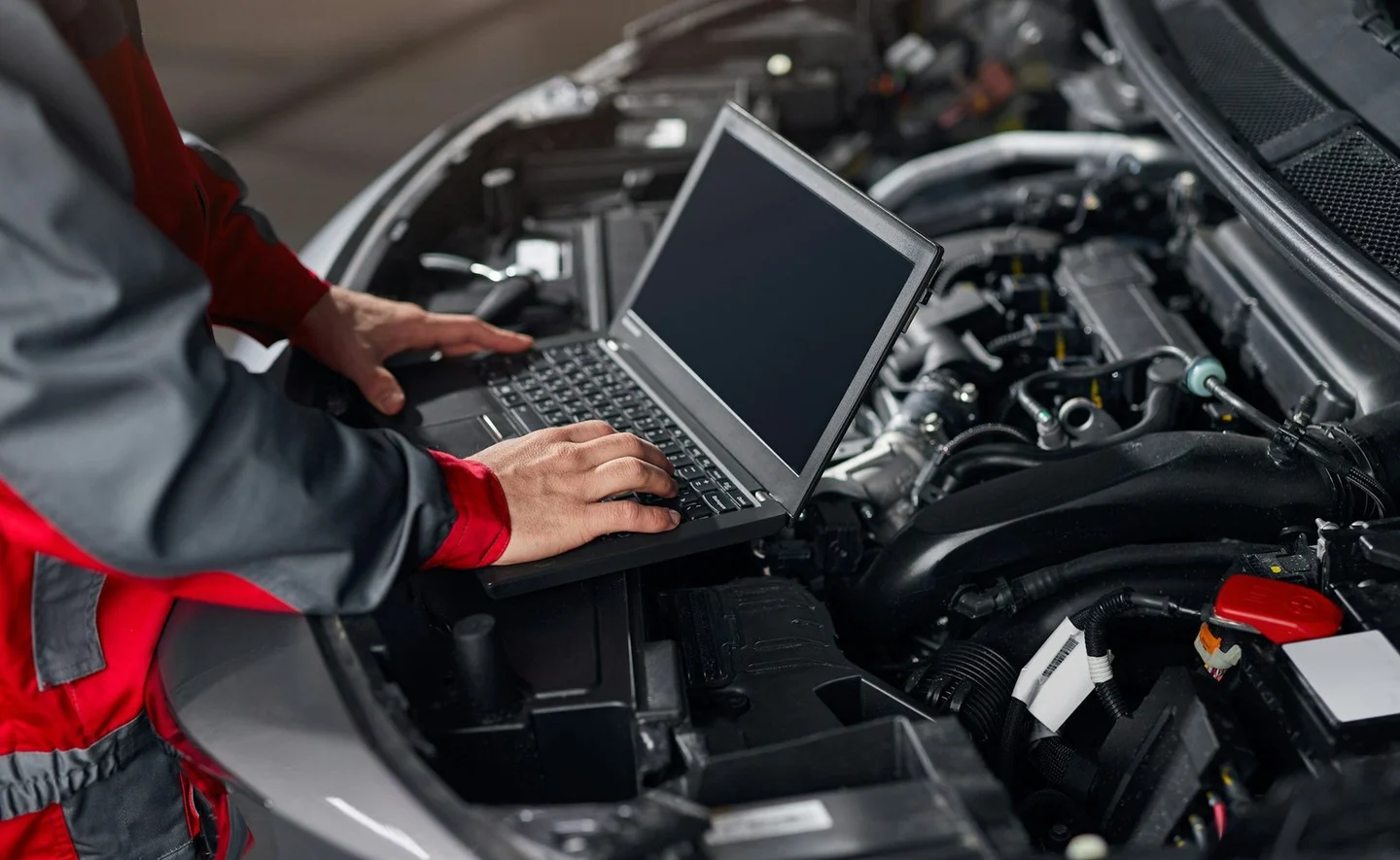
A workshop should compare the behavior with the fitted equipment and relevant test information. Fault codes and live data can help, but they do not independently prove that a control module or transmission needs replacement.
Correct transmission servicing and driving habits remain separate from choosing a mode. Neither Sport nor Eco Pro substitutes for the correct fluid, applicable service requirements, or investigation of a leak.
Follow any dashboard instruction to stop. If steering, braking, or drive becomes unreliable, stop safely and arrange assistance rather than continuing to test different settings.
Handle heat warnings without mode experiments
A normal highway trip does not need arbitrary cooldown stops at a fixed distance. Follow the instructions for your engine after sustained high load. Selecting Neutral at a stop is not a prescribed cure for overheating, and switching to Sport does not repair failed coolant circulation.
If a temperature warning tells you to stop, pull over safely, switch off as instructed and arrange assistance. Never open a hot coolant reservoir or continue driving to compare modes. The warning and the actual cooling fault determine the next step.
Common drive-mode questions
Is Comfort always the default after restarting
Don’t assume so. Start-up behavior varies by model and configuration. Check the displayed mode after starting and consult the vehicle instructions for supported preference settings.
Does every BMW have Eco Pro and Adaptive
No. Availability and names vary. Older vehicles, M models, hybrids, and electric BMWs can have different systems. Use the actual equipment and manual as the reference.
Will Sport damage a healthy BMW during normal use
Selecting a factory mode as instructed is different from repeated hard use. Load, driving behavior, condition, and maintenance matter. Sport is neither an automatic cause of damage nor a promise of extra durability.
Should I switch modes to fix a warning
No. A warning requires its stated action and, when appropriate, diagnosis. A message disappearing after a mode change doesn’t prove the underlying concern has been resolved.
The practical choice: use the mode whose response suits the journey, understand the equipment it controls, and keep normal road-safety protections in place.
Need help with your BMW?
Tell the garage what you have noticed, what you want checked and which BMW you drive. The team can explain the sensible next step before you book.